I2C Bus Recovery: Implementing Robust "Bus Clear" Sequences
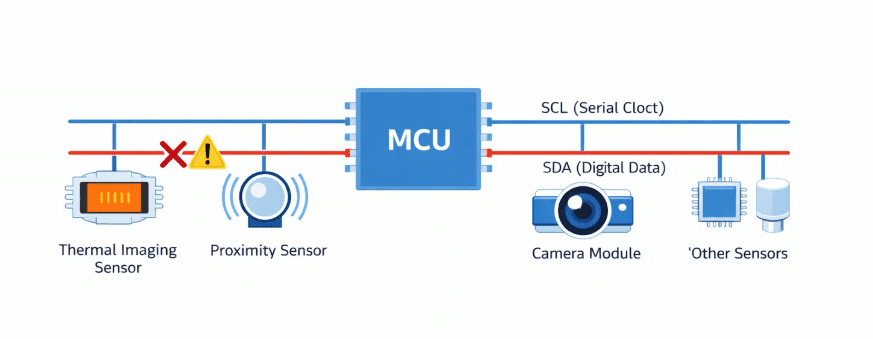
In smart device ecosystems, where continuous sensor monitoring is paramount, communication reliability is the cornerstone of system integrity. When developing multi-sensor platforms that demand 24/7 operation, engineers frequently run into a subtle but critical challenge: I2C bus lockups caused by peripherals holding the SDA (Serial Data) line low indefinitely.
This can silently cripple sensor networks, disrupting the continuous health monitoring systems modern IoT applications depend on. At Hoomanely, where our mission centers on precise, always-on health monitoring through sensor fusion and edge AI, addressing I2C bus recovery has been essential to keeping our biosense intelligence systems reliable.
The silent threat: when SDA gets stuck low
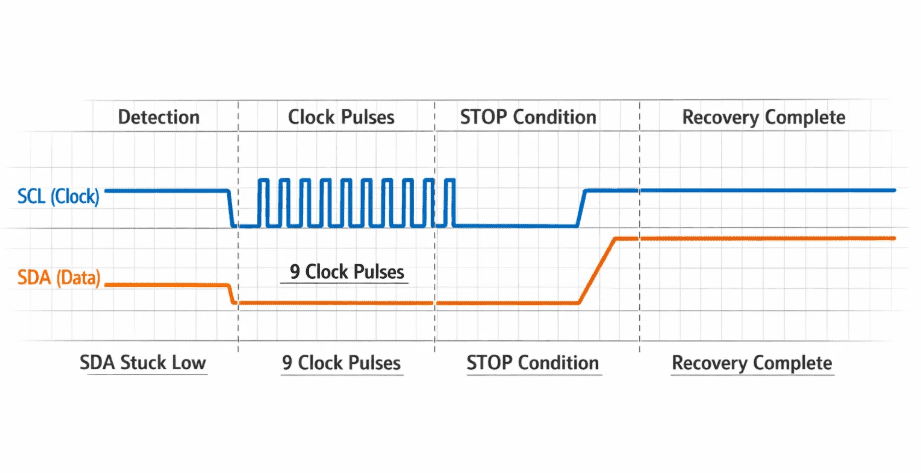
I2C communication underpins countless sensor interactions in embedded systems. Its open-drain design is elegant, but it also creates vulnerability points. When a peripheral holds the SDA line low, whether from power glitches, electromagnetic interference, or firmware bugs, the entire bus becomes inoperable.
Common triggers include power brown-outs during sensor readings, clock stretching gone wrong where a slave never releases clock control, a master reset mid-transaction leaving slaves in an incomplete state, and EMI-induced bit corruption confusing the protocol state machine. The challenge intensifies in continuous monitoring applications, where sensor failures need to self-heal without manual intervention.
Understanding the bus clear protocol
The I2C specification provides a standardized recovery mechanism known as bus clear or bus recovery. It leverages the fact that while SDA might be held low by a confused slave, the SCL (clock) line typically remains under master control.
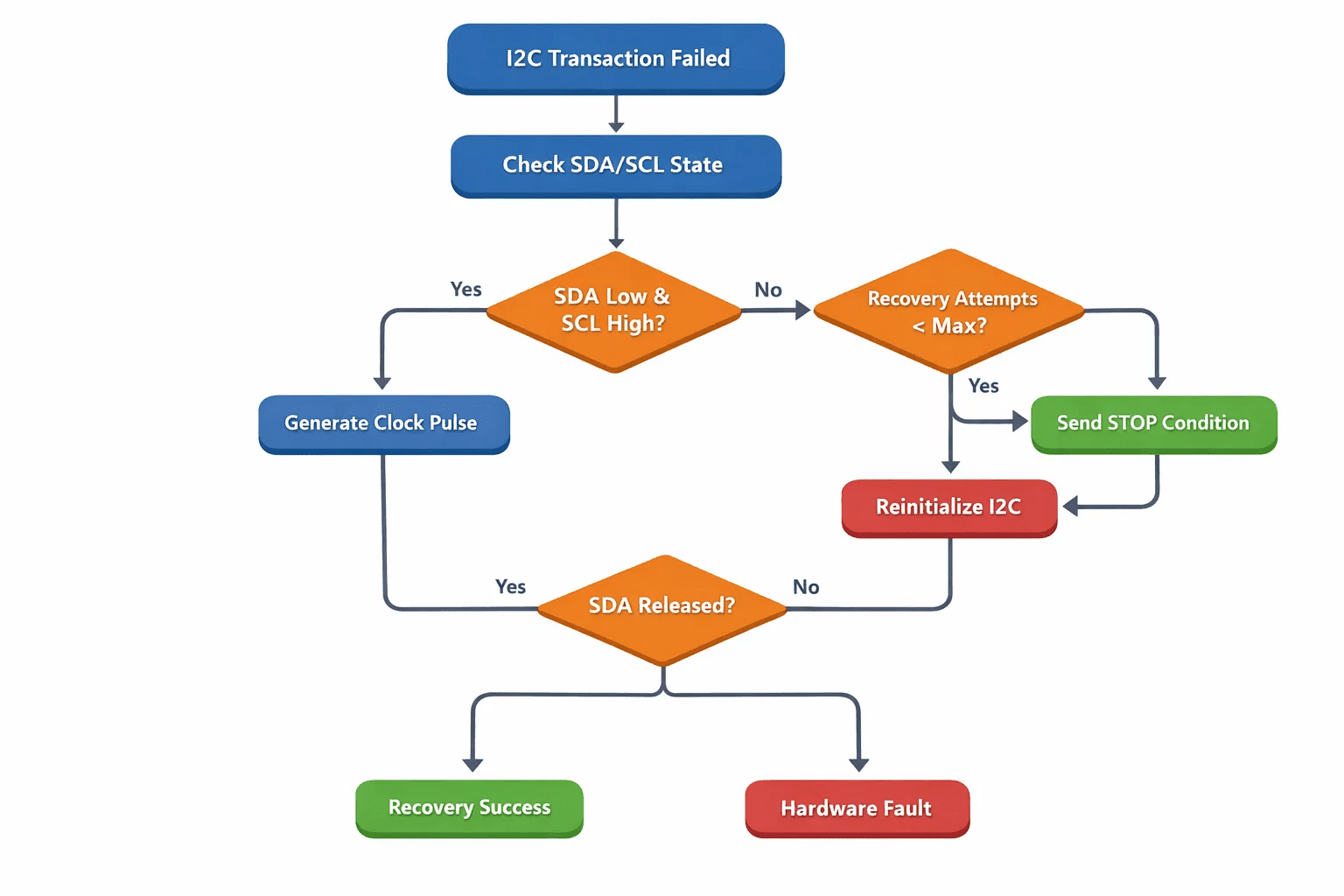
The sequence works because I2C slaves only ever drive SDA low, never high, so a series of clock pulses can eventually free any slave from its stuck state by letting it complete its interrupted transmission. The core algorithm: detect that SDA is stuck low while SCL is high, generate up to 9 SCL pulses to flush the slave's state, send a proper STOP condition to reset all slaves, verify both SDA and SCL return to idle high, and re-initialize the I2C controller.
Real-world implementation: thermal sensor recovery
In our sensor fusion platform, thermal imaging sensors proved particularly susceptible to I2C lockups during high-frequency data acquisition, occasionally freezing mid-transaction during rapid burst captures. Here's the production implementation that resolved it:
static int perform_i2c_bus_recovery(I2C_HandleTypeDef *hi2c) {
    // 1. Detection Phase - Check if SDA stuck low
    if (READ_SDA_LINE() == GPIO_PIN_RESET && READ_SCL_LINE() == GPIO_PIN_SET) {
        LOG_WARN("I2C Bus stuck - SDA low, SCL high. Starting recovery...");

        // 2. Manual clock generation to free stuck slave
        for (int i = 0; i < 9; i++) {
            SET_SCL_LOW();
            HAL_Delay_us(5);    // Half clock period
            SET_SCL_HIGH();
            HAL_Delay_us(5);

            if (READ_SDA_LINE() == GPIO_PIN_SET) {
                break; // Slave released the bus
            }
        }

        // 3. Generate proper STOP condition
        SET_SDA_LOW();
        HAL_Delay_us(5);
        SET_SCL_HIGH();
        HAL_Delay_us(5);
        SET_SDA_HIGH();
        HAL_Delay_us(10);

        // 4. Restore I2C controller
        HAL_I2C_DeInit(hi2c);
        HAL_Delay(2);
        HAL_I2C_Init(hi2c);

        return RECOVERY_SUCCESS;
    }
    return RECOVERY_NOT_NEEDED;
}
This implementation successfully restored communication in the large majority of observed lockup cases, maintaining the continuous sensor operation health monitoring depends on.
Advanced recovery strategies
Timeout-based recovery with progressive backoff prevents indefinite blocking:
// Attempt recovery with progressive timeouts
static const uint32_t recovery_timeouts[] = {50, 100, 500, 1000}; // ms

for (int attempt = 0; attempt < MAX_RECOVERY_ATTEMPTS; attempt++) {
    if (perform_i2c_bus_recovery(&hi2c1) == RECOVERY_SUCCESS) {
        HAL_StatusTypeDef status = HAL_I2C_Mem_Read(&hi2c1, device_addr,
            reg_addr, I2C_MEMADD_SIZE_16BIT, data, size,
            recovery_timeouts[attempt]);

        if (status == HAL_OK) {
            LOG_INFO("Recovery successful after %d attempts", attempt + 1);
            return HAL_OK;
        }
    }
}
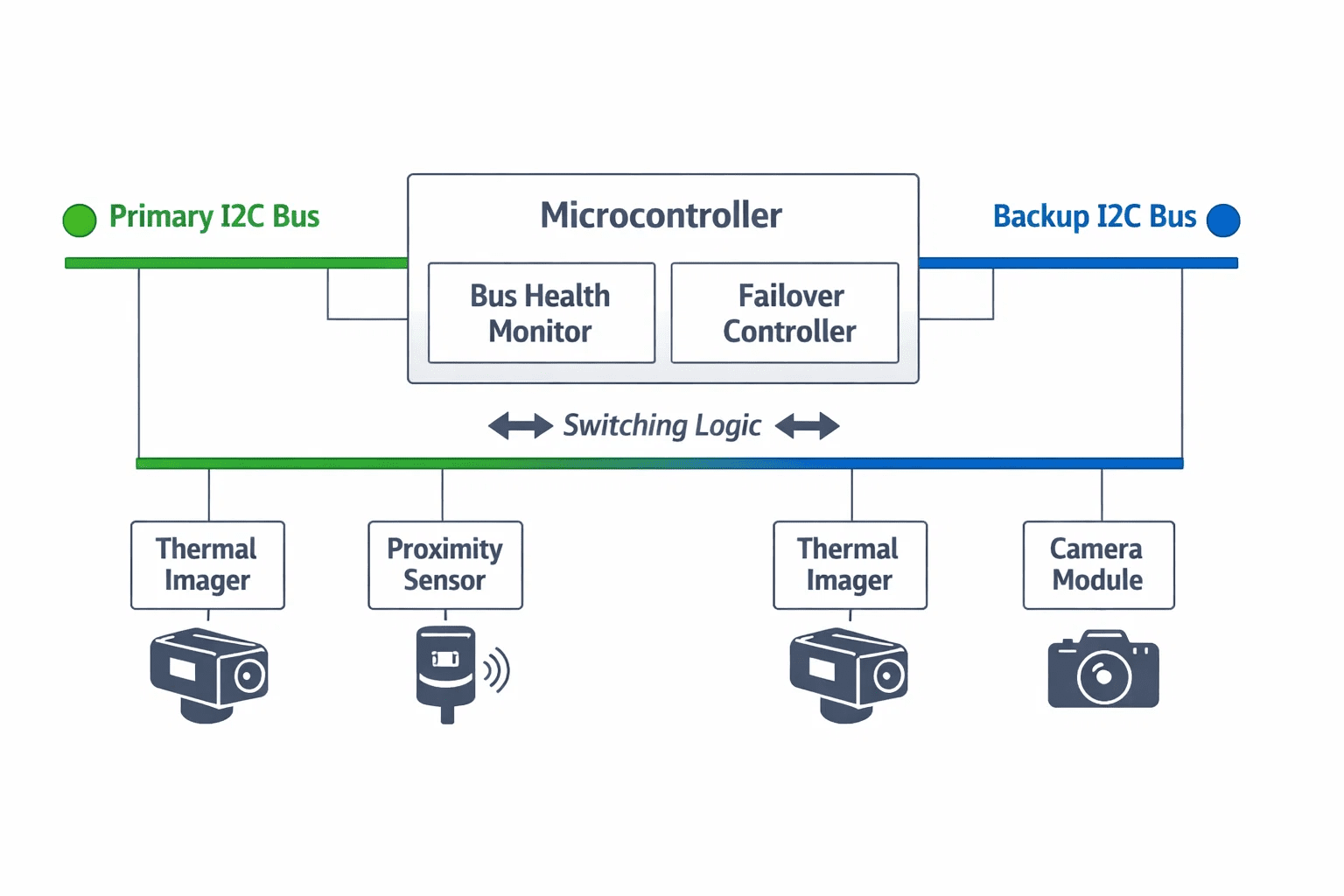
Multi-bus redundancy helps critical sensor platforms maintain operation during extended recovery. A primary bus handles normal operation with fast recovery, a secondary bus backs up communication during primary bus recovery, and failover logic switches transparently between the two, ensuring continuous sensor data flow where gaps in collection aren't acceptable.
Measuring recovery effectiveness
Robust I2C recovery needs quantifiable metrics. Recovery success rate, the percentage of successful bus recoveries, should target above 95% for production systems. Recovery latency, the time from detection to restored communication, should stay under 100ms for real-time applications. False recovery rate, recoveries that look successful but fail shortly after, should stay under 2% to prevent cascading failures.
Over six months of deployment across health monitoring devices, our sensor platform saw 2.3 million total I2C transactions, 127 bus lockup events, a recovery rate in the low nineties percent, an average recovery time in the tens of milliseconds, and only a small handful of false recovery incidents. These numbers show robust bus recovery turning I2C from a potential single point of failure into a resilient foundation for continuous sensor operation.
Why it matters at Hoomanely
Our mission of reinventing healthcare for pets demands unwavering reliability in our sensor fusion platforms. Robust I2C ensures thermal, proximity, and image sensors maintain 24/7 operation, uninterrupted sensor data enables our machine learning models to detect subtle health pattern changes, and consistent data collection allows early detection of health anomalies before they become critical. By implementing these recovery mechanisms across our smart device ecosystem, every moment of a pet's life can contribute valuable data to their personalized health baseline.
Key takeaways
The I2C specification provides standardized recovery through clock generation and proper STOP conditions. Production implementations need timeout handling, retry logic, and comprehensive state validation. Metrics-driven optimization, recovery success rates, latency measurements, and false positive tracking, should guide implementation improvements. Reliable I2C communication enables the continuous sensor operation modern health monitoring depends on, and multi-bus redundancy provides the ultimate layer of reliability for mission-critical sensor networks.