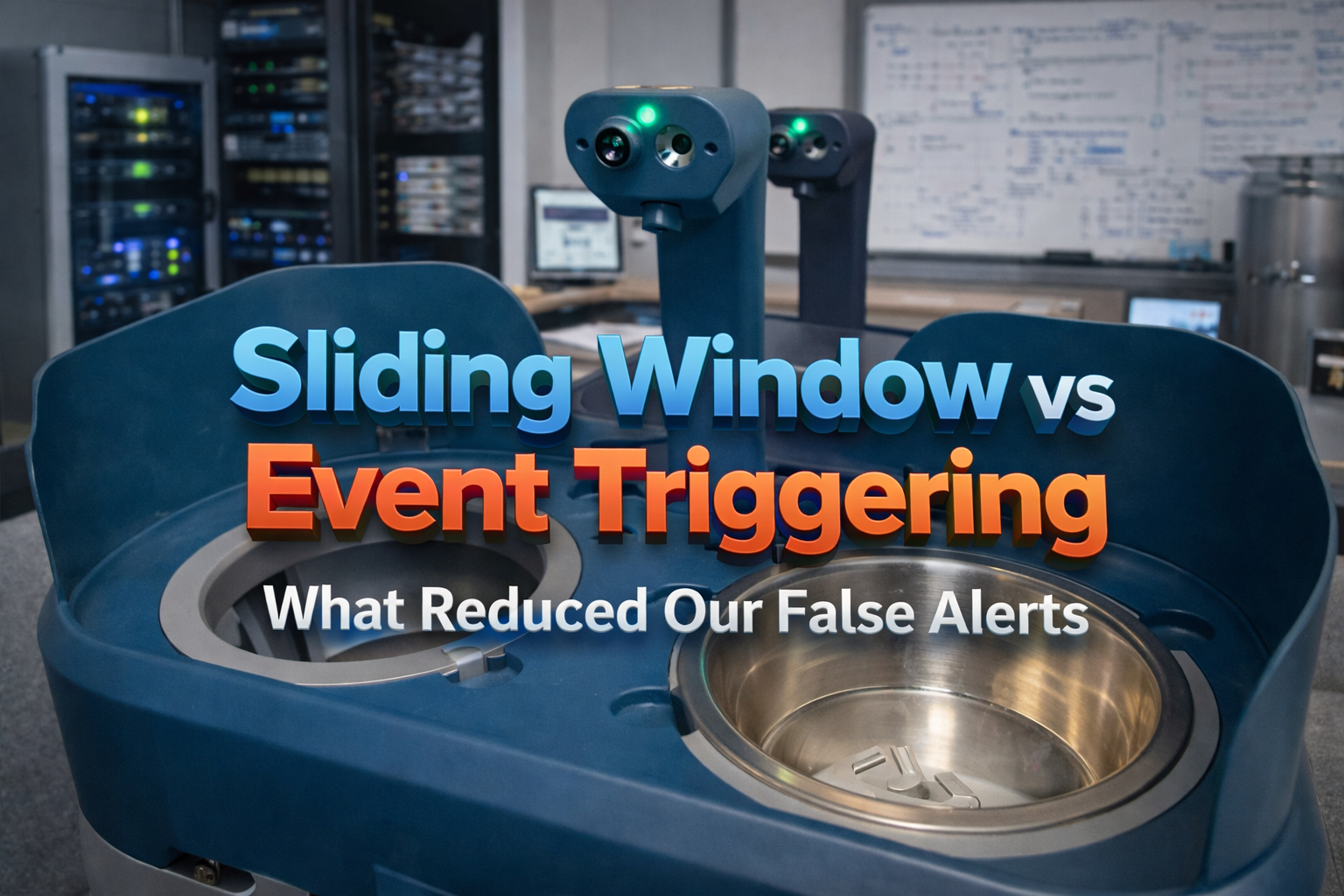
Sliding Window vs Event Triggering: What Reduced Our False Alerts
Any system that raises alerts from continuous sensor data has to decide when a detection becomes an alert worth surfacing to a user. Two common approaches are sliding window aggregation and single-event triggering, and the choice between them has a direct effect on false alert rates.
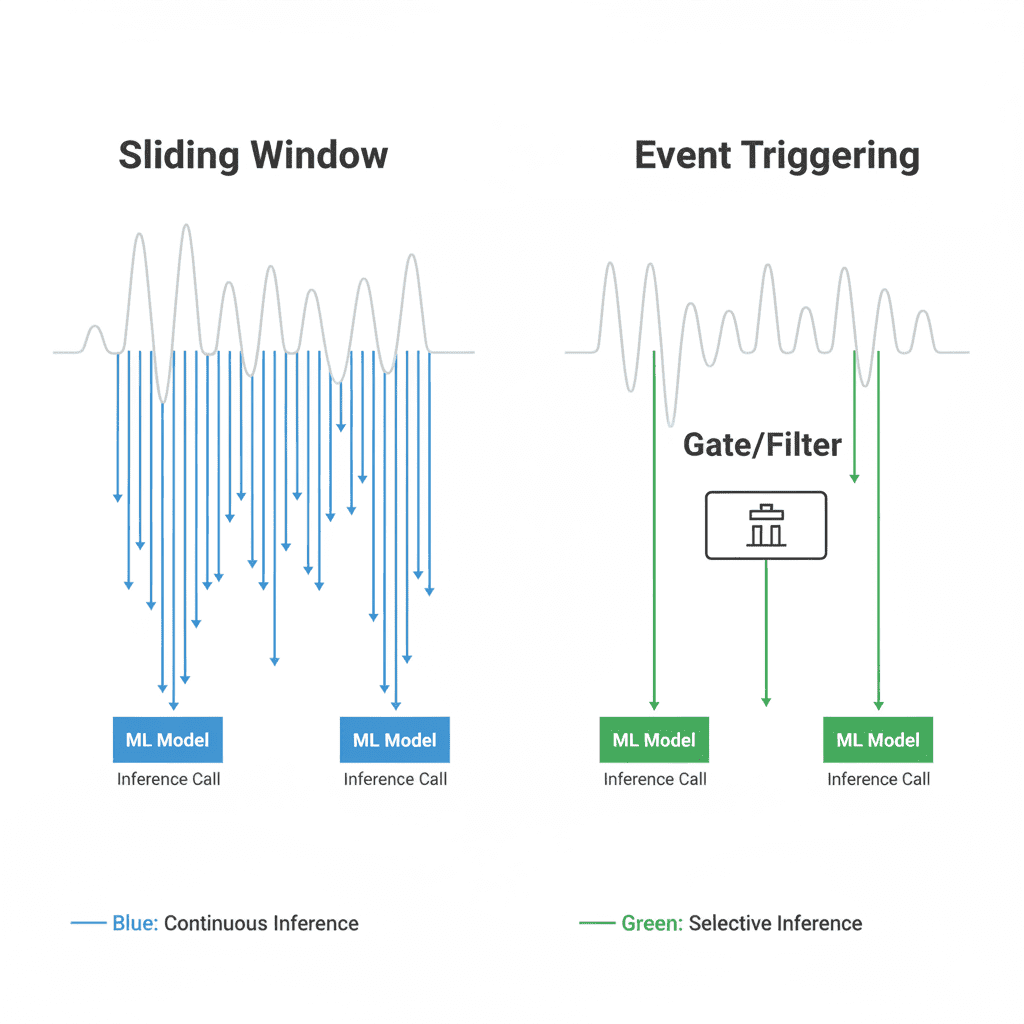
The problem with single-event triggering
Triggering an alert the moment a single detection crosses a threshold is simple to implement, but it's fragile to noise. A single spurious reading, a sensor glitch, a brief motion artifact, an isolated misclassification, is enough to fire an alert. In a system processing continuous data, spurious single readings are common enough that this approach produces a steady trickle of false positives that erodes user trust over time.
Sliding window aggregation
A sliding window approach requires a pattern to persist across multiple consecutive readings within a time window before it counts as a real event. Instead of asking "did this one reading cross the threshold," the system asks "did enough readings within the last N seconds cross the threshold." A single noisy reading gets diluted by the surrounding window rather than triggering an alert on its own.
The trade-off is latency: a real event now takes slightly longer to confirm, since the system is waiting to see if the pattern holds across the window rather than reacting to the very first reading. For most alerting use cases, that small delay is a reasonable price for a large reduction in false positives.
Key takeaways
- Single-event triggering is simple but noisy.
- Sliding window aggregation trades a small amount of latency for substantially better robustness against sensor noise and one-off misclassifications.
- For systems where false alerts directly damage user trust, that trade-off is usually worth making by default.