Advanced ToF Proximity Sensing: Beyond Distance to Behavioral Intelligence
Building intelligent proximity detection systems that transform simple distance measurements into actionable behavioral insights for health monitoring applications.
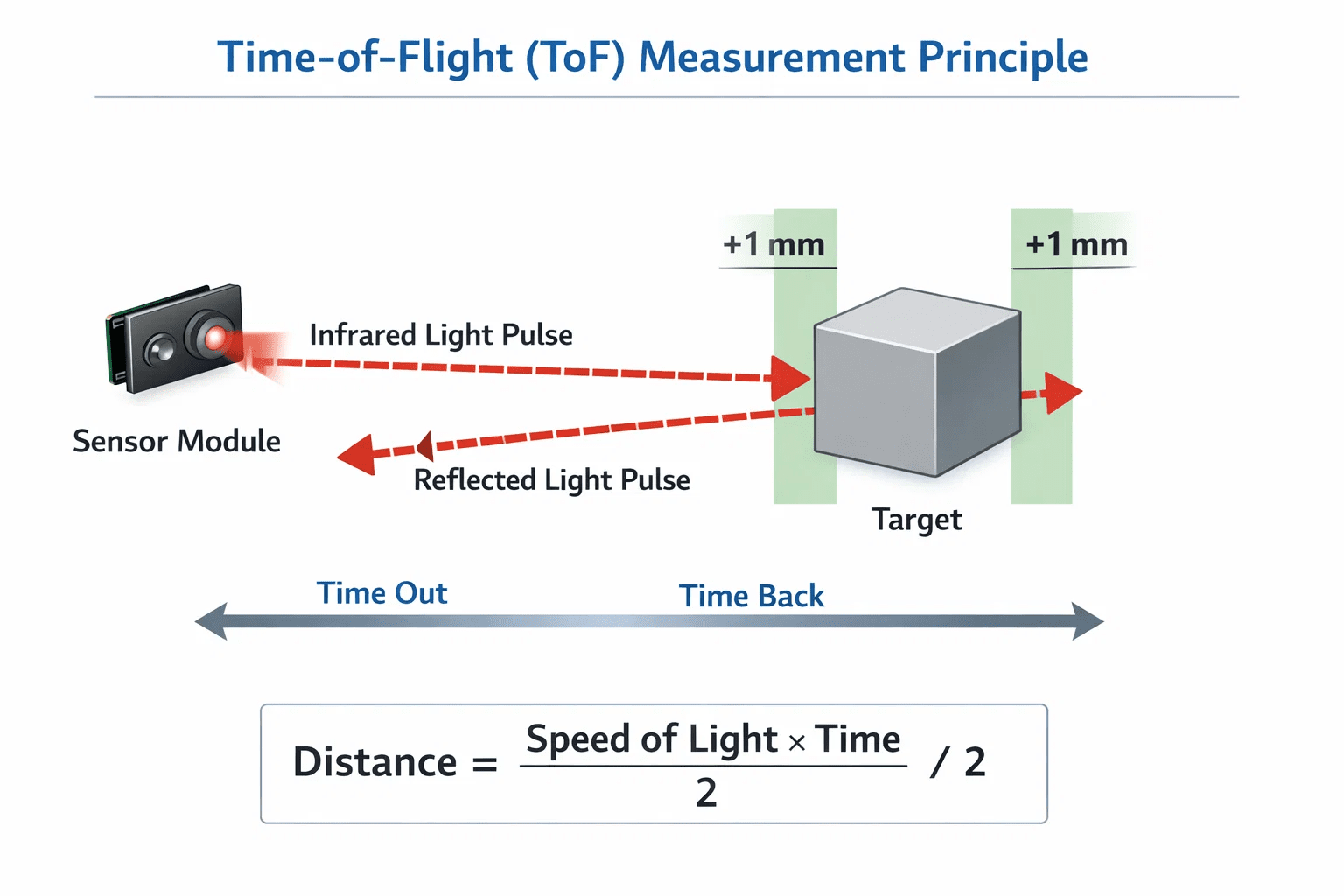
Distance measurement sounds straightforward, point a sensor, read a number. But what if that measurement could reveal complex behavioral patterns, detect subtle health changes, and provide early warnings for safety concerns?
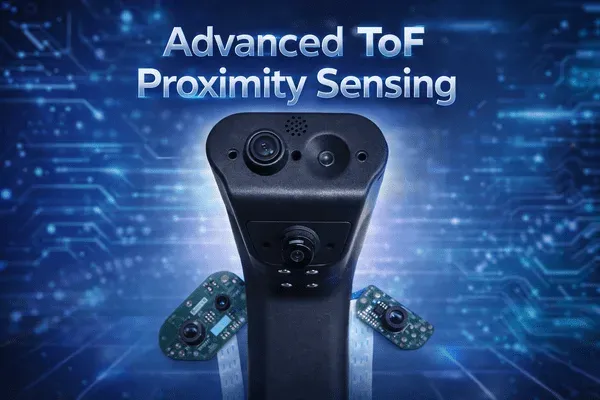
In health monitoring, proximity sensing has evolved well past basic obstacle detection. Modern Time-of-Flight sensors, properly calibrated and intelligently processed, can differentiate normal movement from concerning behavioral change. They can detect feeding habits, sleep disturbances, and even emergency situations, all from analyzing distance data over time.
The challenge: from raw distance to behavioral intelligence
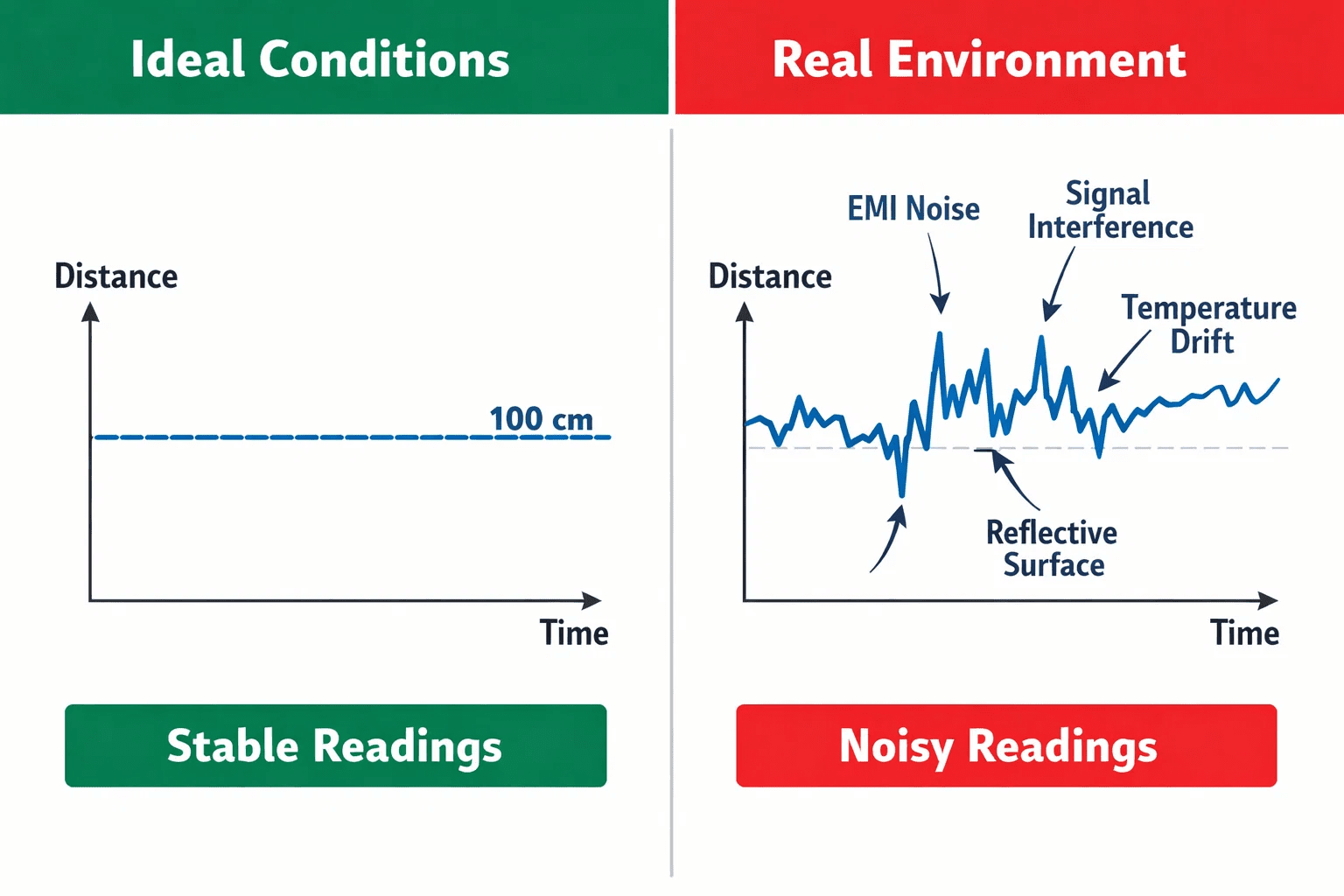
Health monitoring demands real accuracy. A 5mm error might be the difference between detecting normal movement and missing a critical health event. Traditional proximity sensors struggle with environmental interference from ambient light and electromagnetic noise, temperature drift affecting consistency across seasons, cross-talk between closely spaced sensors, and material reflectance variations causing inconsistent readings.
Real-time processing adds its own constraints: multiple sensors need synchronized calibration, behavioral algorithms need continuous data streams, safety systems demand sub-50ms response times, and power efficiency limits how much processing complexity you can afford.
Calibration: the foundation of accuracy
Effective ToF calibration addresses systematic errors through multiple calibration points. Offset calibration eliminates fixed distance errors by measuring a known target at a standard distance, typically 140mm, calculating the correction factor as offset_correction = measured_distance - actual_distance. Cross-talk calibration addresses internal reflections by measuring targets at extended distances (400mm-plus) and analyzing signal characteristics to identify and compensate for internal interference.
ToF sensors also drift meaningfully across temperature ranges, so calibration data gets stored with temperature coefficients:
typedef struct {
    int16_t offset;
    uint16_t xtalk;
    float calibTemperature;
    uint32_t calibrationDate;
} CalibrationData_t;
At runtime, the system applies temperature-compensated corrections: corrected_distance = raw_distance + offset_correction + (current_temp - calib_temp) * temp_coefficient.
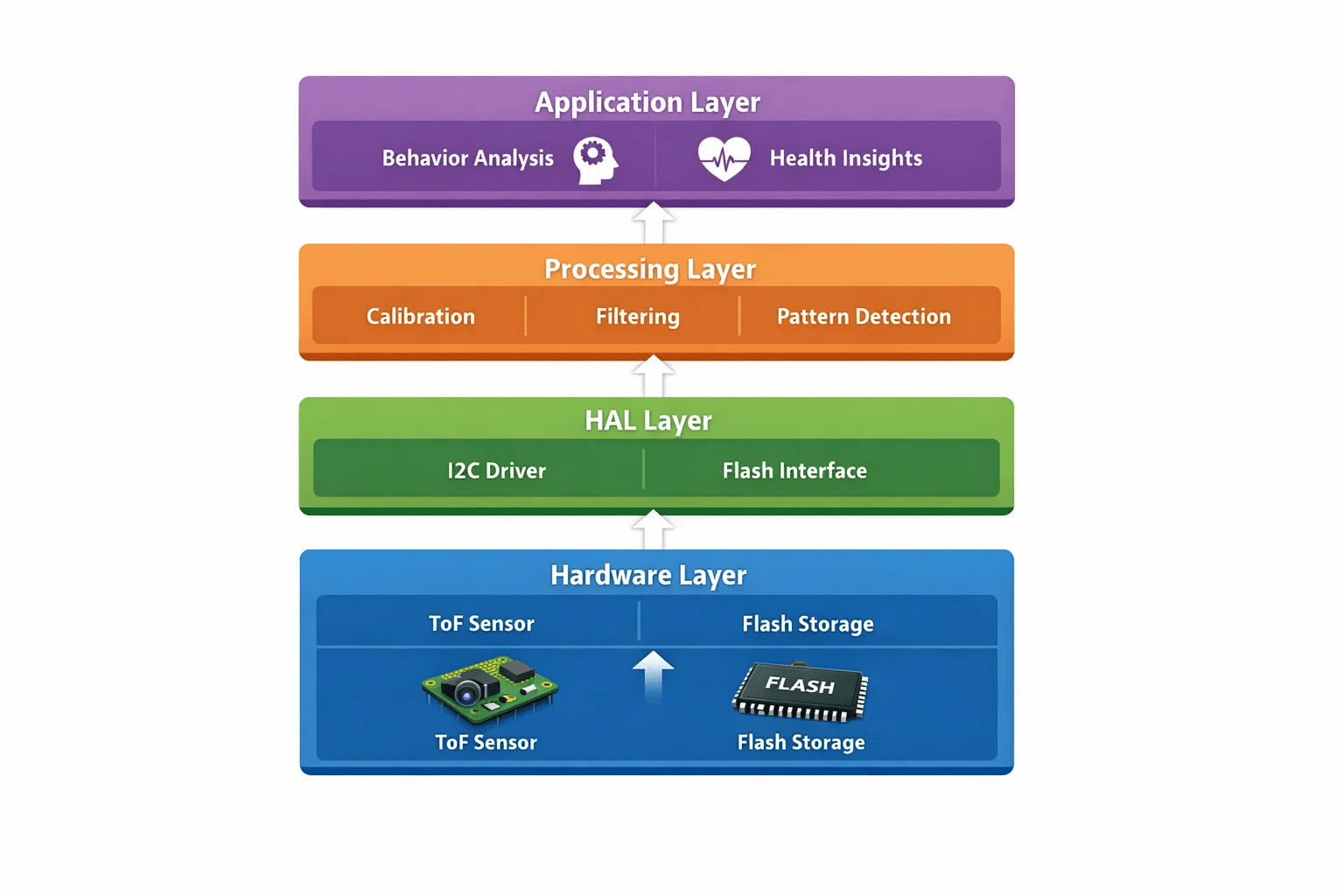
Calibration persistence uses redundant flash storage with integrity checks:
HAL_StatusTypeDef StoreCalibration(CalibrationData_t *calibData) {
    calibData->checksum = CalculateChecksum(calibData);
    WriteToFlash(PRIMARY_CALIB_ADDR, calibData);
    WriteToFlash(BACKUP_CALIB_ADDR, calibData);
    return ValidateStoredData();
}
This ensures calibration survives power failures, firmware updates, and flash degradation.
Advanced signal processing for behavioral analysis
Raw ToF measurements carry noise that can mask behavioral patterns, so a multi-stage filtering approach cleans the signal up. Stage one is outlier rejection, checking that status is valid and the distance falls within acceptable bounds. Stage two is temporal smoothing through a simple IIR filter: smoothed_distance = (previous_smooth * 7 + current_distance) / 8. Stage three is pattern recognition, analyzing distance patterns over time to identify behavioral events like entry and exit durations within a defined range.
Rather than simple threshold detection, behavioral analysis needs richer trigger logic that tracks entry and exit timing:
void ProcessProximityData(uint16_t distance) {
    static uint32_t entry_time = 0;
    static bool in_range = false;

    bool currently_in_range = (distance >= trigger.min_distance) &&
                             (distance <= trigger.max_distance);

    if (currently_in_range && !in_range) {
        entry_time = HAL_GetTick();
        in_range = true;
    } else if (!currently_in_range && in_range) {
        uint32_t duration = HAL_GetTick() - entry_time;
        AnalyzeBehavior(duration, distance);
        in_range = false;
    }
}
This captures both presence detection and behavioral timing, enabling analysis of movement patterns, feeding duration, and activity levels.
Memory-efficient data management
Continuous behavioral monitoring generates real data volume, so a circular buffer keeps recent history without exhausting memory, while long-term patterns get written to LittleFS on external flash as daily files for persistence beyond a single session.
Power optimization
Behavioral monitoring has to balance responsiveness against power draw. Adaptive measurement rates shift cadence by context, 10Hz for active monitoring, 1Hz for background tracking, and 0.1Hz in sleep mode. Motion-triggered wake configures an interrupt for distance changes above a threshold and drops into a low-power mode until motion is detected, minimizing power draw between events.
Integration with health monitoring at Hoomanely
Proximity sensing is a cornerstone of our pet health monitoring ecosystem. Precise distance measurements detect feeding approach patterns, duration, and frequency, subtle changes here often indicate health issues before obvious symptoms appear. Continuous proximity tracking reveals activity patterns correlating with age-related health changes, joint problems, or emerging conditions. Rapid pattern recognition helps identify unusual situations, from falls to seizures, enabling immediate caregiver alerts. And multi-zone proximity sensing maps social behaviors between pets and family members, giving insight into emotional wellbeing and stress levels. This proximity intelligence integrates with our thermal imaging, visual monitoring, and environmental sensing to build a more comprehensive picture of pet health.
Implementation challenges
Health monitoring often needs multiple proximity sensors for full coverage, which raises the challenge of cross-talk between closely spaced units. The fix is time-division multiplexing with synchronized measurement windows and a brief isolation period between activating and measuring each sensor. FreeRTOS task prioritization keeps critical measurements on their timing budget even under load.
Testing and validation
Production systems implement self-validation, testing against known target distances and flagging deviations beyond tolerance. Robust systems also go through extensive environmental testing: temperature cycling, humidity testing, vibration resistance, and EMI immunity across various interference sources.
Key takeaways
Rigorous multi-point calibration with temperature compensation is what gets you clinical-grade accuracy across environmental conditions. Intelligent processing, real-time filtering plus pattern recognition, is what turns raw distance data into meaningful behavioral insight. Robust architecture, FreeRTOS task management, persistent storage, and error handling, is what makes a production-ready embedded system. Performance optimization through memory-efficient algorithms and power management is what enables continuous monitoring without sacrificing responsiveness. And proximity sensing becomes genuinely valuable when it's integrated into a broader health monitoring ecosystem that correlates multiple data streams, not read in isolation.