LLM

Systems engineering for production LLMs: model routing by cost and capability, backpressure under load spikes, session continuity across a stateless backend, and validating structured output before it reaches a user.

Putting an LLM in a production path means treating it like any other unreliable, expensive, rate-limited dependency — not a magic black box. This hub covers the systems engineering around large language models: routing requests to the right model, handling load spikes without falling over, keeping conversations coherent across a stateless service, and validating that structured output is actually correct before it reaches a user.

We work on this because our AI health assistant has to stay useful and affordable at scale — a naive integration gets expensive and brittle fast, and a hallucinated structured response in a pet health context is a real trust problem, not a curiosity. So we treat reliability and cost control here with the same rigor we apply to firmware.

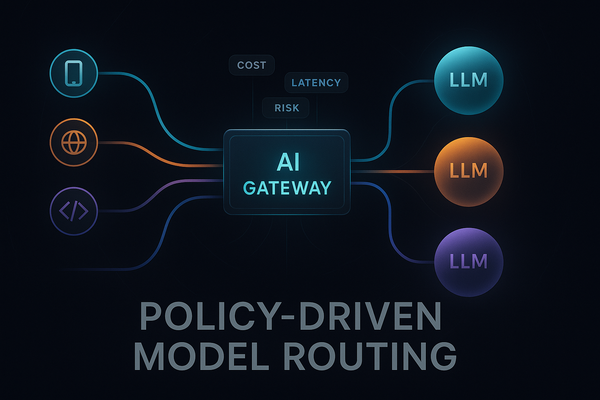
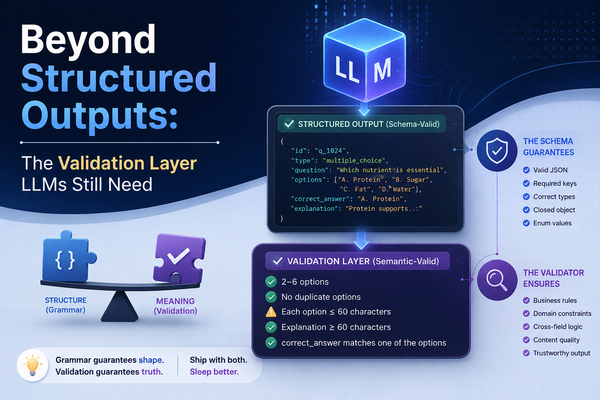
Policy-Driven Model Routing: Selecting the Right LLM Per Request covers how we pick a model per request based on cost and capability. Backpressure for LLMs: Managing Load Spikes and Token Floods in Real-Time AI Services is our mental model for handling traffic surges gracefully. Building Stateful Continuity in Stateless LLM Services: A Multi-Tier Session Architecture covers how conversations stay coherent across a stateless backend. Beyond Structured Outputs: The Validation Layer LLMs Still Need covers what has to happen after the JSON schema passes. Retrieval Cost Engineering for OpenSearch RAG and Bounded Intelligence: Operating AI Systems That Remain Stable, Predictable, and Trustworthy round out the cost and governance side of running LLMs in production.