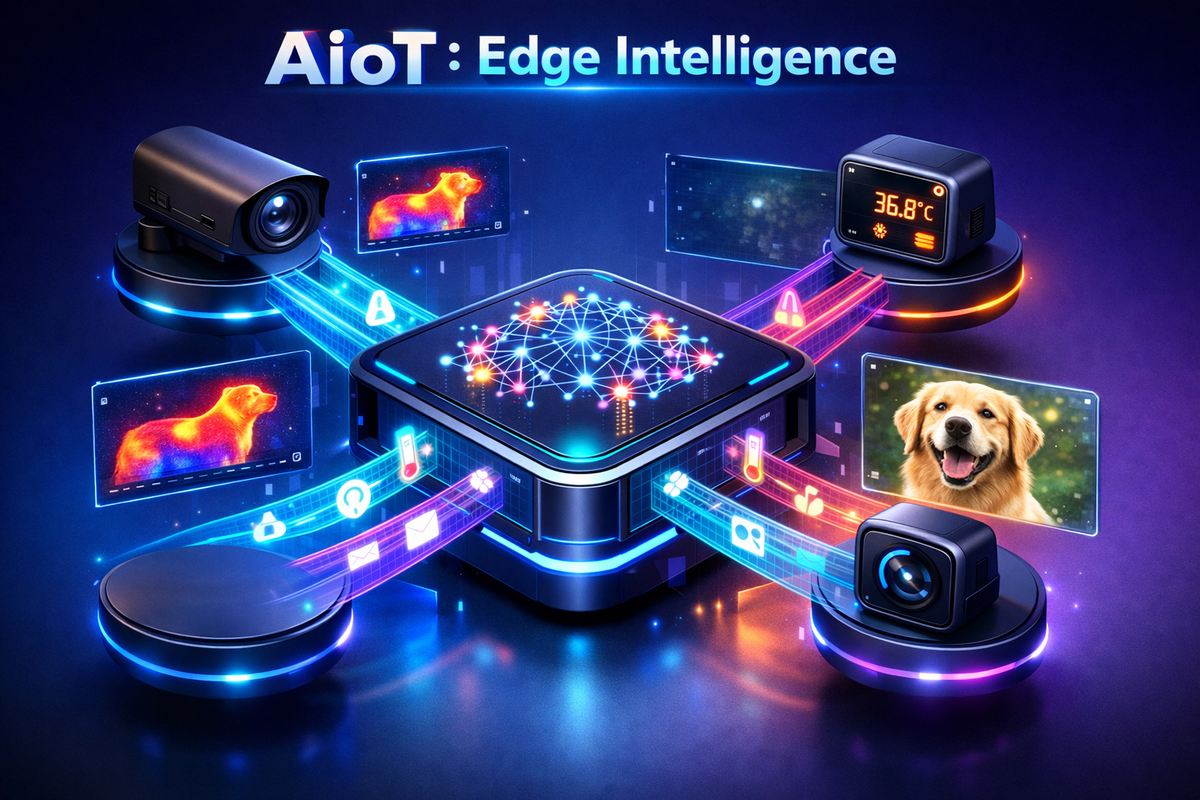
AIoT : How Edge Intelligence is Transforming Connected Devices
The convergence of Artificial Intelligence and the Internet of Things, AIoT, represents one of the more significant shifts happening in connected devices right now. Unlike traditional IoT systems that simply collect and transmit data, AIoT devices think, learn, and make decisions at the edge, turning raw sensor data into intelligent insight without depending on cloud connectivity.
This matters most in applications where real-time decisions, privacy, and reliability are the priority. From industrial maintenance to healthcare monitoring, AIoT enables a new generation of autonomous systems that understand context, predict outcomes, and adapt behavior in real time.
The edge intelligence shift
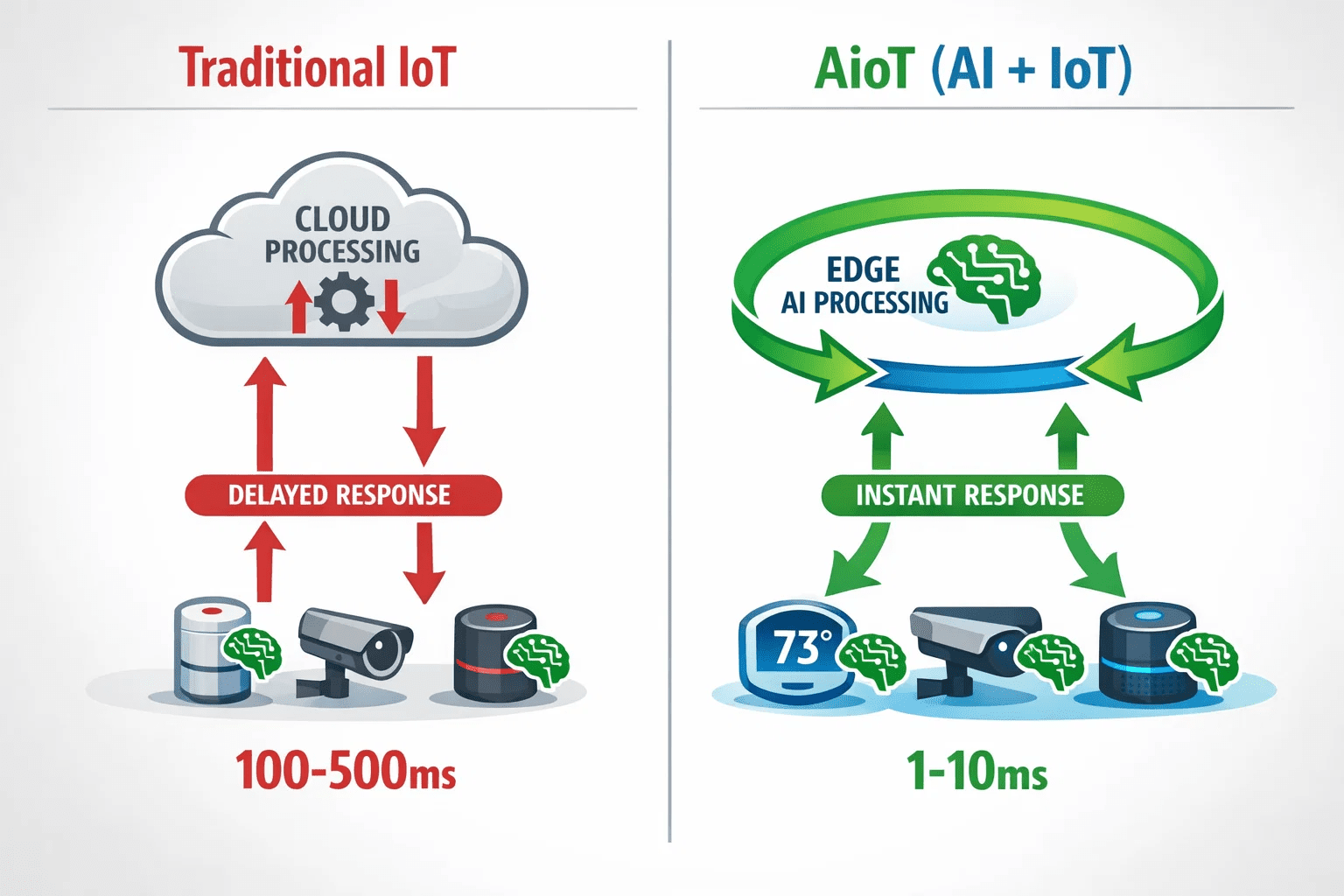
Traditional IoT architectures have real limitations: latency, bandwidth constraints, privacy concerns, and dependency on internet connectivity. Edge intelligence solves these by bringing AI processing directly to the device. The architectural shift is dramatic: legacy IoT runs sensor to cloud processing to decision to response, typically 100 to 500ms of latency, while AIoT runs sensor to local AI to immediate decision to action, typically 1 to 10ms. That gap enables applications that were previously impossible: real-time safety monitoring, instantaneous anomaly detection, and autonomous decision-making in offline environments.
Multi-sensor fusion as the intelligence foundation
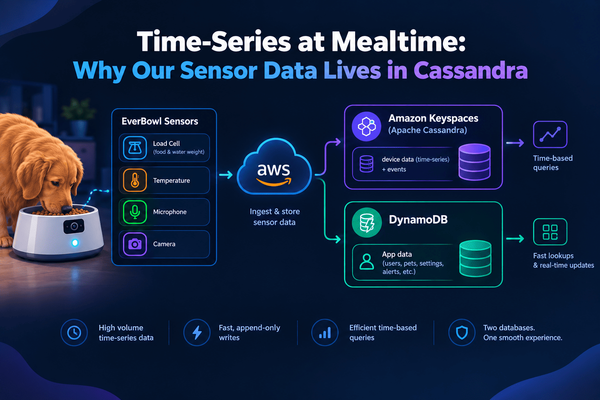
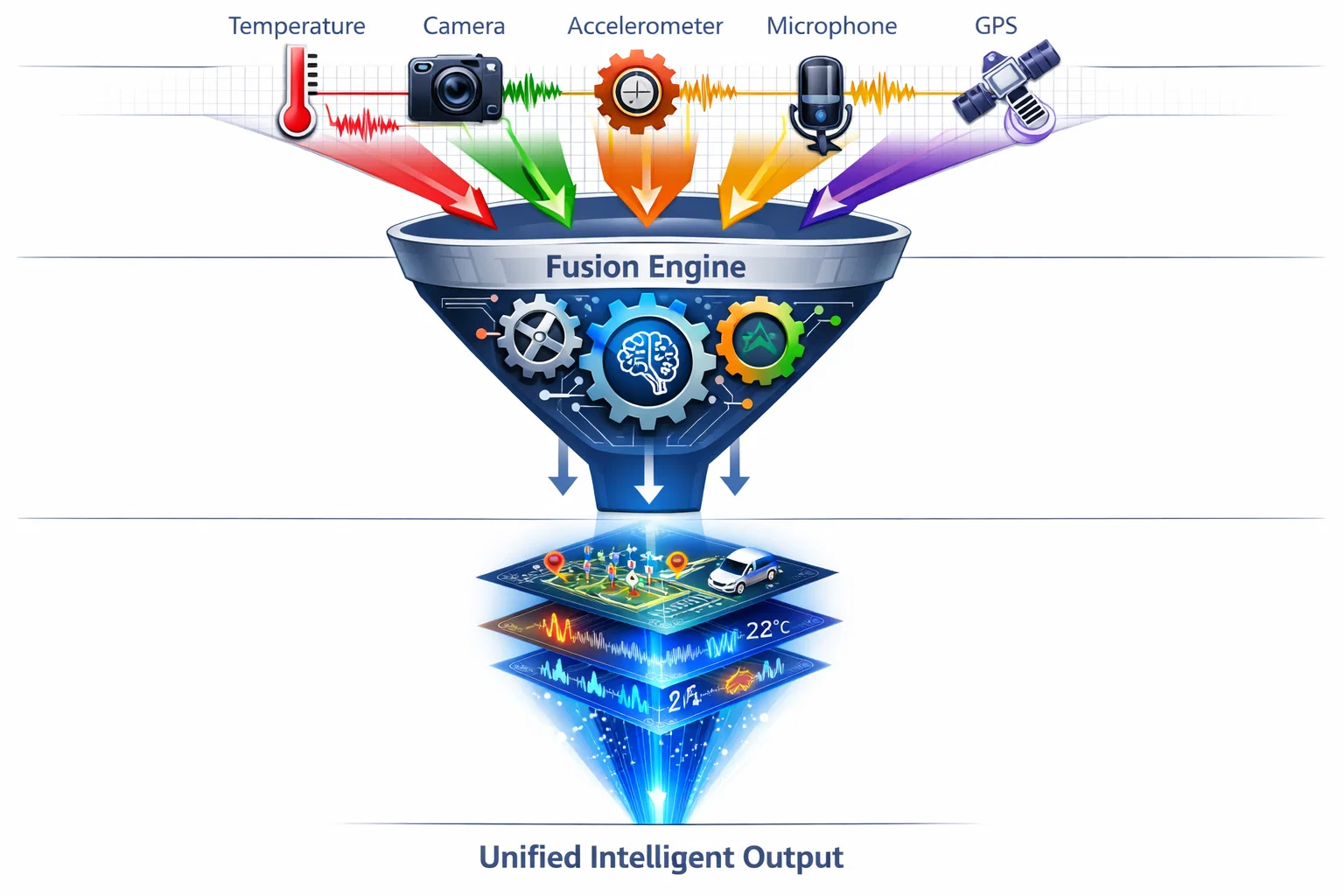
Modern AIoT devices don't just collect data from individual sensors, they perform intelligent fusion at the edge, combining multiple modalities into comprehensive environmental understanding: environmental sensors for temperature, humidity, air quality, and acoustic patterns; motion analytics through accelerometers and gyroscopes for behavioral analysis; and optical intelligence through computer vision for visual pattern recognition. The real value comes from real-time correlation analysis across these streams, identifying patterns invisible to any single sensor, exactly the approach we take at Hoomanely, where multi-modal sensor fusion enables pet health monitoring that goes well beyond simple activity tracking.
Hardware evolution: purpose-built for intelligence
The AIoT shift is powered by new categories of microcontrollers and edge processors specifically designed for machine learning workloads: mixed-signal integration combining analog sensor interfaces with digital AI processing, ultra-low-power AI enabling months of battery operation, and secure enclaves providing hardware-based security for AI model protection. These advances let complex ML models run efficiently on devices with strict power and size constraints, bringing intelligence to sensors and actuators that used to be simply "dumb."
Healthcare and continuous monitoring
Wearables and ambient sensors now perform continuous health monitoring with AI-driven analysis that can detect early signs of medical conditions, track recovery progress, and provide personalized wellness recommendations. The trend toward preventive care and healthcare AIoT extends naturally to pet healthcare too.
The pet care technology shift
Pet care is one of the more interesting AIoT applications, where advanced sensors, edge AI, and behavioral analysis are changing how we monitor and care for companion animals. Modern devices implement multi-parameter monitoring providing clinical-grade insight: physiological monitoring of heart rate, respiratory rate, and body temperature; activity analysis of movement patterns, sleep cycles, and exercise intensity; behavioral recognition through AI-powered analysis of eating habits, stress indicators, and social patterns; and environmental correlation connecting health metrics with weather, noise, and air quality.
At Hoomanely, our platform uses on-device processing to analyze complex behavioral and physiological patterns locally, giving immediate insight with no cloud dependency. Predictive health modeling establishes a personalized baseline for each animal and flags subtle deviations that may indicate developing issues, often before symptoms are visible. Stress and anxiety detection analyzes physiological and behavioral indicators in real time to catch emotional distress owners might miss, particularly valuable for pets with separation anxiety or recovering from trauma. Activity optimization gives exercise recommendations tailored to breed, age, and individual health status.
Proactive wellness through continuous monitoring
Moving from reactive to proactive pet care is a fundamental shift AIoT enables. Rather than waiting for visible symptoms, these systems continuously monitor subtle changes: vital sign trending through long-term heart rate variability and respiratory pattern analysis, digestive health tracking through eating pattern and digestion cycle monitoring, pain detection through behavioral analysis of subtle movement changes, and medication compliance monitoring for treatment effectiveness. Catching health issues before they become serious doesn't just improve pet wellbeing, it also reduces veterinary costs and helps extend healthy lifespans.
Technical architecture: making it work
Secure edge intelligence. AIoT devices handle sensitive data and make autonomous decisions, which demands robust security: hardware security modules for cryptographic operations, secure boot processes verifying only authorized code executes, encrypted model storage protecting against reverse engineering, and federated learning approaches that train models without exposing raw data. We take pet health data security seriously, our edge processing approach keeps sensitive health information on-device, with only anonymized insights shared when owners choose to collaborate with veterinarians or participate in research.
Power management. AIoT devices need to balance processing capability against battery life: activity-based processing scales computation to detected activity levels, sleep mode coordination synchronizes sensor and processor cycles for efficiency, and predictive power management allocates power based on usage patterns.
Scalability and maintenance. Managing large deployments needs over-the-air updates for remote software and model updates, fleet management for centralized monitoring across device populations, automated diagnostics for self-monitoring and health reporting, and modular architecture for upgradeable components over the long term. For pet care specifically, we're seeing exciting developments in biosensor technology, advanced behavioral analysis, and integration with veterinary telemedicine platforms.
Key takeaways
AIoT is a paradigm shift, transforming connected devices from passive data collectors into intelligent, autonomous systems that understand, learn, and act at the point of need. Advances in edge AI processing, sensor fusion, and power management make sophisticated intelligence practical for battery-powered devices. Industries from manufacturing to healthcare, and especially pet care, are seeing real improvements through AIoT deployment. Edge processing inherently improves privacy while specialized security architecture ensures robust threat protection. And the technology keeps advancing, with new sensor types, AI architectures, and ecosystem integrations continually expanding what's possible.