Beyond the Datasheet: Achieving LoRa Max Performance Through Proactive RF System Integration
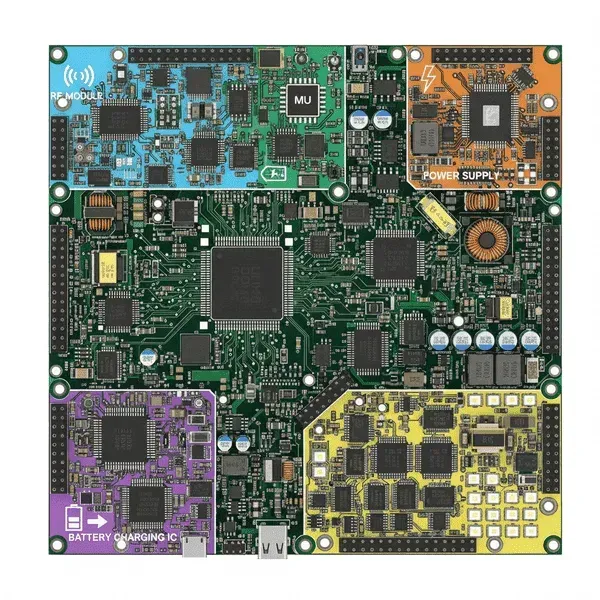
At Hoomanely, we move beyond theoretical limits to ensure our connected products deliver predictable, robust performance in the field. Our goal for the IoT sensor network was to maximize the potential range of LoRa. By establishing and rigorously enforcing three core RF design principles from the initial PCB layout, we consistently achieved reliable, line-of-sight range between 0.5 and 1 kilometer in demanding suburban environments.
This success is rooted in treating the LoRa radio as part of a finely tuned electromagnetic system, actively mitigating noise and optimizing antenna mechanics during the PCB design phase.
What makes LoRa special, and tricky
Think about how you communicate in a noisy room. The WiFi and Bluetooth approach is to shout really loud, but only people nearby hear clearly. LoRa's approach is to whisper very slowly and carefully, so even someone across the building can understand every word. LoRa trades speed for distance, sending data slowly using clever tricks to make weak signals readable even after traveling kilometers. This is why a sensor in a remote field can talk to a gateway on a city rooftop without any cellular network or WiFi infrastructure. The catch is that it's incredibly sensitive to interference, and your LoRa radio is never alone on the circuit board.
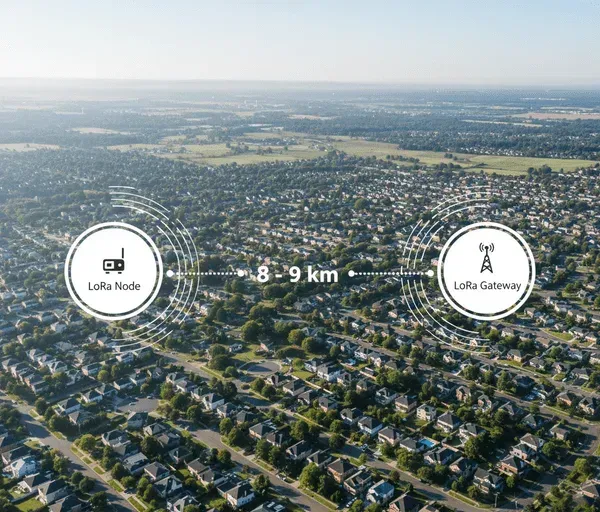
A real IoT device isn't just a radio module, it's a LoRa radio needing absolute silence, a microcontroller running at 48MHz, sensors collecting data, a switching power supply creating electrical noise, LEDs blinking, maybe GPS or Bluetooth, and battery charging circuits, all packed onto one small PCB with every circuit fighting for space. It's like trying to record a podcast in a construction zone, every component is a potential source of interference.
Rule 1: the non-negotiable antenna keep-out zone
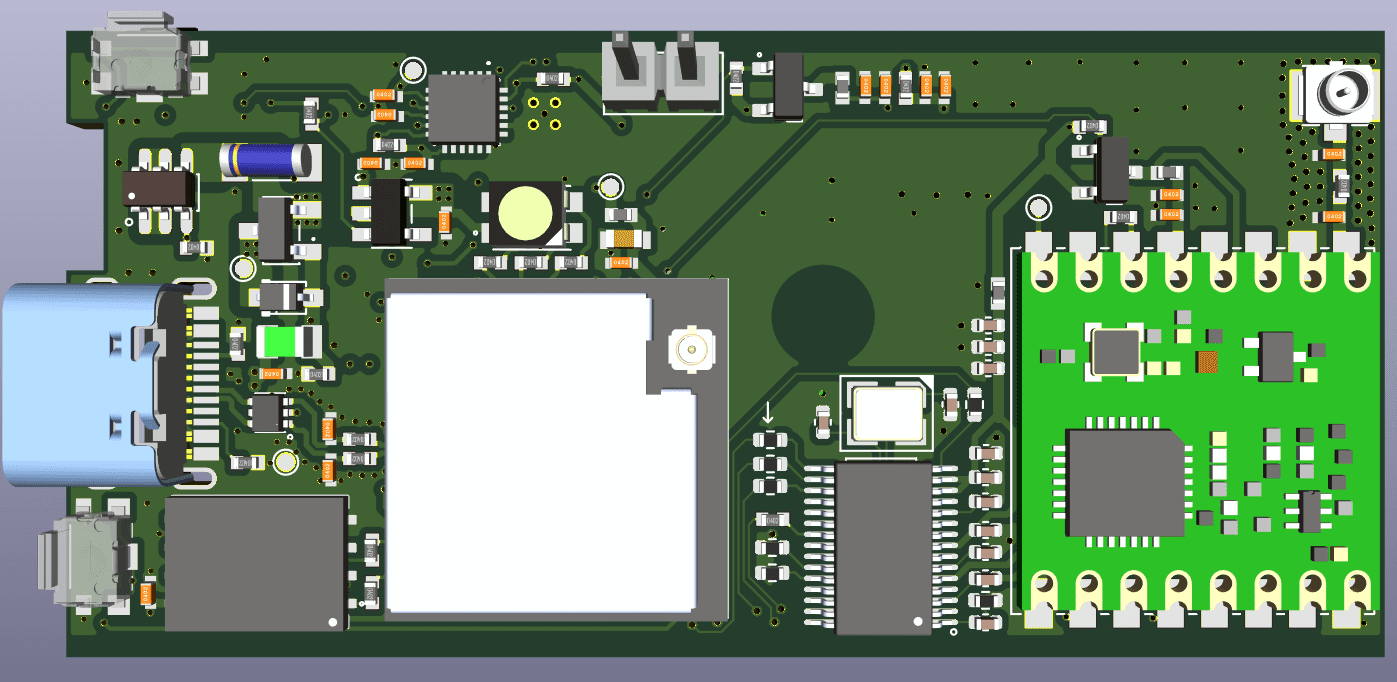
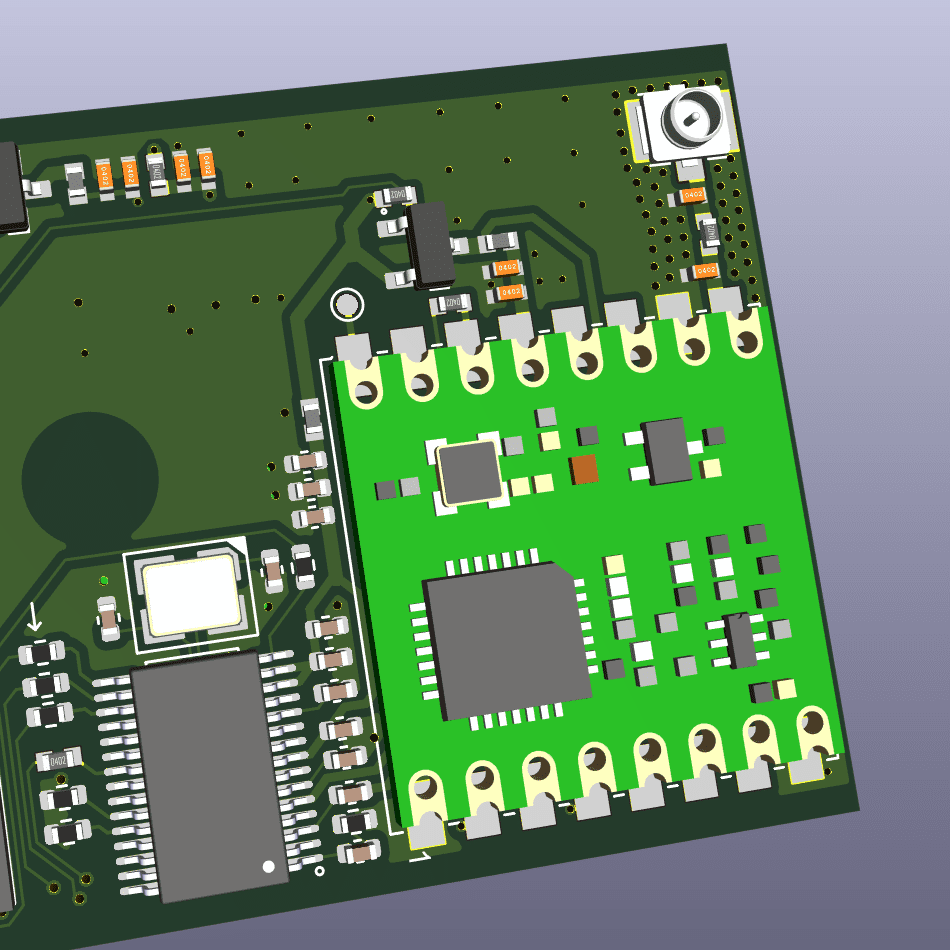
Antenna efficiency is the primary factor driving LoRa range. Relying on minimum datasheet recommendations is a risk to production reliability, so we established a stricter internal protocol. We mandate a minimum 10-millimeter, component and trace-free keep-out zone around the antenna's feed and radiating element, minimizing electromagnetic coupling and ensuring stable signal integrity across production batches. A continuous copper ground plane is intentionally removed from the critical area, typically 6-8mm of clearance, immediately beneath the antenna, preventing the ground plane from acting as a reflector that would detune the antenna and preserve the intended radiation pattern. No circuit element, not even minor decoupling capacitors or test points, is permitted within the critical 10mm radius, essential for maintaining the antenna's intended impedance match and maximizing radiating efficiency.
Rule 2: dedicated, low-noise power delivery architecture
LoRa modules require extreme electrical silence to detect signals measured in femtowatts, less than 10 to the minus 14 watts. Our approach treats electrical noise as a resource to be managed, allocating only the cleanest power to the radio subsystem. We employ a strategic two-tier power architecture, the main high-efficiency switching regulator powers noise-tolerant digital circuits and peripherals, while a separate linear regulator or a heavy LC filtering stage exclusively supplies ultra-clean DC power to the LoRa module. While this is a planned trade-off on overall efficiency, the resulting range improvement of 3-4x, validated by up to 14dB better receiver sensitivity, is a critical performance imperative.
High-speed digital circuits and noise generators, particularly switching power supplies, are placed a minimum of 20mm away from the RF section to prevent near-field electromagnetic interference. Ferrite beads are standard on all power lines feeding RF circuitry, acting as passive high-frequency chokes blocking noise before it can modulate sensitive radio circuits. We also perform spectral analysis on our chosen microcontroller clock frequencies to ensure system clock harmonics don't align with the target LoRa operating band, like 915MHz.
Rule 3: maintaining ground plane integrity in the RF section
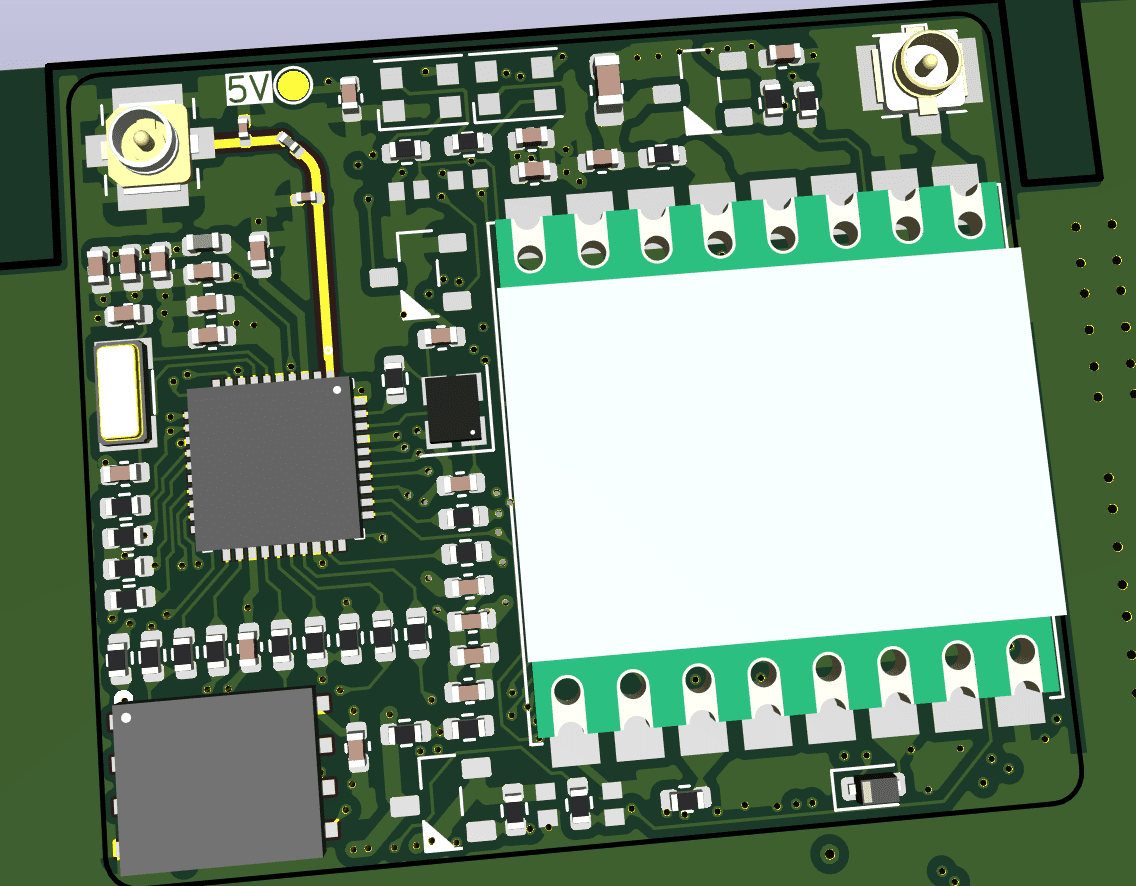
At RF frequencies, the ground plane is the critical return path, and any break creates a path discontinuity resulting in unpredictable signal reflection and unintended radiation. The RF section must sit over a continuous, uninterrupted ground plane, establishing a stable reference and minimizing return current loop inductance. The antenna feed line is precisely designed to a 50-ohm characteristic impedance, calculated based on the PCB stack-up and trace width, ensuring maximum power transfer to the antenna and minimizing harmful signal reflection. RF traces are kept as short as feasible, use smooth curves instead of sharp 90-degree turns, and maintain a solid ground reference directly underneath across their entire length. High-density ground stitching vias placed every 5mm around the perimeter of the RF section create a low-impedance barrier, effectively isolating the RF domain and improving EMI containment.
Conclusion: integrated design blueprint and performance consistency
Following these layout standards ensures a reliable system blueprint:
- The LoRa module and antenna positioned in one corner
- Noise sources at the opposite end
- The entire RF area isolated by a solid
- Continuous ground plane and shielded with perimeter ground stitching vias
- The antenna feed trace kept short
- 50-ohm matched
- With ground integrity maintained underneath
The result of this disciplined approach is consistent, predictable range performance near the theoretical maximum. By respecting the invisible rules of the electromagnetic field, we eliminate mysterious range problems and minimize costly design re-spins, ensuring our products deliver on LoRa's promise reliably in the field.