Clock Tree Jitter & High-Speed I/O: How Internal Clock Jitter Impacts DCMI Capture Reliability at the Physical Limit
In the world of embedded vision systems, every nanosecond matters. When pushing the boundaries of high-speed camera interfaces, one often-overlooked factor can make the difference between crystal-clear captures and corrupted frames: internal clock jitter. This isn't just theoretical noise, it's a real-world challenge that directly impacts the reliability of DCMI (Digital Camera Interface) systems operating at their physical limits.
Understanding clock jitter in real systems
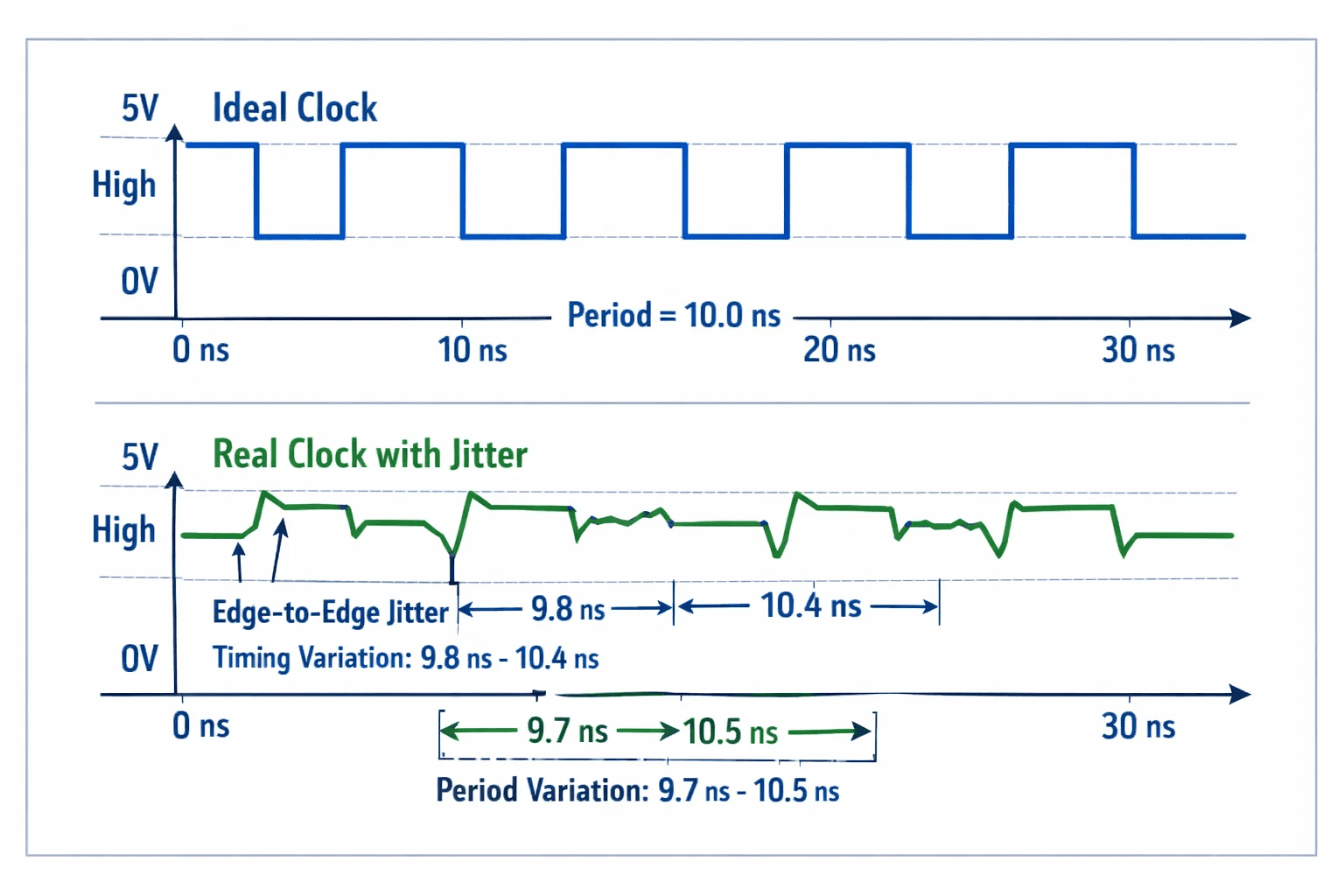
Clock jitter is the deviation of timing events from their ideal positions. In a perfect world, every clock edge would arrive precisely when expected. Reality is messier: modern microcontrollers, despite their sophistication, introduce measurable timing variations that cascade through the entire system. Jitter isn't a fixed specification number, it's a dynamic phenomenon that varies with temperature, supply voltage, electromagnetic interference, and system load.
Why DCMI systems are particularly vulnerable
Digital camera interfaces operate under extremely tight timing constraints. A typical high-resolution camera sensor outputs pixel data at rates exceeding 100 MHz, and at these frequencies, even picosecond-level timing variations can accumulate into significant errors.
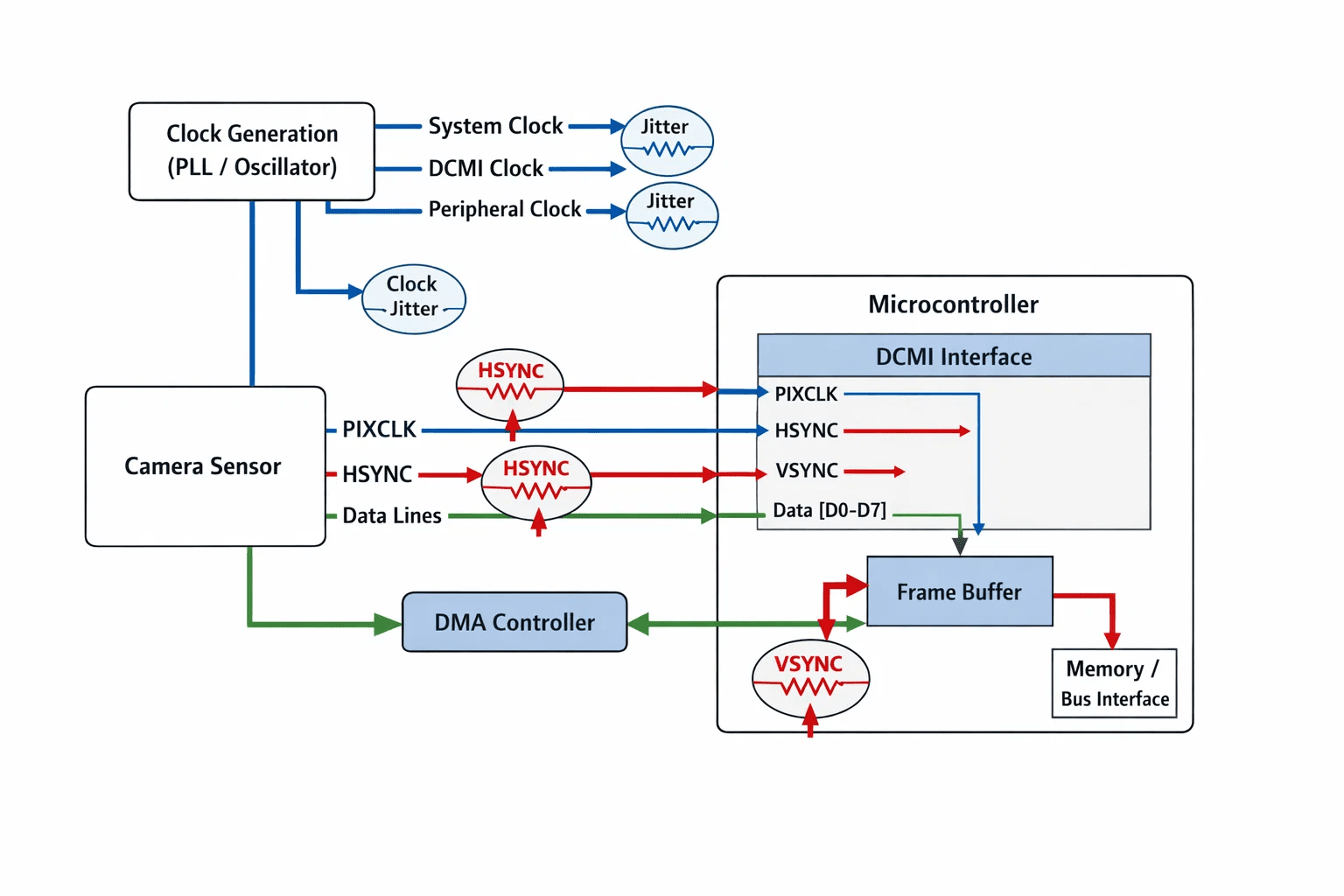
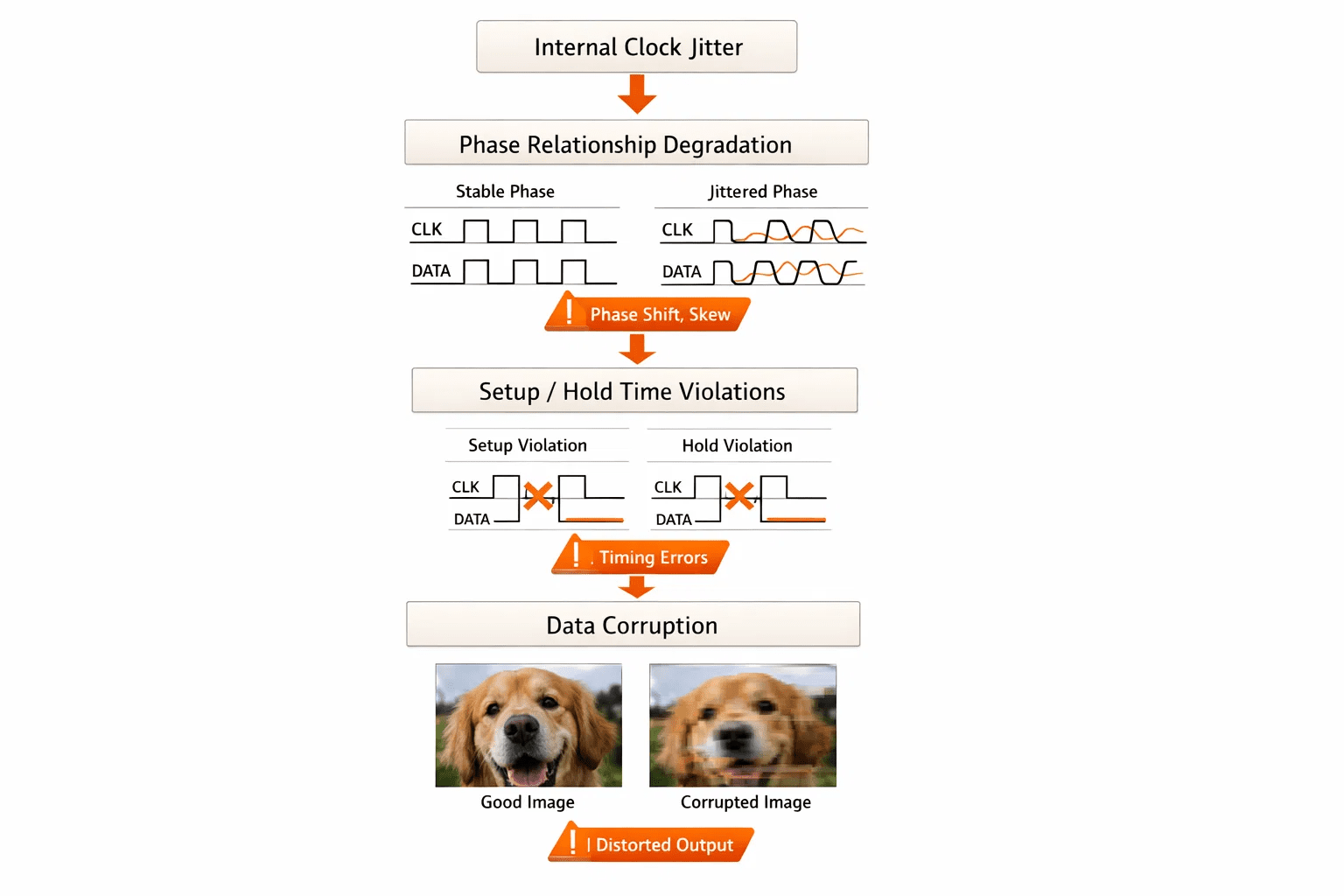
When internal clock jitter affects pixel clock (PIXCLK) generation, it creates a cascade: the delicate phase relationship between PIXCLK, HSYNC, and VSYNC becomes unstable, setup and hold time windows for data sampling shrink unpredictably, and pixels arrive at unexpected moments, leading to misaligned or lost data.
Real-world impact
In high-performance embedded vision applications, jitter symptoms show up as intermittent frame corruption (random horizontal lines or color artifacts appearing sporadically), synchronization loss (the camera interface occasionally losing sync and requiring a reset), reduced maximum frame rates (systems that should theoretically support higher speeds failing in practice), and environmental sensitivity (performance degrading under specific temperature or EMI conditions).
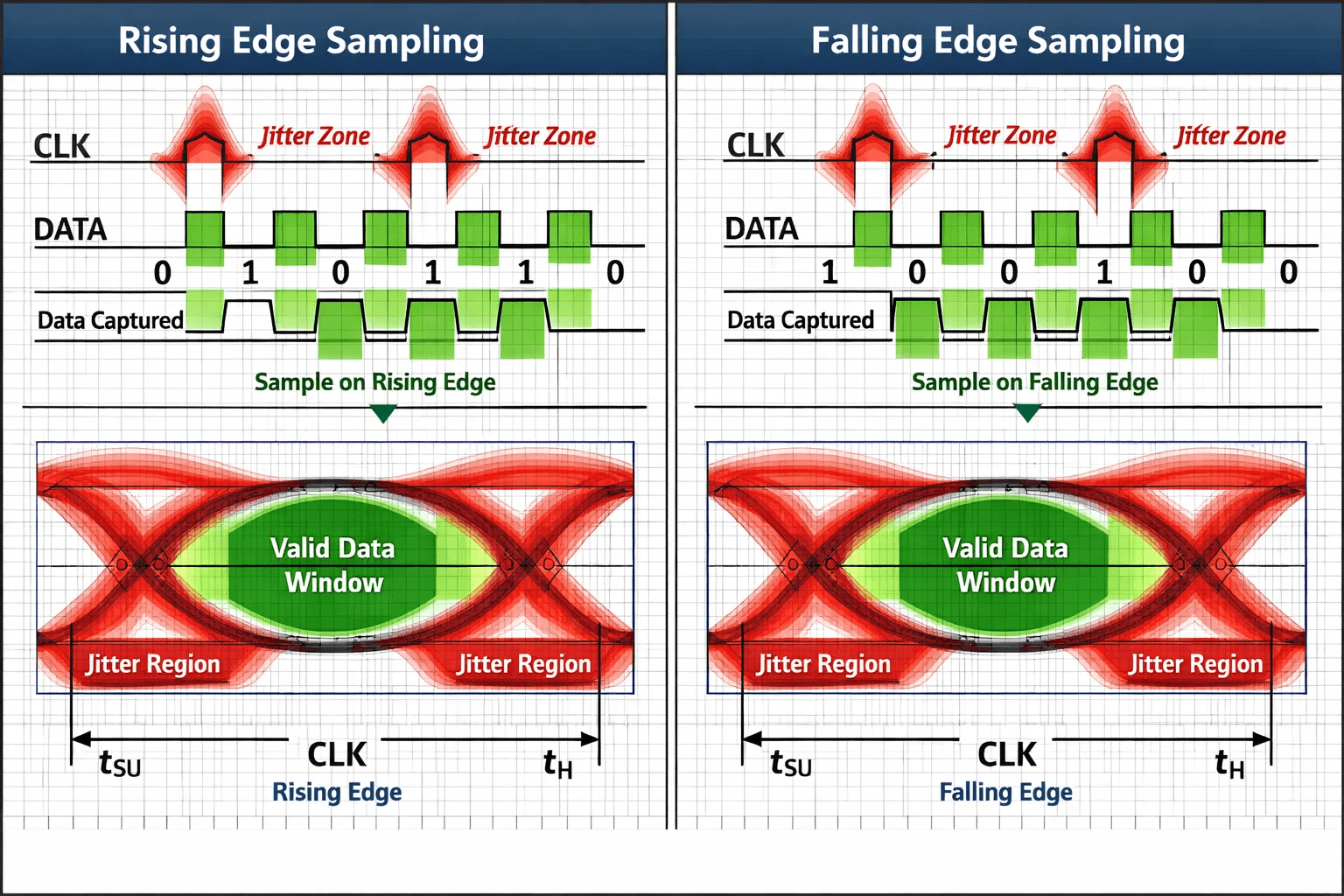
The choice between DCMI_PCKPOLARITY_FALLING and DCMI_PCKPOLARITY_RISING isn't arbitrary, it determines which phase of the pixel clock captures incoming data. When internal jitter shifts the effective sampling point, one polarity might provide better noise margins than the other, which explains why switching clock polarities sometimes "magically" fixes intermittent capture issues.
The clock tree architecture challenge
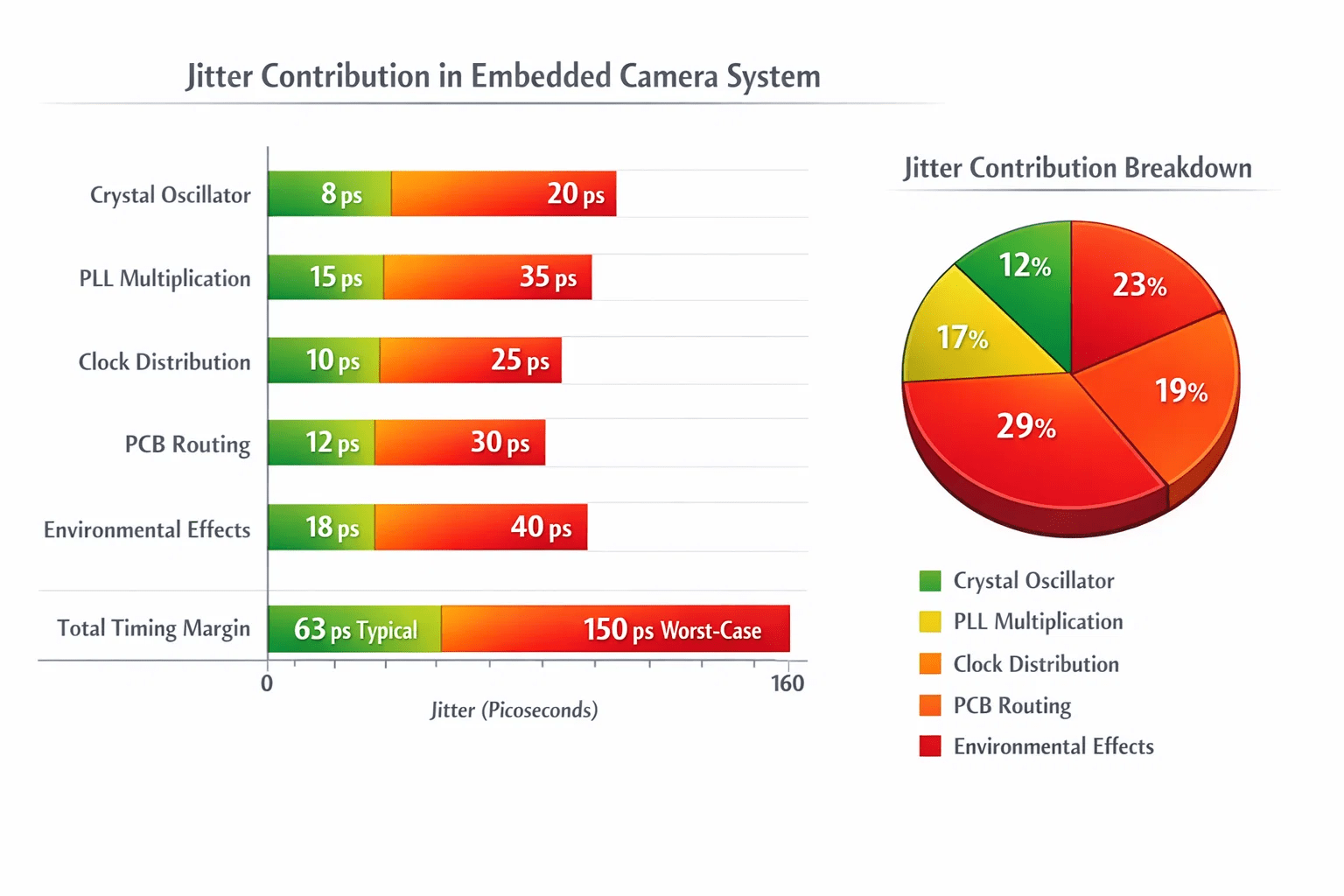
Tracing the path from crystal oscillator to pixel clock reveals multiple points where jitter can creep in. PLL multiplication chains each add their own jitter contribution, and high multiplication ratios, while reaching desired frequencies, also amplify existing noise. Clock distribution networks introduce skew and jitter through on-chip RC delays and crosstalk, and high-frequency signals are particularly susceptible to supply noise coupling. Dynamic loading effects show up as peripheral activity changes the effective capacitive load on clock networks, introducing timing variations.
Mitigation strategies
Hardware-level approaches. Dedicated clock domains isolate timing-critical interfaces on separate clock trees, reducing cross-coupling, particularly effective for camera interfaces sharing die space with high-activity peripherals. Supply filtering, clean power delivery to clock generation circuits, significantly reduces jitter, and dedicated LDO regulators for PLL supplies often justify their cost through improved timing stability. Careful PCB layout, proper ground planes, and strategic component placement minimize external jitter sources.
Firmware techniques. Adaptive polarity selection, runtime detection of the optimal clock polarity based on capture quality metrics, provides robustness across manufacturing variations. Continuous monitoring of HSYNC/VSYNC timing relationships enables early detection of jitter-induced problems. Strategic frame buffer allocation and DMA configuration can provide additional tolerance for timing variations.
The measurement challenge
Quantifying clock jitter requires real technique. Time interval analysis with high-resolution oscilloscopes measures period-to-period jitter for short-term variations. Eye diagram analysis, overlaying many clock cycles, reveals the timing uncertainty envelope affecting data capture windows. Long-term statistical characterization helps predict reliability under various operating conditions.
Beyond the specifications
The true measure of timing robustness isn't found in datasheet specifications, it emerges from understanding how all system elements interact. Temperature cycling, supply variations, electromagnetic environments, and manufacturing tolerances all shape real-world jitter performance in ways pure simulation can't predict. Systems operating at their timing limits need design margins that account for worst-case jitter accumulation, not just typical values.
Why it matters at Hoomanely
Our approach combines edge AI with multi-sensor fusion to generate clinical-grade intelligence at home, which benefits directly from understanding timing-critical system design. When developing wearable devices that continuously monitor pet health metrics, every sensor interface has to operate reliably under diverse conditions, camera systems capturing behavioral patterns, biosensors monitoring vital signs, and wireless communications maintaining connectivity all depend on robust timing design that accounts for real-world clock jitter effects.
Key takeaways
Clock jitter is cumulative, multiple sources throughout the clock generation and distribution chain add up to create system-level timing uncertainty. Environmental sensitivity matters, temperature, supply voltage, and EMI all shape jitter characteristics in ways pure simulation can't predict. Interface timing is system timing, DCMI reliability depends on the entire clock tree architecture, not just the immediate pixel clock generation. Measurement enables optimization, comprehensive jitter characterization reveals the specific mechanisms limiting performance. And design for resilience, robust timing design incorporates adaptive strategies and monitoring to maintain performance across operating conditions.