Connecting a Website’s Social Presence Across Its Digital Platforms
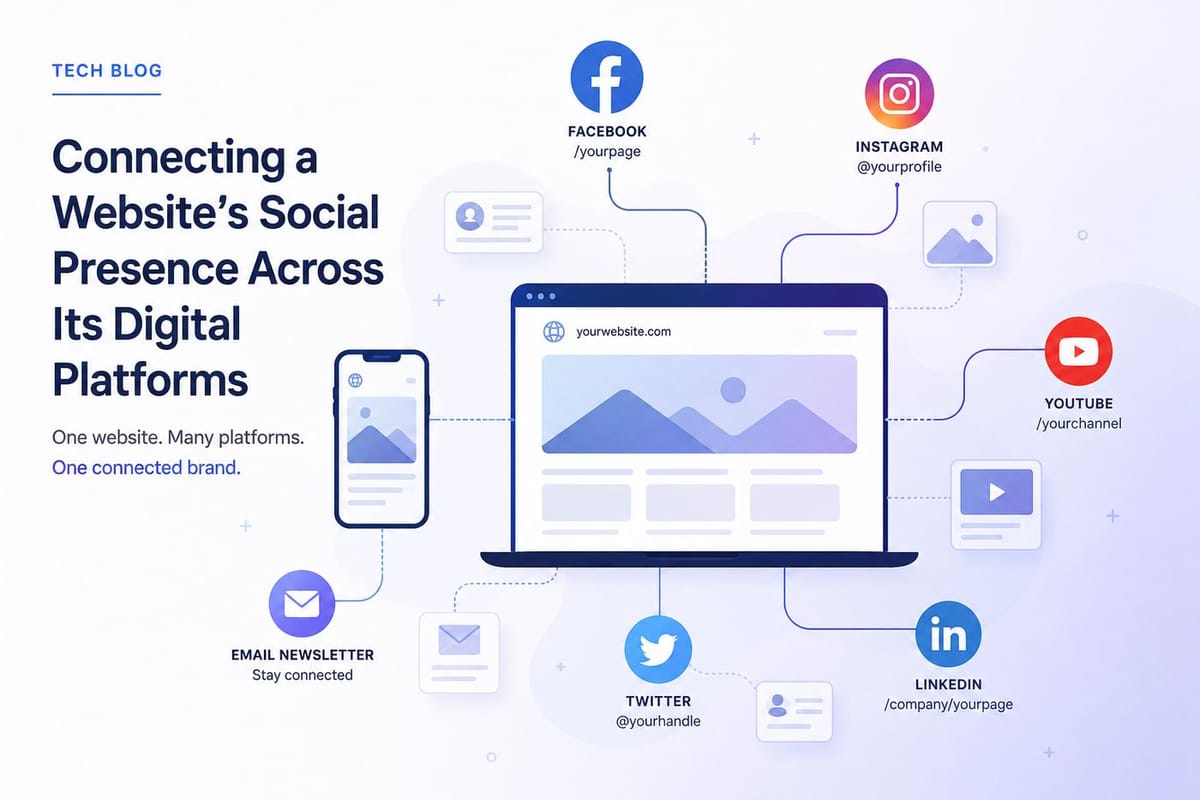
While working on the SEO setup of a website, I came across a small task related to connecting the website with its social media presence. The website already had social media profiles, but I needed to make sure that the relevant profiles were properly connected as part of the website's overall digital presence.
At first, this looked like a very simple configuration task. However, while working on it, I realized that even small SEO-related changes need to be checked carefully. A website is not limited to the pages that users see directly. It can also have different profiles, platforms, and digital properties associated with it.
Checking the Existing Setup
Before making any changes, I first checked the existing website setup. I wanted to understand what was already configured instead of directly adding new information.
I looked at the social profiles that were being used by the website and checked whether the information was correct and consistent. This was important because using an incorrect profile or adding incomplete information could make the setup less useful.
I also checked whether the website's existing SEO configuration had any related information already available. This helped me understand what needed to be added and what did not need to be changed. This was a good reminder for me that even a small technical task should start with understanding the current setup.
Connecting the Social Profiles
After checking the existing information, I added the relevant social profiles to the required configuration. The main goal was to create a clearer connection between the website and the social profiles that represent the same online presence.
For example, a company can have its main website along with profiles on different social platforms. Although these platforms are separate, they all represent the same organization or brand online. By providing the correct profile information, the website can give search engines additional context about those associated profiles.
The important part for me was making sure that I used the correct profiles and entered the information properly. I didn't want to simply add links and consider the task completed.
What Happens After Adding the Profiles?
One thing I wanted to understand while doing this task was what actually happens after the social profiles are connected.
The purpose isn't to expect an immediate increase in rankings or traffic. Instead, the information provides additional context about the website's online identity and the social profiles associated with it.
Search engines collect information from different parts of the web to understand websites, organizations, and their online presence. Providing consistent information can make that relationship clearer.
For me, understanding this difference was important. Before working on SEO tasks, it was easy to think that every SEO change should immediately result in higher rankings. Working on real websites showed me that many technical SEO improvements are about making the website clearer, more accessible, and better structured.
Verifying the Change
After adding the profiles, I didn't stop at making the configuration change. I went back and checked the information again to make sure everything was correct.
I verified the profile details and made sure there were no typing mistakes, incorrect links, or missing information. I also checked the website's existing SEO setup to make sure the change was consistent with the rest of the configuration.
This verification step became an important part of my workflow. Even when a task is small, checking the result gives more confidence that the change was actually completed correctly.
What Could Happen If the Information Is Incorrect?
While working on this, I also understood why accuracy matters. If an incorrect social profile is added, the connection may point to the wrong online property. Similarly, if an old or inactive profile is used, it may not accurately represent the current website's online presence.
That's why I treated the task as a verification exercise rather than simply adding a few profile links. The information should represent the actual social profiles associated with the website. Keeping these details consistent also makes it easier to maintain the website's digital presence over time.
What This Taught Me About SEO
This small task changed the way I think about technical SEO. Earlier, when I thought about SEO, I mostly associated it with things like keywords, meta titles, descriptions, indexing, and content. After working on different website tasks, I started realizing that SEO also involves many smaller technical details.
Some changes may not produce an obvious visual difference on the website. A visitor might open the website and not notice that anything has changed.
However, these behind-the-scenes configurations can still be part of maintaining a technically organized website. I also learned that SEO work requires a habit of checking, changing, and verifying. It is not always about making a large change and immediately expecting a visible result.
My Takeaway
Connecting the website's social presence was a relatively small task, but it gave me another practical understanding of how different parts of a website's online identity can be connected. The biggest thing I took away was that small technical SEO tasks should not be ignored just because they don't directly change the appearance of a webpage.
I also learned to look at a website as a complete digital presence rather than only as a collection of webpages. The website, search presence, social profiles, and other digital platforms can all be connected in different ways. Working on these smaller tasks has gradually helped me understand SEO from a practical perspective. Instead of only learning SEO concepts theoretically, I am getting to see how these concepts are actually applied while working on a real website.
For me, that has been one of the most useful parts of working in SEO and web development: sometimes a small configuration change can teach you something much bigger about how a website is represented across the web.