Embedded Linux Threading Strategies for Real-Time Data Processing
In modern embedded systems, whether high-speed vision sensors, multi-channel audio acquisition, or edge ML inferencing, throughput and latency matter. When you run a full embedded Linux platform but also need real-time data processing, simple threading isn't enough. You have to structure threads, pick the right scheduling policies, bind threads to cores, and tune producer-to-consumer communication patterns for deterministic behavior.
The problem
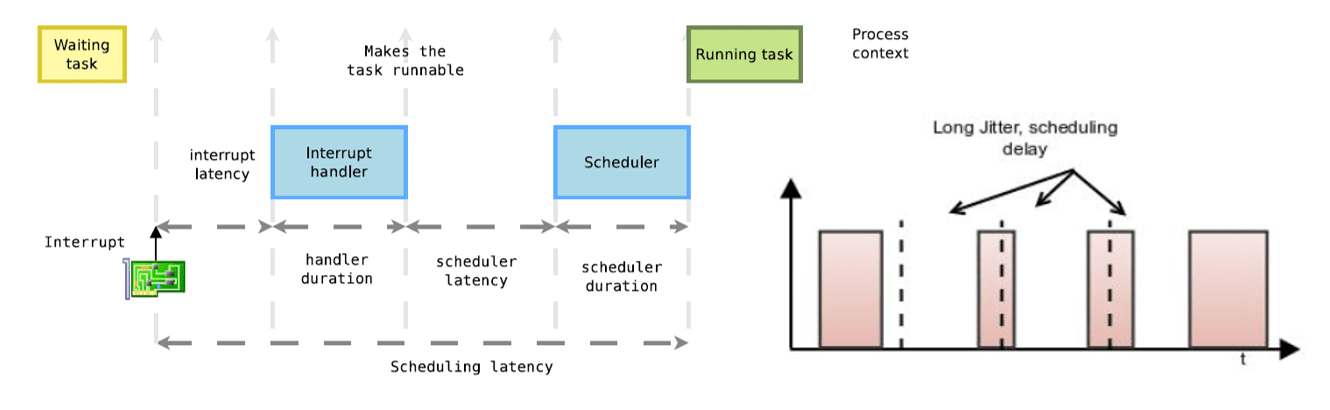
We built a multi-sensor data hub at Hoomanely that ingests video, IMU, and CAN-bus data concurrently, processes streams (FFT, event detection), and logs results while meeting latency and throughput budgets. The challenge: threads run side by side, some real-time (data capture, processing), some not (logging, UI); the Linux scheduler by default may migrate threads between cores and mix RT and non-RT jobs, causing jitter and cache thrashing; data passes from producer threads (capture) to consumer threads (processing), creating contention and buffer overrun risk; and the system needs to meet deadlines, like processing 4 kHz IMU data alongside 1080p@60 video, without dedicating an entire RTOS to the job.
Left untuned, you'll see latency spikes, dropped frames, and unpredictable behavior. The root causes are almost always incorrect priority, the wrong scheduling class, threads floating between cores, or a sub-optimal producer-consumer design.
The approach
We adopted three key strategies. The producer-consumer pattern isolates capture threads (producers) that push data into lock-free or low-latency queues, with consumer threads pulling and processing, decoupling acquisition from processing and allowing buffering of bursts. CPU affinity and core isolation pin critical threads to specific cores using sched_setaffinity() or pthread_setaffinity_np(), and we configure Linux to isolate cores (isolcpus, cgroup cpuset) for real-time threads specifically. Priority scheduling assigns threads real-time classes like SCHED_FIFO, or newer policies like SCHED_DEADLINE when appropriate, ensuring real-time threads preempt best-effort threads and meet latency budgets.
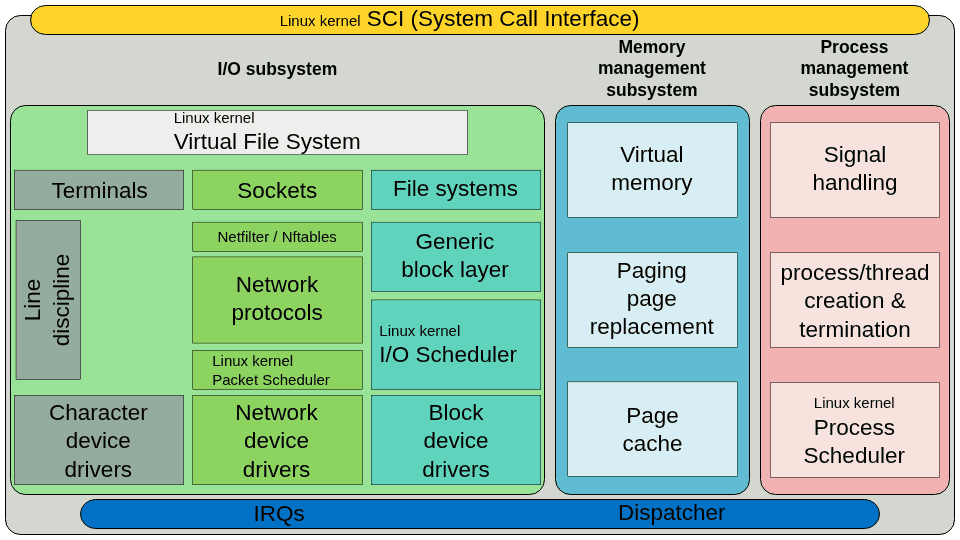
Combined, this means data-capture threads always run with high priority and minimal interference, consumer threads process with predictable latency, and logging or UI threads run in the background without disrupting the critical path.
Implementation
Producer-consumer. One producer thread per data source (camera, IMU), set to SCHED_FIFO with a priority around 80 on Linux RT. Each producer writes into a lock-free ring buffer (or bounded queue); on buffer full, increment a drop-counter and log a warning rather than blocking the producer. Consumer threads get affinity to the same core as their producer or a dedicated core, with a slightly lower but still high priority (around 70), waiting on the queue or polling with minimal delay. Non-real-time threads like logging run as SCHED_OTHER, low priority, on separate cores.
CPU affinity and core isolation. At boot, enable isolcpus=2-3 (for example) in kernel parameters to isolate cores 2 and 3 for real-time use. Bind threads with taskset -p or directly in code:
cpu_set_t cpuset;
CPU_ZERO(&cpuset);
CPU_SET(2, &cpuset);  // pin to core 2
pthread_setaffinity_np(pthread_self(), sizeof(cpu_set_t), &cpuset);
For interrupts or kernel threads, check /proc/irq/*/smp_affinity and tune so interrupt handling doesn't interfere with real-time cores.
Priority scheduling. For Linux threads: set sched_priority to something like 80 and call pthread_setschedparam(thread, SCHED_FIFO, ¶m). Make sure the user has RT priority permissions configured under /etc/security/limits.d/. Consider SCHED_DEADLINE for strict periodic real-time tasks with a specified budget and deadline, and use pthread_setaffinity_np() alongside it to bind the thread to a core and avoid scheduler-induced migration.
Monitoring and tuning. Use htop, top -H, or ps -m to check where threads run and on which cores. Measure latency by capturing a timestamp at queue push and process start, computing jitter and worst-case values. Track queue drop counters and buffer fullness, adjusting queue depths or thread priorities based on what you see.
Key takeaways
Use producer-consumer patterns to decouple acquisition from processing, and never block a high-priority capture thread. Bind threads to cores and isolate cores to reduce jitter from scheduler interference and cache migration. Use real-time scheduling policies, SCHED_FIFO or SCHED_DEADLINE, so threads meet deadlines and preempt non-real-time work. Monitor queue depths, drop counters, and latency and jitter metrics continuously, tuning is iterative, not set-once-and-forget. And embedded Linux can meet real-time needs if properly configured, you don't always need a separate RTOS for moderate latency budgets.
Why it matters at Hoomanely
These techniques bolster our vision of delivering high-performance embedded systems that handle demanding sensor and data-processing workloads while staying flexible, maintainable, and cost-effective. Bringing robust threading and scheduling strategies into our Linux-based sensor and data-processing products is how we make sure latency, throughput, and reliability all meet the bar our customers expect.