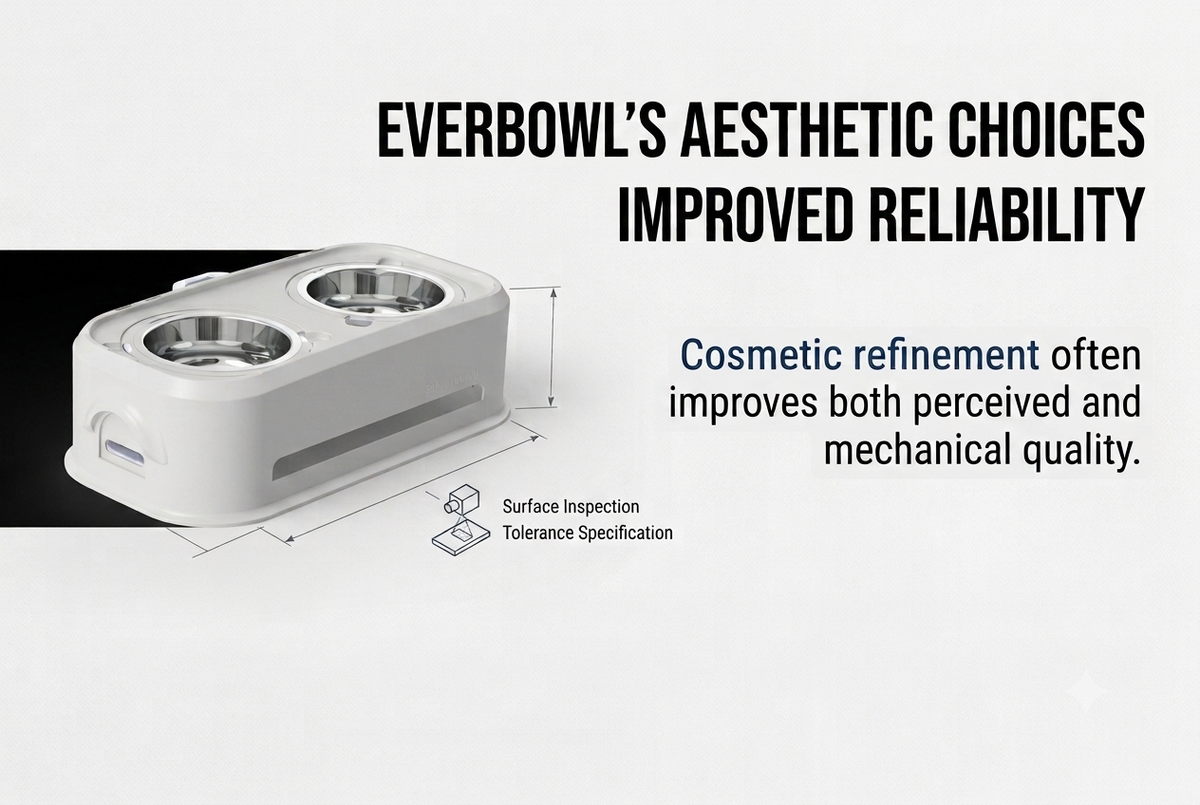
Everbowl's Aesthetic Choices Improved Reliability
How Better Design Finishes Made Everbowl More Durable
Aesthetics and engineering usually get treated as separate jobs on a product team. One person worries about how something looks, another about how it holds up. Working on Everbowl blurred that line more than we expected.
A handful of changes we made purely to improve the bowl's look (smoother edges, better paint prep, tighter part-to-part fits) ended up making it more durable too. Fewer chips, fewer visible scratches, easier assembly, less handling damage over time.
We were trying to make Everbowl look better, and it turned out a lot of what makes a product look good is the same thing that makes it last longer.
The Misconception: Looks vs Performance
A common assumption in hardware development is that cosmetic work only changes appearance. It doesn't. The surfaces people touch are also the product's first line of defense against wear, contamination, and fatigue.
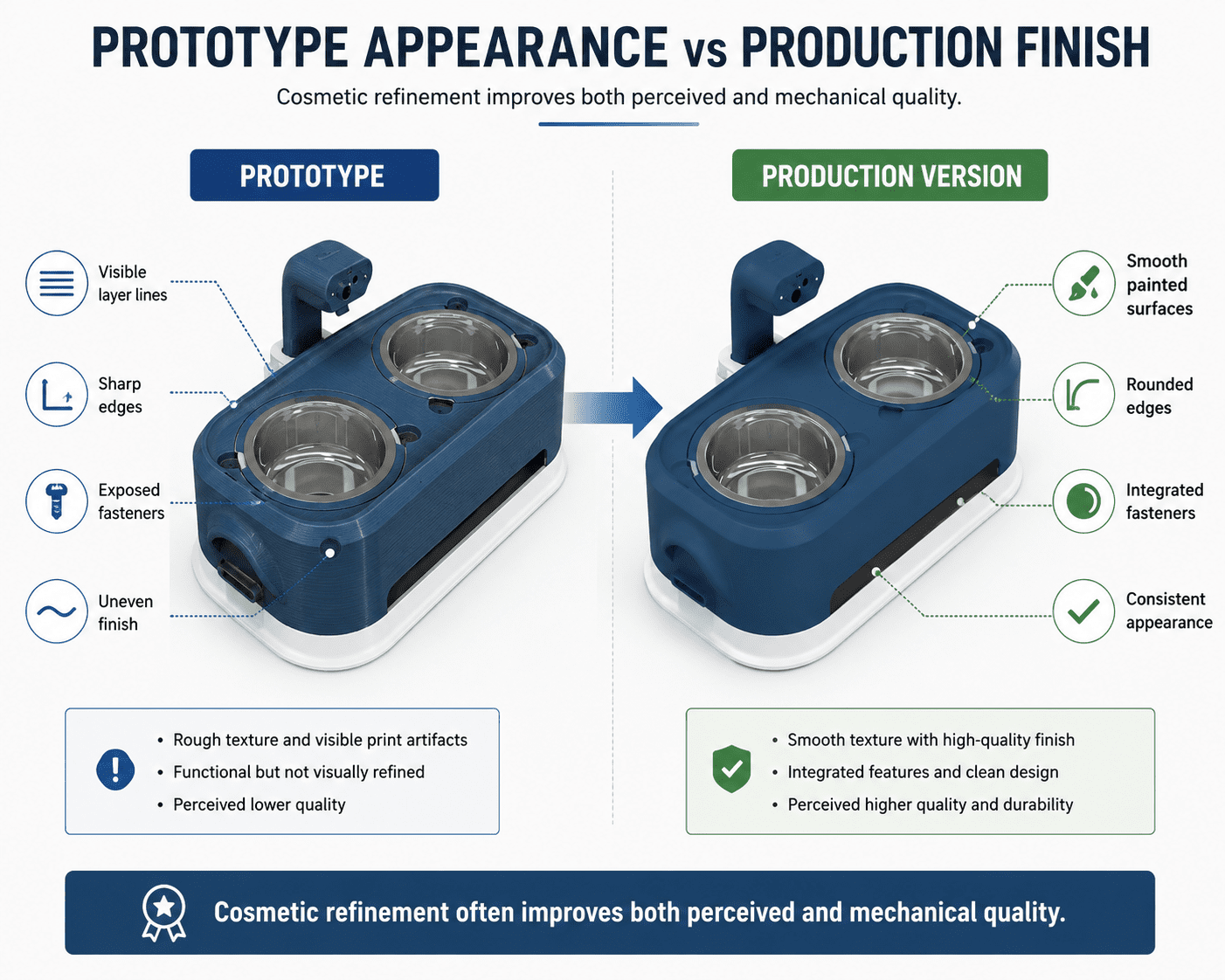
Picture two products with identical internals. One has sharp exposed edges, uneven surface transitions, poor coating adhesion, visible fasteners, and rough printed textures. The other has smooth edge radii, consistent painted surfaces, flush component interfaces, integrated fasteners, and uniform finishes.
On day one, both might perform the same. Six months in, they usually don't look or feel the same at all. A product that still works but looks beat up doesn't feel reliable, even if nothing is actually wrong with it.-
Surface Finish Is an Engineering Feature
Surface finish usually gets talked about as a look-and-feel decision, but it touches scratch resistance, how easy a part is to clean, moisture retention, dirt buildup, coating durability, and how it wears over time.
Everbowl gets picked up, wiped down, and moved around constantly, so these details matter more than they would on something that sits on a shelf. A properly prepared surface also holds paint better, which means fewer chips from everyday handling.
Edge Geometry: Small Radius, Big Difference
One of the easiest wins in development was rounding off edges. Prototype parts tend to prioritize manufacturability over ergonomics, which usually means sharp corners and abrupt transitions. They're structurally fine, but they chip easily, wear fast, concentrate impact stress, and just feel worse in your hand.
Adding controlled fillets fixed more than we expected. Rounded edges spread impact energy over a wider area instead of concentrating it at a point, which cuts down on localized stress. They also catch light more evenly, so the bowl looks higher quality, and they hold up better against the small knocks that happen during normal use.
Engineering Insight
Every exposed edge becomes a potential impact point. Softening geometry often increases durability without adding material.
Painting: More Than a Cosmetic Layer
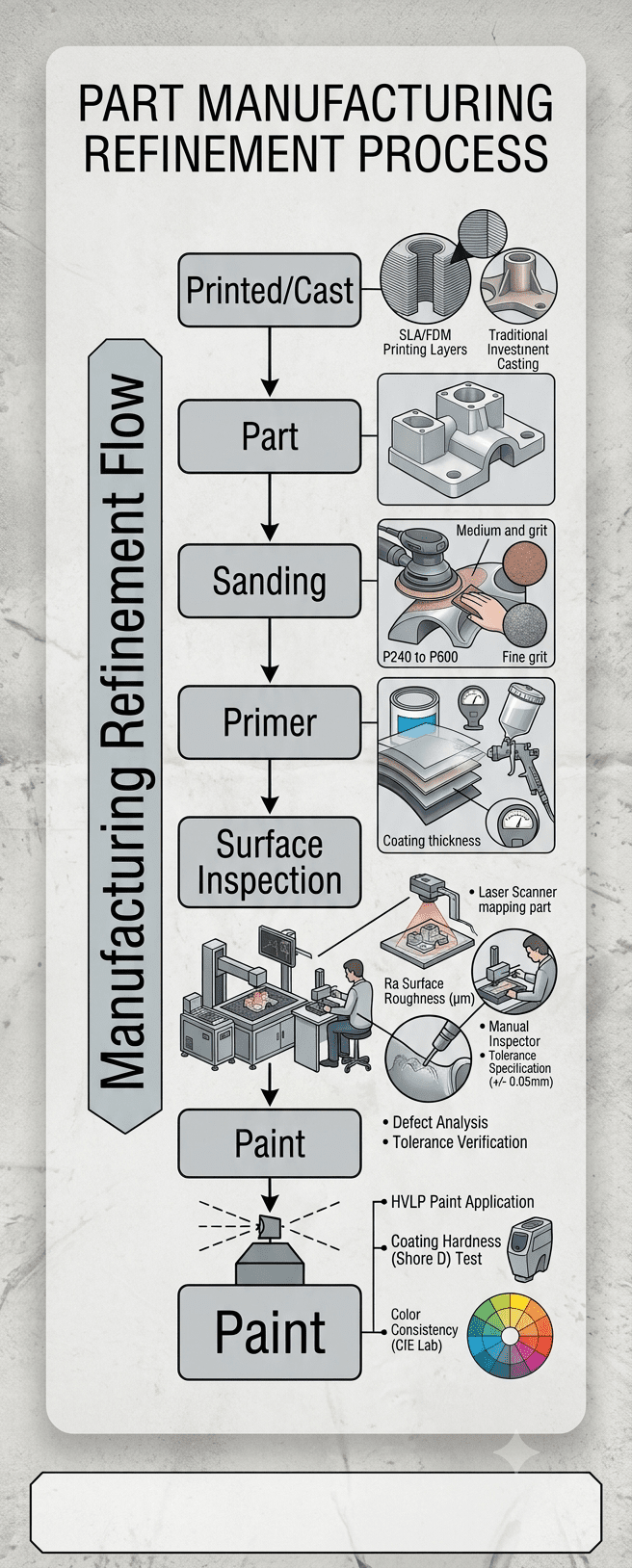
Painting often gets treated as the last cosmetic step before a product ships. On Everbowl it did real protective work: better scratch resistance, oxidation protection on the metal parts, less visible wear, and a more uniform look across mixed materials.
The bowl combines vacuum-cast plastics, FDM-printed parts, SLA components, and laser-cut aluminum, and each of those processes leaves a different texture and finish. Without a consistent paint process, those differences were obvious side by side. Painting brought the materials together and protected them from handling at the same time.
Integrating Materials More Thoughtfully
Products built from more than one manufacturing process tend to show their seams: different materials expand at different rates, catch light differently, and wear at different speeds. Instead of accepting that as a given, we tightened the interfaces between the aluminum rings, the vacuum-cast plastic housings, the SLA components, and the FDM structural parts.
Better alignment closed up visible gaps, and it also cut down on dust getting trapped and parts working loose over time. The tighter tolerances we needed for a clean look were the same tolerances that made the assembly more solid.
Designing Components That Age Gracefully
Every product looks different after a year of use than it did on day one. The goal isn't to stop that from happening — it's to decide where it happens.
Instead of letting scratches land randomly, you can steer them: protect the surfaces people touch most, push visible wear toward less obvious spots, use tougher finishes on high-contact areas, and let replaceable parts take the cosmetic hit instead of the housing.
A product that ages this way still looks cared for after months of use, and that reads as good engineering even when nothing mechanical has changed.
Fastener Integration Improved Both Form and Function
Visible fasteners are sometimes unavoidable, but inconsistent placement hurts both looks and reliability. We standardized how Everbowl gets fastened: threaded inserts for repeatable assembly, better screw access, fastener positions that line up with the product's geometry, and less hardware showing overall.
Assembly got easier and the product looked more deliberate, for the same reason: it was better organized mechanically.
Measuring the Benefits of Aesthetic Improvements
Aesthetic refinements can, and should, be evaluated with real engineering metrics, not just impressions.
Handling Damage Rate Handling Damage Rate (%) = (Units Showing Handling Damage ÷ Total Units) × 100 Cutting exposed vulnerable features lowers the share of units that show visible handling damage.
Surface Wear Reduction Surface Wear Reduction (%) = ((Wear Before − Wear After) ÷ Wear Before) × 100 You can estimate this with repeated handling tests or controlled abrasion testing.
Engineering Insight
The success of a finish is measured not by how it looks on Day 1, but by how well it looks after hundreds of interactions.
Real-World Examples Beyond Everbowl
This pattern isn't unique to Everbowl. In consumer electronics, rounded aluminum edges reduce denting and make devices more comfortable to hold. In automotive interiors, soft-touch coatings feel better and resist abrasion. Medical device housings are smooth and seamless mainly because that makes them easier to clean and less likely to trap contamination. Industrial equipment increasingly uses integrated panel designs that eliminate dirt traps and add structural stiffness at the same time.
Future Trends: Functional Industrial Design
A few practices are pushing this further. Design for Durability optimizes geometry specifically to slow cosmetic degradation over time. Surface engineering uses advanced coatings for wear resistance, chemical protection, and even antimicrobial performance. Human-centered design balances how something looks with how it actually gets held and used. And some teams are now simulating cosmetic aging before production, essentially predicting where a product will show wear before it's ever built.
None of this treats looks and performance as separate problems anymore.
Hoomanely Context
At Hoomanely, we look at every design refinement from both angles: how it changes the way a product looks, and how it changes the way it holds up.
With Everbowl, refined edges, integrated fasteners, better material interfaces, and properly prepared paint added up to a product that was easier to assemble, took handling damage better, and behaved more consistently day to day. It's a pattern we now watch for deliberately: a lot of good engineering just looks like good design.
Key Takeaways
- Aesthetic refinement can directly improve mechanical reliability.
- Surface finish affects wear resistance, cleanliness, and coating durability.
- Rounded edges reduce both impact damage and stress concentration.
- Painting protects components while creating visual consistency across different materials.
- Better fastener integration improves assembly and appearance simultaneously.
- Products should be designed to age gracefully, not merely look good when new.
- The best industrial design decisions often solve functional problems as well as visual ones.
Conclusion
We went into this thinking of aesthetics as the last layer you add once the engineering is done. Everbowl changed our minds. Most of the changes that made the bowl look better also made it stronger, easier to build, and more resistant to everyday wear: better finishes protected materials, rounded geometry cut down on stress concentrations, and tighter interfaces made assembly simpler and the structure more solid.
Good industrial design isn't decoration sitting on top of engineering. A lot of the time, it's the same decision, just judged by two different names.