Real-Time Memory Management: Building Bulletproof Buffer Systems for Edge AI
Modern edge AI systems need sophisticated memory management that balances performance, reliability, and real-time constraints. When you're dealing with continuous thermal imaging streams, compressed visual data, and high-speed communication protocols all at once, traditional memory allocation approaches often fall short. Here's a look at the techniques behind bulletproof buffer systems that never compromise timing guarantees.
The memory hierarchy challenge in edge AI
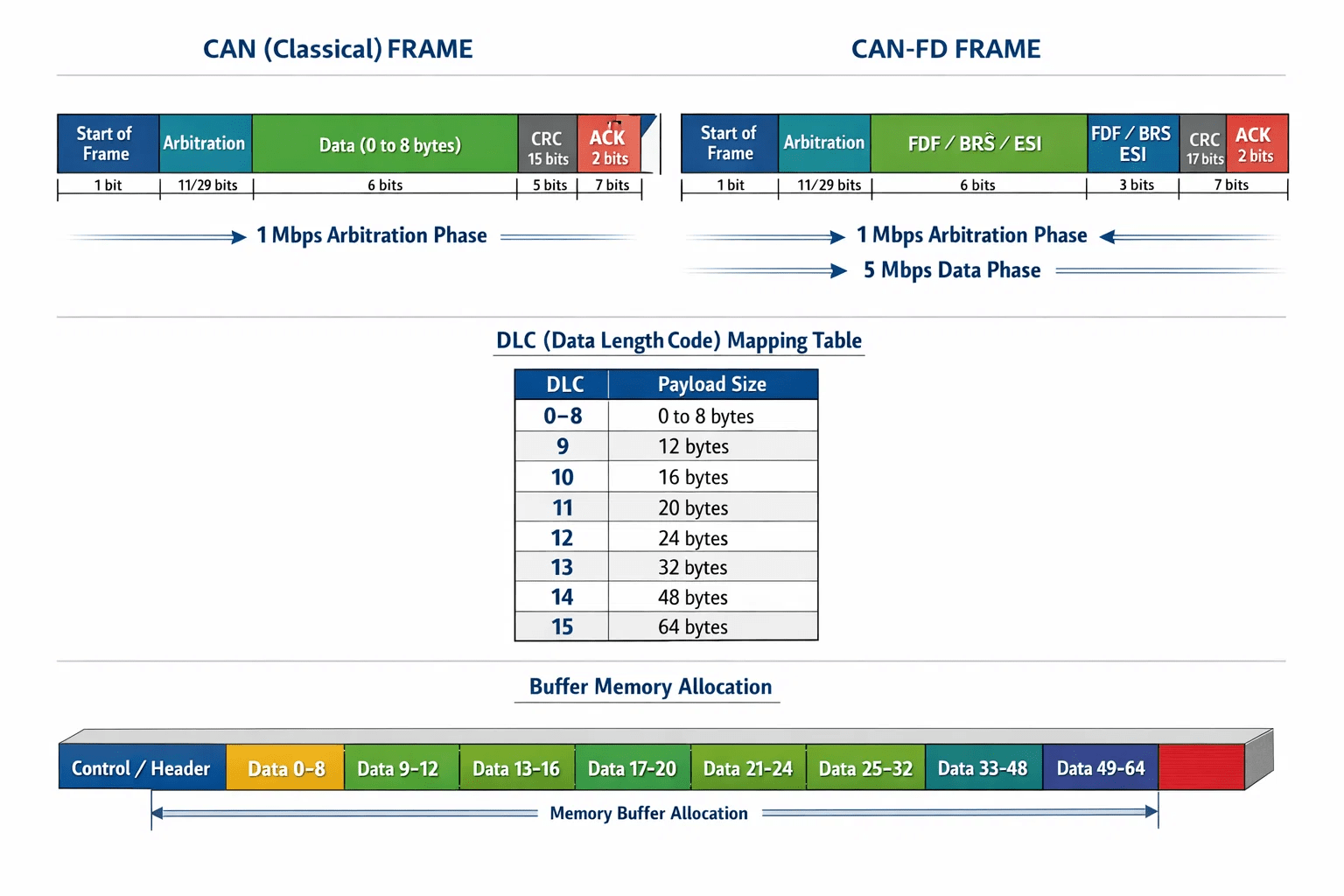
Edge AI devices operate under a specific set of constraints: limited memory, strict real-time deadlines, and a real need for reliability. Consider a pet health monitoring system processing thermal imagery at 30fps while simultaneously handling compressed visual data and CAN-FD communication at 5Mbps. A single allocation failure or timing violation could mean lost health data or a false reading.
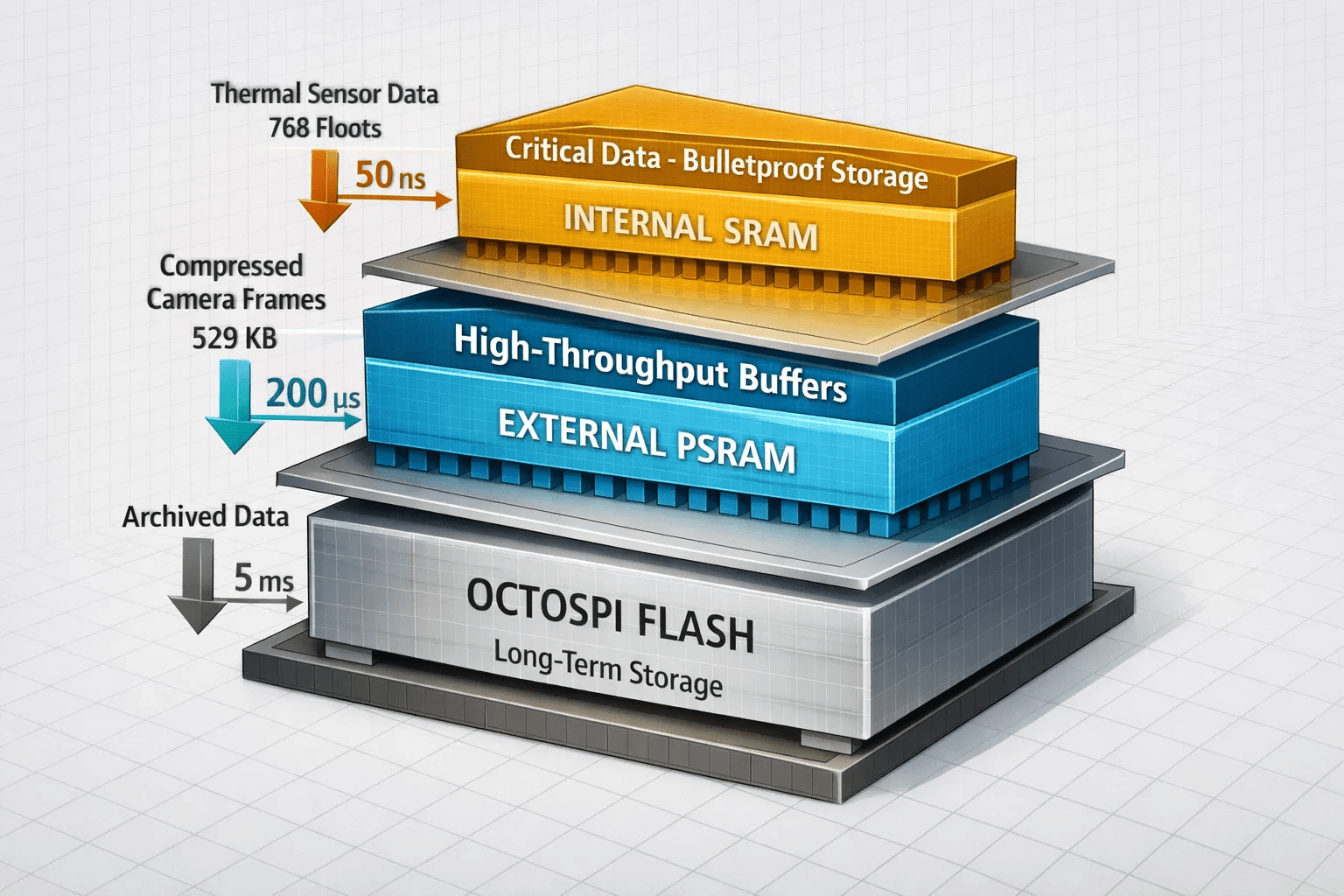
The key insight is that different data types have fundamentally different requirements. Critical thermal sensor data (768 float values representing temperature readings) needs deterministic access and protection from hardware-level corruption. Bulk visual data (529KB compressed frames) benefits more from high-capacity storage with optimized throughput.
Hardware-aware memory allocation
Real-time systems have to account for hardware quirks that can silently corrupt data. On our platform, thermal float data gets isolated in internal SRAM specifically to avoid a known alignment bug in external memory access:
// CRITICAL: Thermal float data stored in SRAM to avoid 2-byte shift bug
float thermal_sram_pool[1][768] __attribute__((section(".sram")));
bool thermal_sram_in_use[1] = {false};
The __attribute__((section(".sram"))) directive makes sure the compiler places this data in the most reliable memory region available, immune to external memory controller issues.
Lock-free buffer management
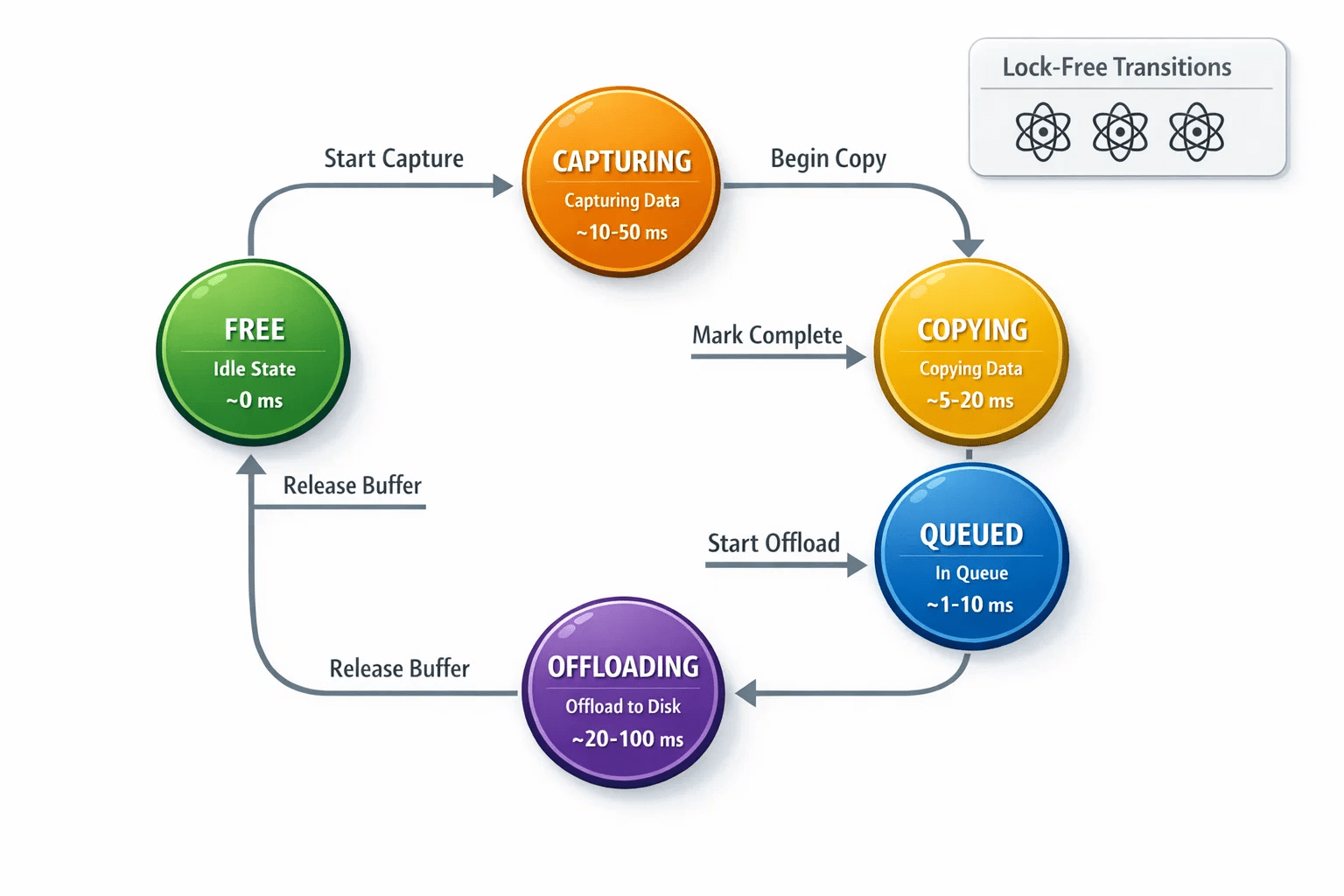
Mutex-based approaches introduce latency spikes that violate real-time constraints, so we use atomic operations and carefully designed state machines for lock-free coordination between producers and consumers:
typedef enum {
  BUFFER_STATE_FREE = 0,
  BUFFER_STATE_CAPTURING = 1,
  BUFFER_STATE_COPYING = 2,
  BUFFER_STATE_QUEUED = 4,
  BUFFER_STATE_OFFLOADING = 8
} buffer_state_t;
The COPYING state prevents buffer reuse during slow PSRAM writes, while OFFLOADING coordinates with background storage operations, keeping buffers moving through well-defined phases without race conditions.
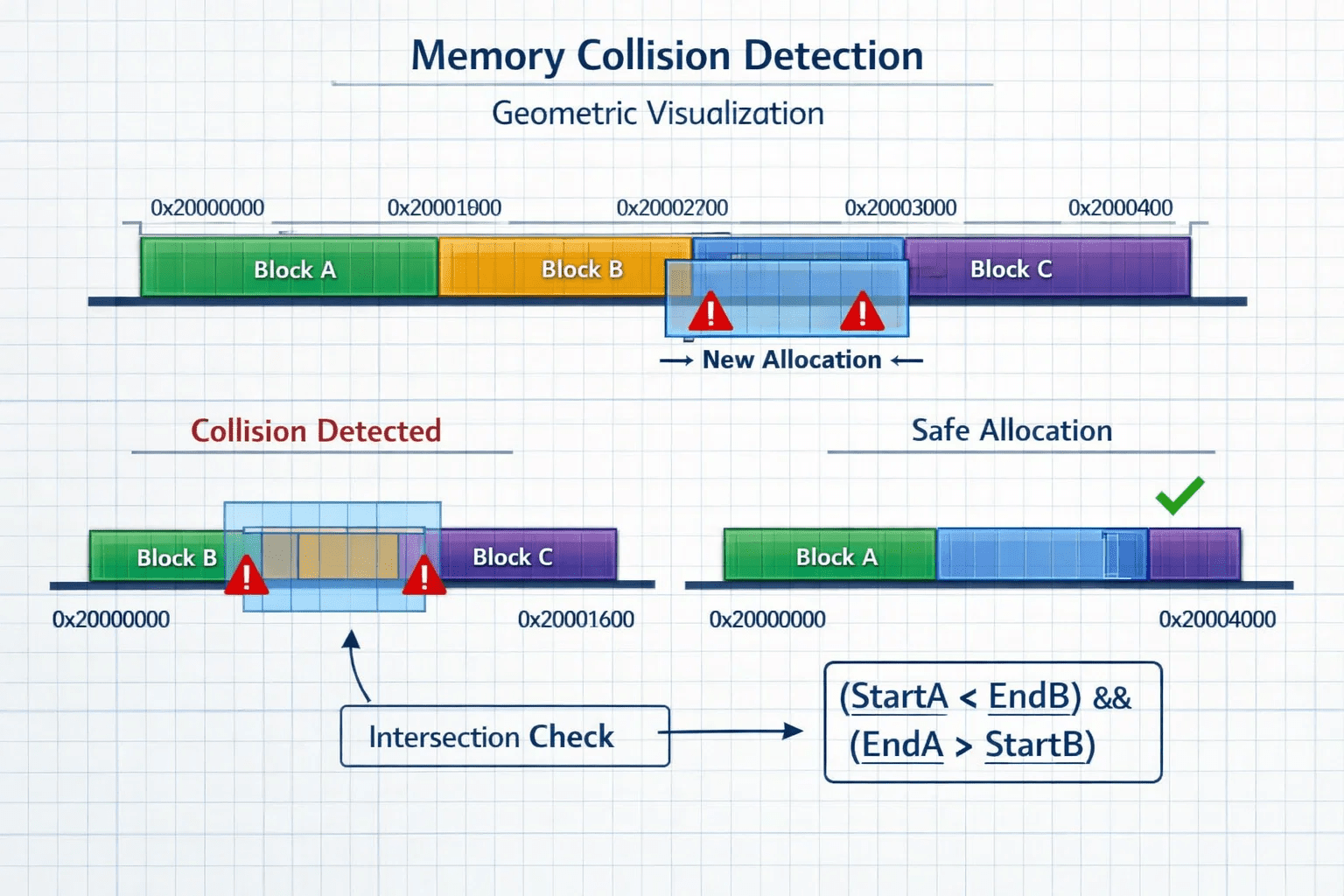
Collision detection prevents corruption during wrap-around scenarios by checking for geometric overlap between new writes and active buffers:
static bool check_psram_collision(uint32_t start_offset, size_t size) {
  uint32_t end_offset = start_offset + size;

  for (int i = 0; i < PSRAM_THRESHOLD_ENTRIES; i++) {
    if (psram_mgr.entries[i].in_use && psram_mgr.entries[i].camera_captured) {
      uint32_t ent_start = psram_mgr.entries[i].camera_offset;
      uint32_t ent_end = ent_start + psram_mgr.entries[i].camera_size;

      // Intersection check: (StartA < EndB) && (EndA > StartB)
      if (start_offset < ent_end && end_offset > ent_start) {
        return true; // Collision detected
      }
    }
  }
  return false;
}
This guarantees new data never overwrites active buffers, even under aggressive memory reuse.
DMA-accelerated operations
DMA turns memory-intensive operations from CPU-blocking tasks into parallel processes, which matters a lot for OCTOSPI flash operations where write latencies can exceed 100ms:
if (HAL_XSPI_Transmit_DMA(&hospi1, (uint8_t *)current_buffer) != HAL_OK) {
  LOG_ERROR_TAG(TAG, "DMA start failed at 0x%08lX", current_addr);
  return -1;
}

// Wait for DMA completion via task notification
uint32_t notification_value = ulTaskNotifyTake(pdTRUE, pdMS_TO_TICKS(1000));
This achieves a meaningful performance improvement over CPU-based transfers while keeping real-time responsiveness for other operations, since the calling thread sleeps efficiently rather than polling.
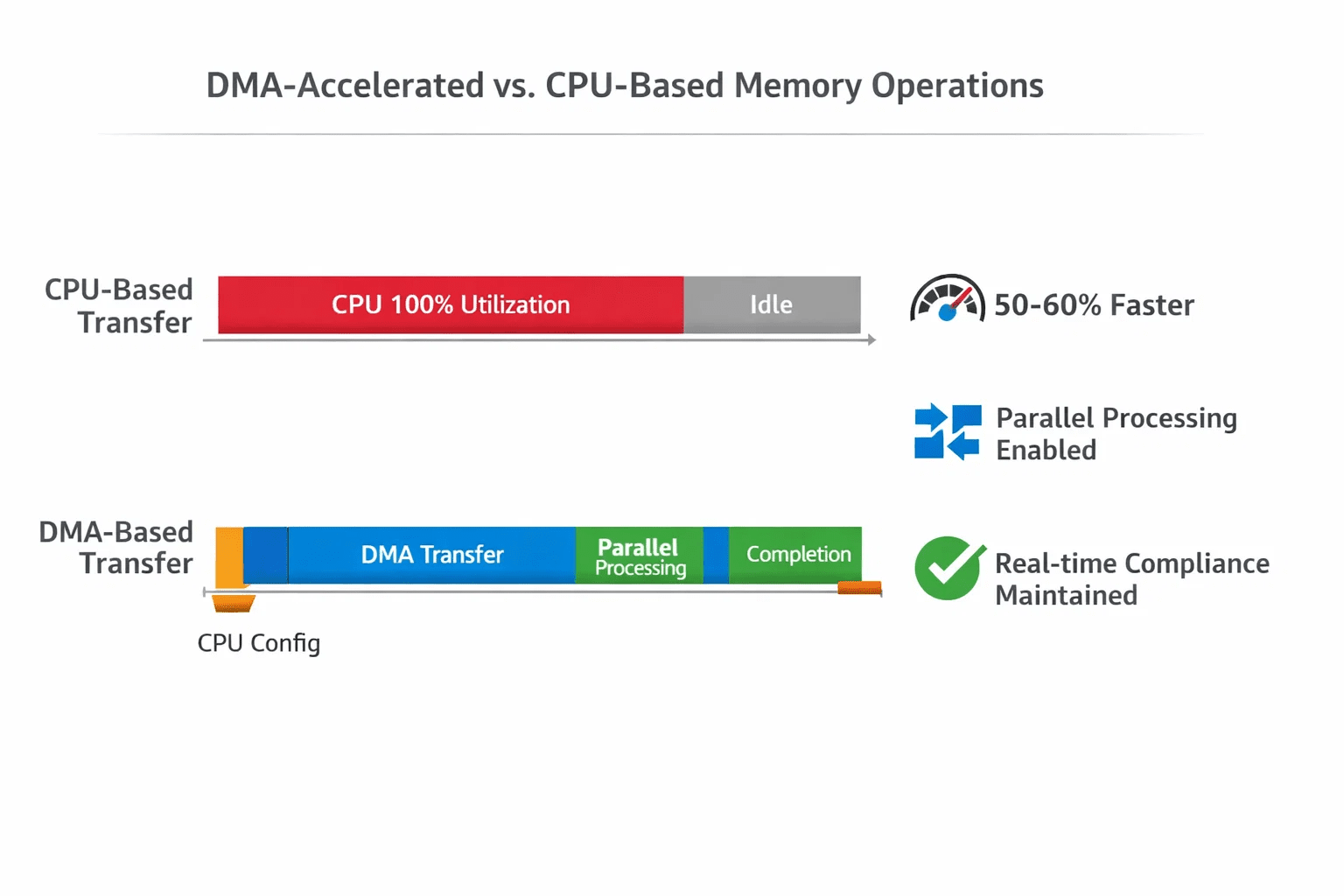
Flash memory operates on page boundaries, typically 256 bytes, so efficient writes align to those boundaries and handle partial pages gracefully. One detail worth calling out: each page program operation needs its own write-enable command, since the write enable latch clears automatically after each page completes:
// CRITICAL: Enable write for EACH page program
if (OSPI_WriteEnable() != HAL_OK) {
  LOG_ERROR_TAG(TAG, "WriteEnable failed at page %lu", page_count);
  return -1;
}
Compression integration
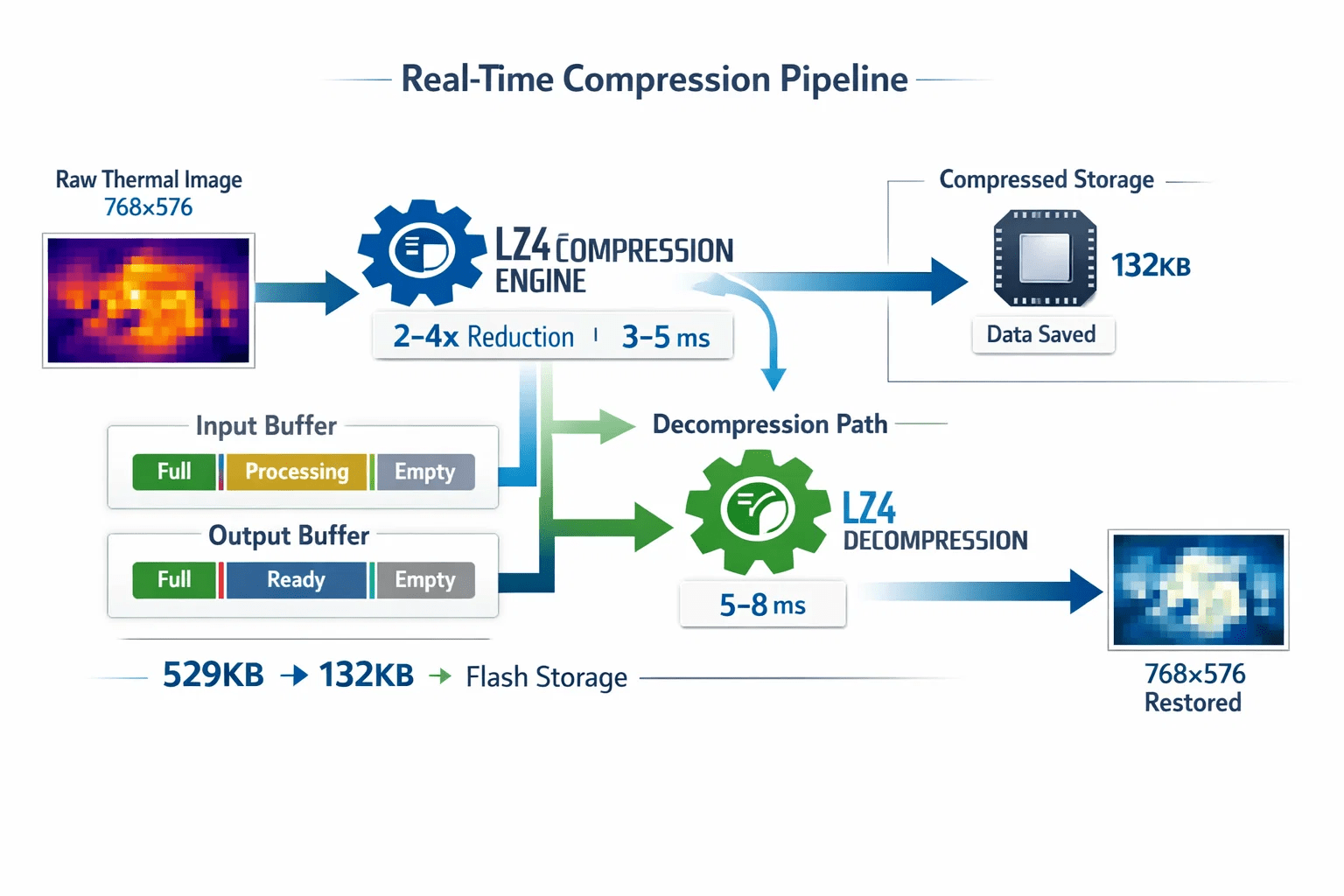
LZ4 offers the best balance of speed and ratio for real-time compression, but it needs careful buffer coordination:
int camera_compress_image(const uint8_t *src, size_t src_size,
                         uint8_t *dst, size_t dst_capacity) {
  TickType_t compress_start = xTaskGetTickCount();
  int compressed_size = LZ4_compress_default((const char *)src, (char *)dst,
                                           (int)src_size, (int)dst_capacity);
  TickType_t compress_end = xTaskGetTickCount();

  uint32_t compress_time = (compress_end - compress_start) * portTICK_PERIOD_MS;
  float ratio = (float)src_size / compressed_size;

  LOG_INFO_TAG(TAG, "Compressed %lu -> %d bytes (%.2fx ratio, %lu ms)",
               src_size, compressed_size, ratio, compress_time);

  return compressed_size;
}
The compression bound calculation (LZ4_compressBound) guarantees destination buffers never overflow.
Threshold-based flow control
Simple threshold systems cause stuttering: capture until full, stop, clear one buffer, resume, repeat. We use burst-aware thresholds instead, only resuming capture once there's room for a full burst:
// Only resume capture if we have space for a FULL BURST (3 entries)
// This prevents "stuttering" (capture 1 -> block -> capture 1)
if (psram_mgr.entry_count <= (PSRAM_THRESHOLD_ENTRIES - BURST_SIZE) && DCMI_suspend) {
  DCMI_suspend = false;
  psram_mgr.threshold_reached = false;
  LOG_INFO_TAG(TAG, "=== DCMI RESUMED (Burst Space Available) ===");
}
This keeps the system operating in distinct, predictable modes: either capturing full bursts efficiently or offloading in the background without interference.
Zombie entry detection and cleanup
Long-running systems accumulate orphaned buffers that never complete their lifecycle. We detect entries that fall too far behind the current processing sequence and clean them up:
// Zombie Check - entries that are too far behind current sequence
if (max_seq > psram_mgr.entries[i].sequence_id &&
    (max_seq - psram_mgr.entries[i].sequence_id) > (BURST_SIZE * 2)) {

  LOG_WARN_TAG(TAG, "DETECTED ZOMBIE ENTRY[%d] seq=%lu (Current max=%lu)",
               i, psram_mgr.entries[i].sequence_id, max_seq);

  dma_ring_buffer_release(psram_mgr.entries[i].sequence_id);

  psram_mgr.entries[i].in_use = false;
  psram_mgr.entry_count--;
}
This prevents memory leaks while preserving integrity for actively processing streams.
Performance monitoring
Production systems need comprehensive telemetry to catch degradation before it affects operation, tracking buffer allocation time (should stay under 1ms for real-time compliance), typical compression ratios (2 to 4x for thermal imagery), DMA transfer rate improvements, and memory utilization patterns including high-water marks and fragmentation.
Why it matters at Hoomanely
These memory management techniques directly enable continuous pet health monitoring. By efficiently managing thermal imagery (fever detection), compressed visual data (activity analysis), and real-time sensor fusion, edge devices can provide 24/7 health insight without compromising reliability. The bulletproof buffer architecture makes sure critical health data, a thermal signature indicating illness, movement patterns suggesting distress, environmental factors affecting wellbeing, never gets lost to a memory management failure.
Key takeaways
Hardware-aware design means understanding and working around microcontroller-specific memory quirks through strategic allocation. Lock-free coordination through state machines and atomic operations eliminates latency-inducing mutex operations. DMA integration leverages hardware acceleration while keeping the CPU available for real-time tasks. Intelligent flow control with burst-aware thresholds and hysteresis prevents oscillation and optimizes throughput. Proactive cleanup through zombie detection maintains system health over extended operation. And comprehensive monitoring catches performance degradation before it becomes a real problem.