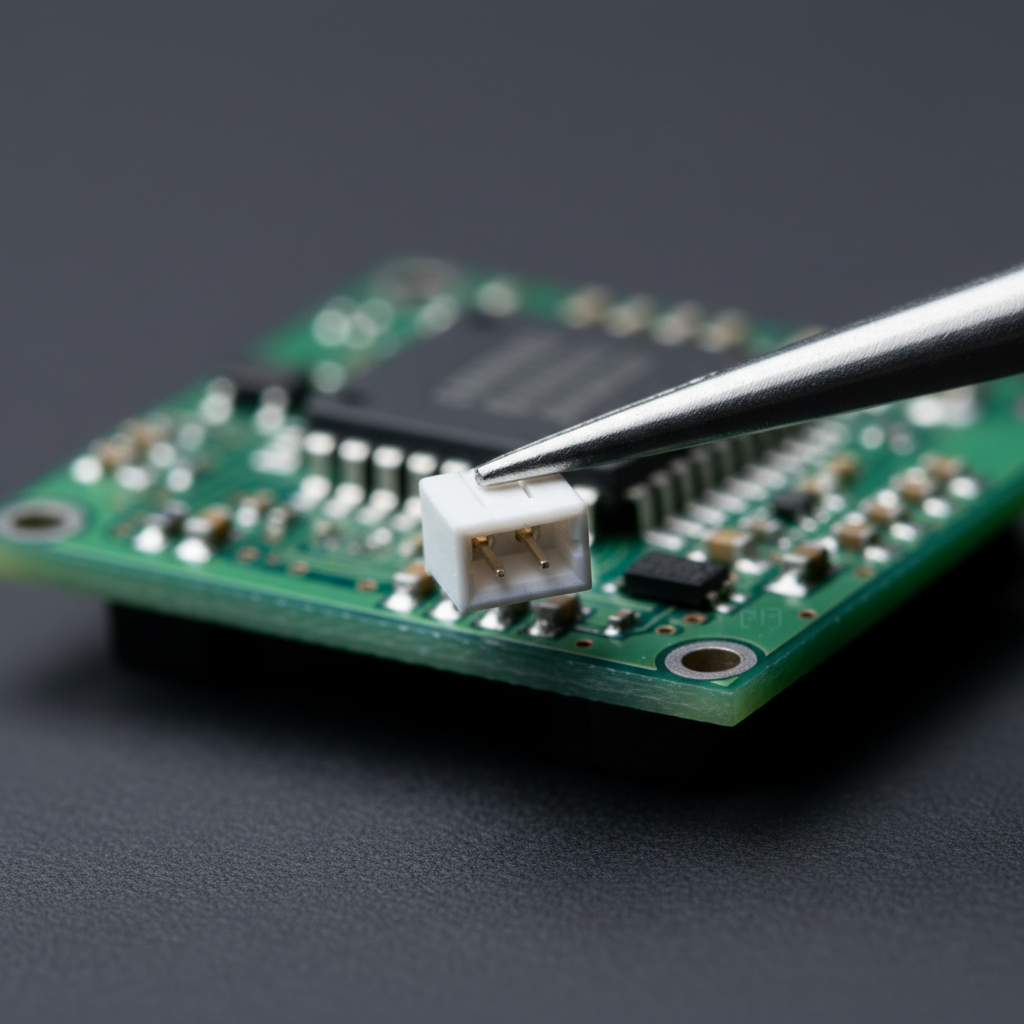
The $2 Decision That Determines 5 Years of Product Life
When you're holding a PCB prototype, it's easy to focus on the exciting parts, the microcontroller, the sensors, the wireless module. But here's what I've learned at Hoomanely: the humble connector is often the difference between a product that lasts 5 years and one that fails in 6 months. Most hardware failures in the field aren't from sophisticated circuit design flaws, they're from the mechanical interfaces, the connectors that experience physical stress every single day of the product's life. That's why we treat connector selection as a critical design decision right from the prototyping stage, not an afterthought during production planning.
Why connectors deserve more respect
Think about what a connector endures over a product's lifetime. Battery connectors face insertion cycles during assembly, service, and battery replacement. Board-to-board connectors face thermal expansion and contraction as the device heats and cools. Cable connectors face pull forces, vibration, and mechanical stress during use. Sensor connectors face potential contamination, humidity exposure, and temperature extremes. A connector that seems fine in the lab can degrade significantly after 50 insertion cycles, fail intermittently after temperature cycling, or develop high contact resistance in humid environments. These aren't hypothetical problems, they're the most common causes of field failures in IoT and embedded devices.
Phase 1: design requirements definition
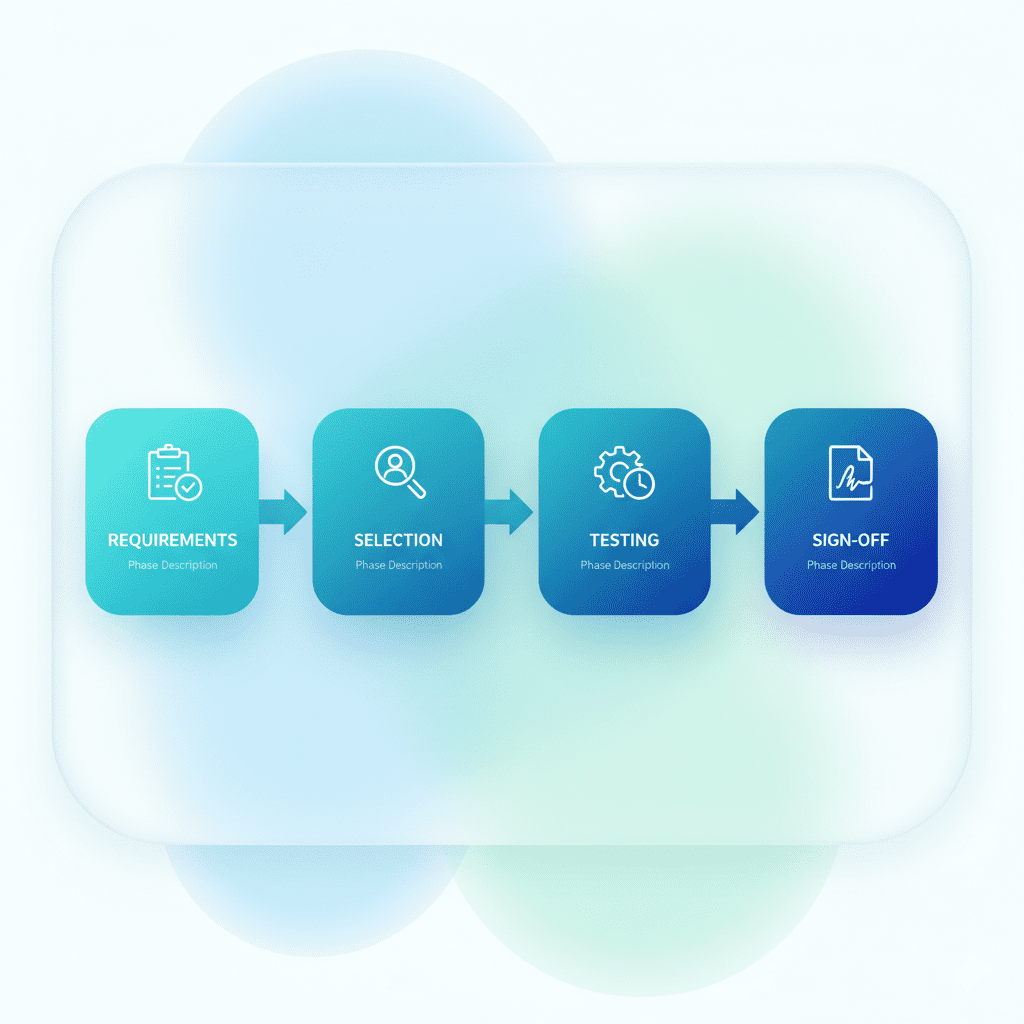
Before we even open a component catalog, we define clear requirements for each connector:
- Expected insertion and removal cycles over the product lifetime
- Current and voltage requirements
- Mechanical stress profile (vibration, drops, pulling forces)
- Environmental exposure (temperature range, humidity, dust)
- Serviceability requirements (user-replaceable, field service, or factory only)
- Space constraints
For a recent IoT sensor design, our battery connector requirements specified over 100 insertion cycles for a field-replaceable battery, 2A continuous current, an operating range of -20°C to +70°C, survival of a 1.5m drop test while connected, and keying that prevents reverse polarity for user access. This level of specification tells us exactly what we need, not just any battery connector will do.
Phase 2: component selection with long-term thinking
We've standardized on JST connectors as our primary choice for most applications, a strategic decision based on several factors. Global availability means JST components are stocked by major distributors worldwide, so scaling production or switching manufacturing partners won't hit an availability bottleneck. Consistent quality means JST provides detailed specifications for insertion cycles, retention force, and environmental ratings, and their products meet those specs reliably. A complete ecosystem of matching wire assemblies, crimp tools, and housings simplifies manufacturing and quality control. A proven track record across millions of consumer and industrial products means failure modes are well-documented. And standardization across product lines reduces inventory complexity and streamlines manufacturing training.
Our selection guide maps specific families to applications: JST PH series (2mm pitch) for user-replaceable battery connections, rated for 20-plus cycles with a robust housing; JST XH series for high-current battery connections handling 3A per pin reliably; JST SH series (1mm pitch) for compact sensor connections in space-constrained designs; and JST ZH series (1.5mm pitch) for frequently-accessed board-to-board connections, balancing size and durability.
Phase 3: three non-negotiable tests
Before any connector is approved for production, it must pass three critical validation tests during the prototype phase, not after we've committed to manufacturing.
Test 1 is pull force validation, measuring retention force on a new connector as baseline, then after 10, 25, 50, and 100 cycles, tracking the degradation curve. Our acceptance criteria require battery connectors to hold a minimum 2.0N retention force with less than 30% degradation after 50 cycles, and board-to-board connectors to hold a minimum 3.0N with less than 25% degradation after 100 cycles. A connector might feel secure when new, but if retention force drops significantly after just 20 insertions, it will cause intermittent connections in the field. In one comparison, two battery connectors felt equally secure initially, but after 50 cycles one maintained 2.1N while the other dropped to 0.8N, an easy production decision once you have the data.
Test 2 is pinout safety and keying verification. We physically attempt incorrect insertions with increasing force, reverse polarity, offset insertion, forced insertion at angles, documenting what breaks or prevents incorrect connection. Our design rules require physical keying as mandatory unless symmetric insertion is electrically safe, ground pins on the outside so a forced-backward connector hits ground contacts first, shrouded headers preventing accidental shorts from tools or debris during assembly, clear silkscreen polarity markings matching wire color conventions, and circuit-level reverse polarity protection on critical power inputs. A reversed connector isn't just inconvenient, it can destroy the entire board instantly, so this multi-layer protection ensures it never happens in production or field service.
Test 3 is serviceability and longevity assessment, evaluating accessibility without full disassembly, tool requirements for safe disconnection, true repair cost if the connector fails in the field, whether degradation causes sudden failure or gradual performance loss, and documentation clarity for field technicians. We design products where major subsystems use connectors, not permanent soldering, batteries user-replaceable with basic tools, sensors field-serviceable by trained technicians, communication modules replaceable without specialized equipment, and antennas using U.FL internally or SMA externally, both field-replaceable. This philosophy gives faster prototyping since we can swap modules during development without PCB rework, flexible manufacturing since sourcing issues don't force scrapping assembled boards, reduced returns since many "failed" devices are actually depleted batteries or single faulty sensors, and extended product life since serviceable devices last years longer than disposable ones.
Phase 4: environmental stress testing
Even the best connector can fail under environmental conditions. Before finalizing a design, we subject prototype assemblies to temperature cycling from -20°C to +70°C across 10 complete cycles with continuity monitoring, humidity exposure at 85% relative humidity for 48 hours followed by resistance measurement, vibration testing on a shake table for portable devices simulating transport and handling, and drop testing from 1.5m onto a hard surface across six orientations with connectors mated. After each test we measure contact resistance (should remain under 50mOhm), retention force (should not degrade more than 30%), and visual signs of cracks, corrosion, or deformation. If a connector fails any test during prototyping, we redesign before manufacturing tooling begins.
The systematic advantage
This comprehensive validation delivers predictable reliability, since we know exactly how connectors will perform over the product lifetime; reduced field failures, since issues are caught in the lab, not reported by customers; faster time-to-market, since there are no delays for redesigns after manufacturing begins; lower warranty costs; and a better customer experience from devices that work reliably.
For each connector approved for production, we maintain detailed documentation covering selection rationale, test results, assembly instructions, quality control criteria, and service procedures, becoming part of our manufacturing package to ensure consistency across production batches and manufacturing partners.
The long-term perspective
At Hoomanely, we're building products designed to last, thinking beyond the initial prototype demo to what happens in year 3, 4, and 5 of the product's life. Connectors are mechanical components that wear over time. By selecting high-quality connectors, testing them systematically during prototyping, and designing for serviceability, we ensure our products maintain reliability throughout their entire lifecycle. That reliability isn't luck, it's the result of making the right two-dollar decision during the prototype phase, backed by systematic testing and validation.