Designing Hardware Priority Encoding for Simultaneous Fault Conditions
Introduction
Most hardware protection systems are designed around a simple assumption:
One fault happens, the system responds, and recovery begins.
Real products rarely fail that cleanly.
In a deployed device, multiple fault conditions can appear at nearly the same time:
- A power rail collapses while an overcurrent protection circuit activates.
- A communication module fails while the main processor detects a thermal event.
- A battery protection circuit disconnects power while the system is attempting a controlled shutdown.
- Multiple subsystems request isolation simultaneously.
The problem is no longer fault detection.
The problem becomes:
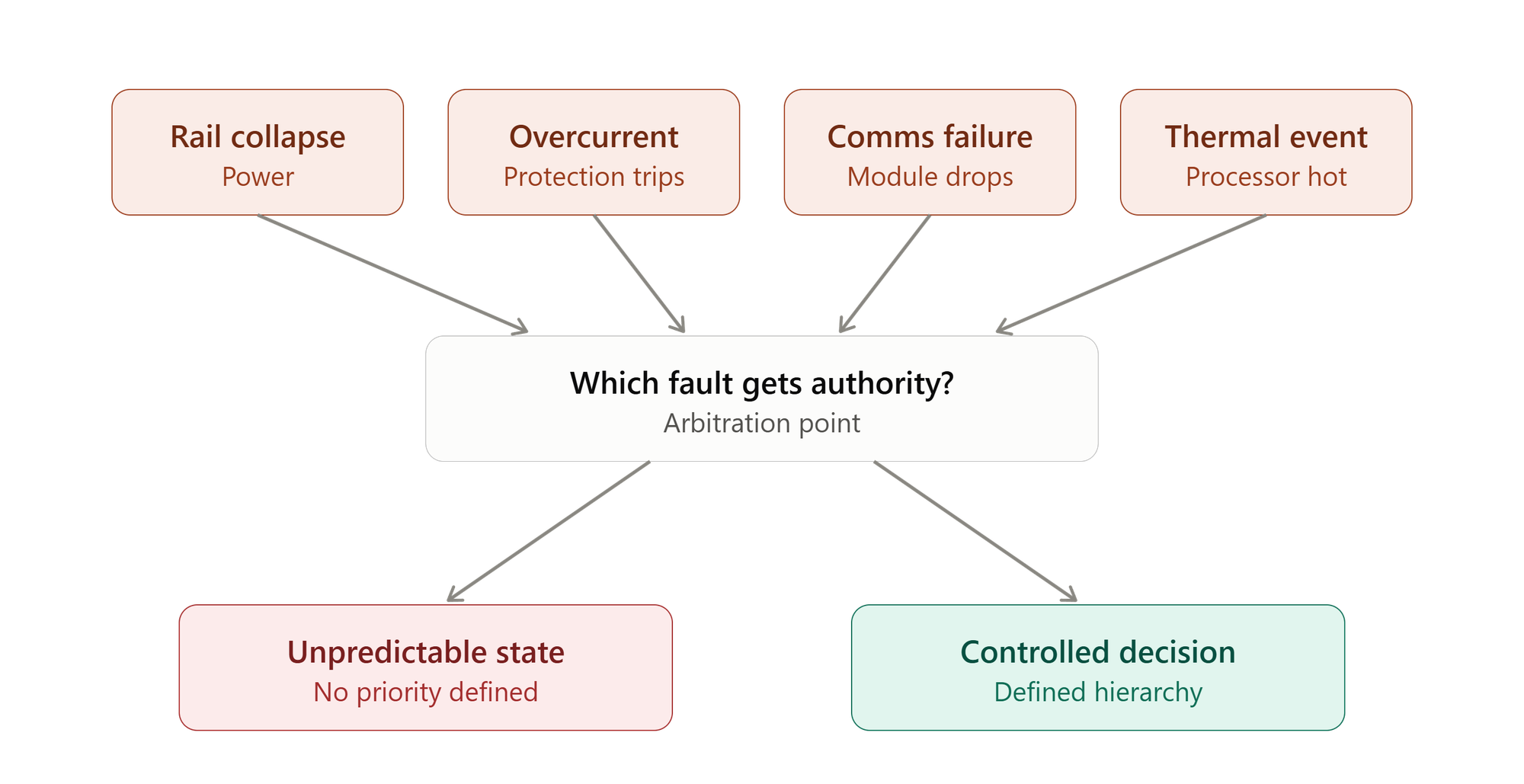
Which fault gets authority?
Without a defined priority system, the hardware can enter unpredictable states:
- Multiple protection circuits fight each other.
- Recovery actions happen in the wrong order.
- The original root cause gets hidden by secondary faults.
- Field diagnostics become difficult because the last visible fault is not always the first failure.
At Hoomanely, fault handling is treated as a decision architecture.
Detecting faults is only the first step.
A reliable system must also decide:
- Which fault is dominant?
- Which protection action happens first?
- Which events should be remembered?
- What information should survive a reset?
- How should the system recover safely?
A product should not simply react to faults.
It should understand them.
Why Multiple Faults Create a Different Design Problem
A typical protection architecture looks like:
Overcurrent Detection
        |
        ↓
Shutdown Load


Thermal Detection
        |
        ↓
Reduce Power


Communication Fault
        |
        ↓
Reset Module
Each protection mechanism works independently.
The problem appears when they happen together.
Example:
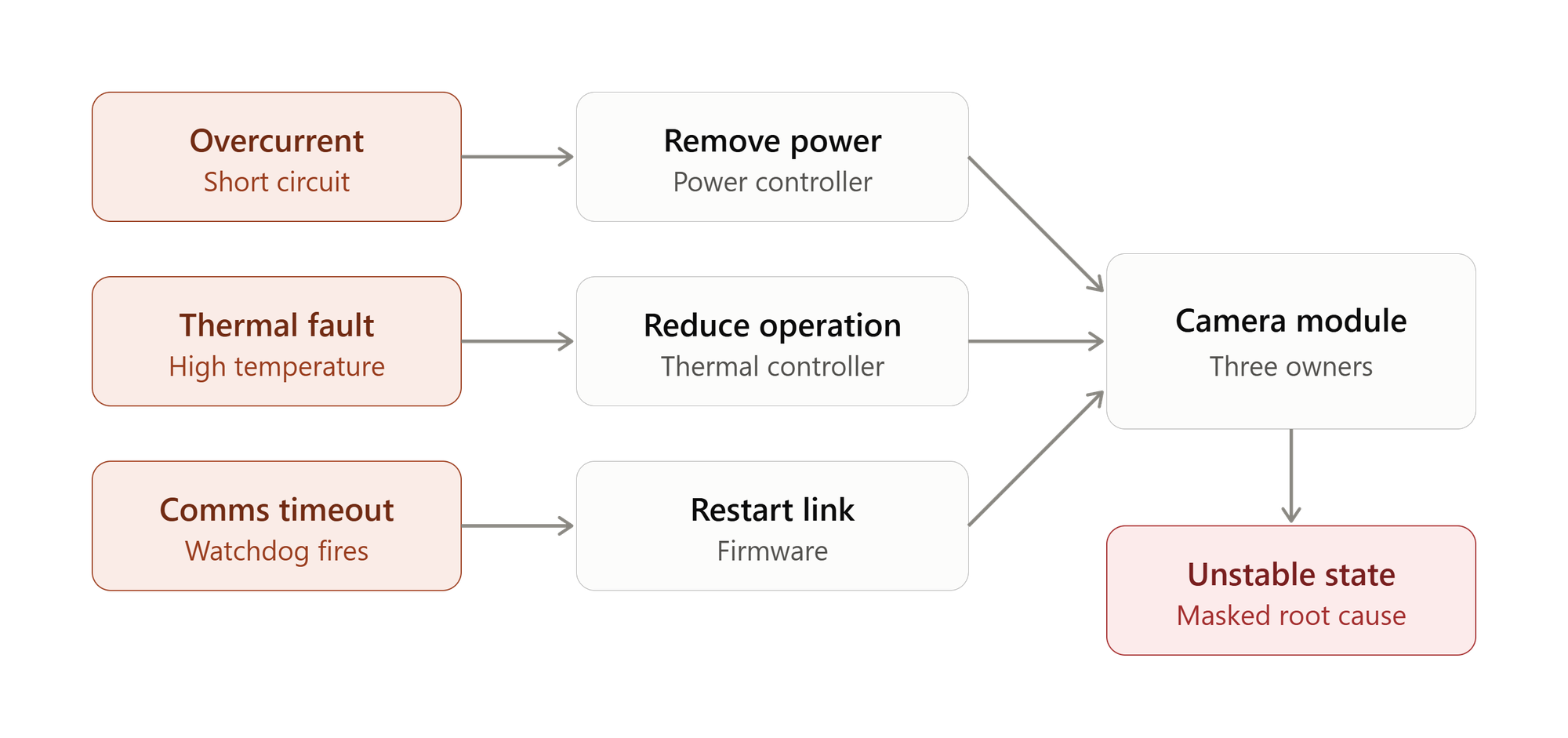
A camera module has:
- Power overcurrent protection
- Thermal shutdown
- Communication watchdog reset
A short circuit occurs during high-temperature operation.
The system sees:
Overcurrent Fault
+
Thermal Fault
+
Communication Timeout
Now three recovery mechanisms are active:
- Power controller wants to remove power.
- Thermal controller wants reduced operation.
- Firmware wants to restart communication.
Which action should happen first?
Without priority logic, the system may:
- Repeatedly restart
- Hide the actual failure
- Waste recovery time
- Enter unstable states
Designing Fault Precedence Logic
Fault precedence defines the authority order between different fault conditions.
Not every fault has equal importance.
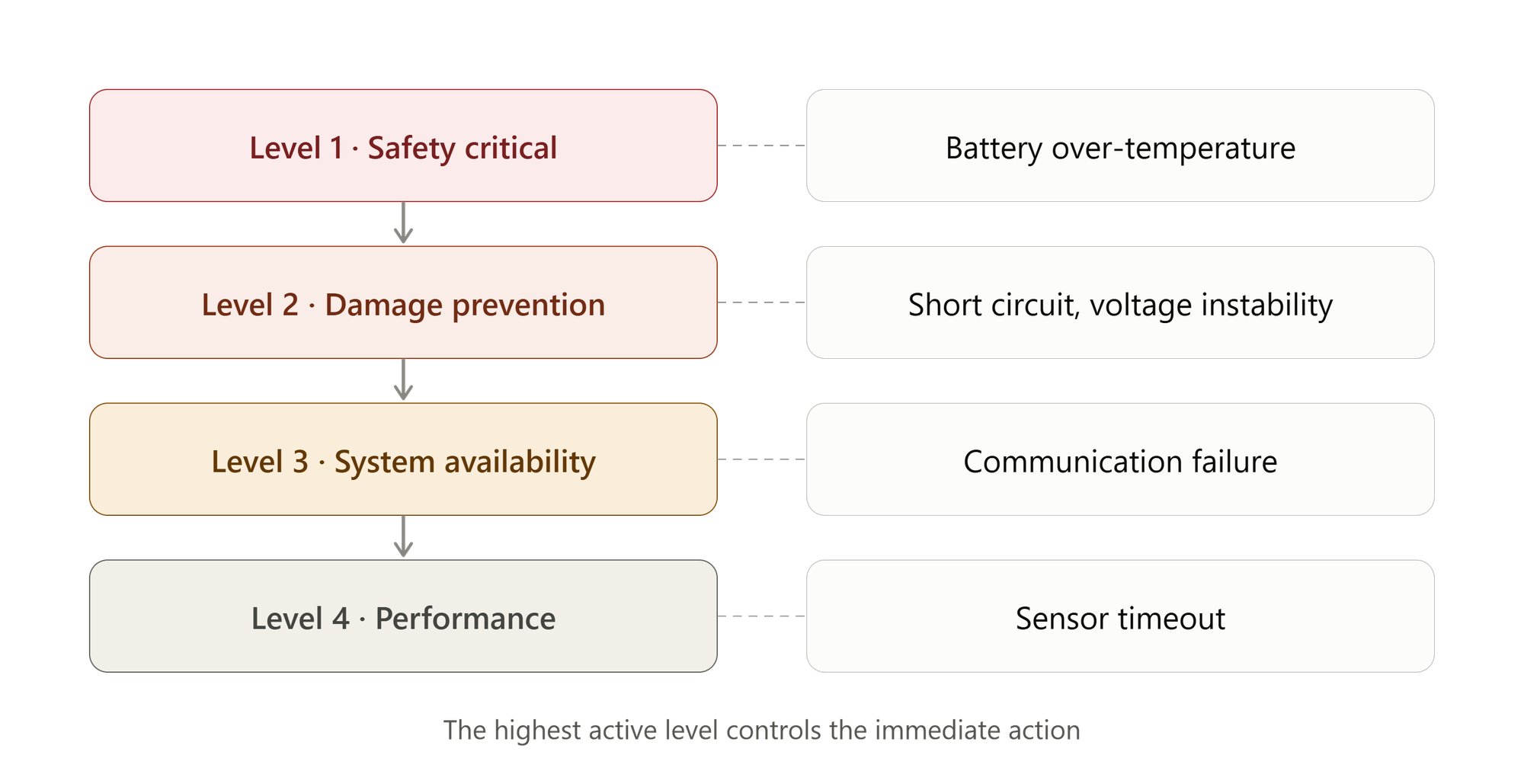
A practical hierarchy may look like:
Level 1
Safety Critical Faults

        ↓

Level 2
Hardware Damage Prevention

        ↓

Level 3
System Availability Faults

        ↓

Level 4
Performance Degradation
Example:
| Fault | Priority |
|---|---|
| Battery over-temperature | Highest |
| Power short circuit | High |
| Voltage instability | High |
| Communication failure | Medium |
| Sensor timeout | Low |
If multiple faults occur:
The highest priority fault controls the immediate action.
Example: Power Protection Priority
Consider a shared power rail supplying:
- Processor
- Camera
- Wireless module
Faults detected:
- Camera overcurrent
- Processor communication error
- Low voltage warning
A poor design might reset the entire system.
A better design:
Camera Overcurrent

↓

Disable Camera Rail


Processor Communication Error

↓

Restart Communication


Low Voltage Warning

↓

Reduce Performance
The fault response matches the actual severity.
Latched Event Ordering: Remembering What Happened First
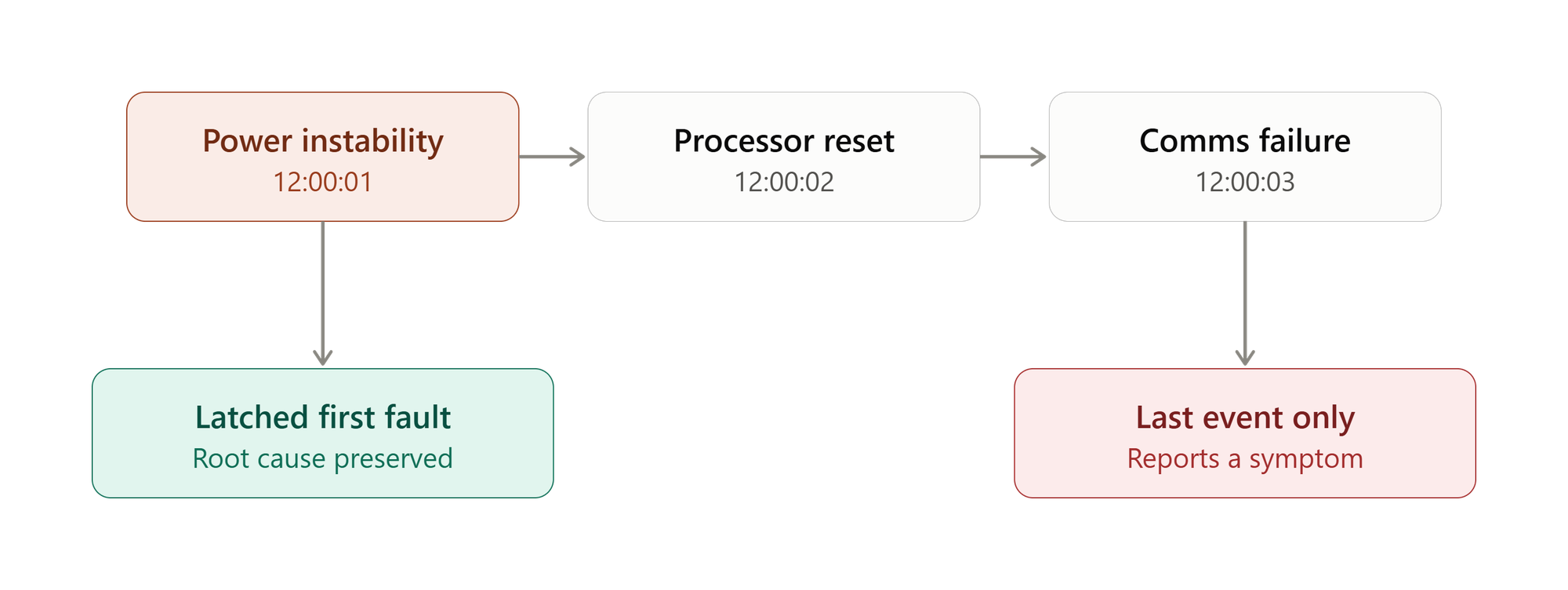
One of the most difficult debugging problems is:
The last fault observed is not always the original fault.
Example:
Sequence:
12:00:01
Power instability detected


12:00:02
Processor resets


12:00:03
Communication failure reported
If only the final event is stored:
The system reports:
"Communication failure"
But communication was not the root cause.
The real failure was power instability.
This is why fault events should be latched with ordering information.
Hardware Fault Latching Concept
A fault capture system should record:
First Fault

↓

Secondary Faults

↓

Final System State
Information can include:
- Fault source
- Timestamp/order
- Severity
- Recovery action taken
Example:
Fault Log

1. MAIN_3V3_DROP
2. CAMERA_OVERCURRENT
3. MCU_RESET
This immediately improves debugging.
Multi-Fault Reporting Without Losing Information
A common mistake is using a single fault flag.
Example:
FAULT = 1This only says something failed.
It does not explain:
- What failed?
- How many failures occurred?
- Which one happened first?
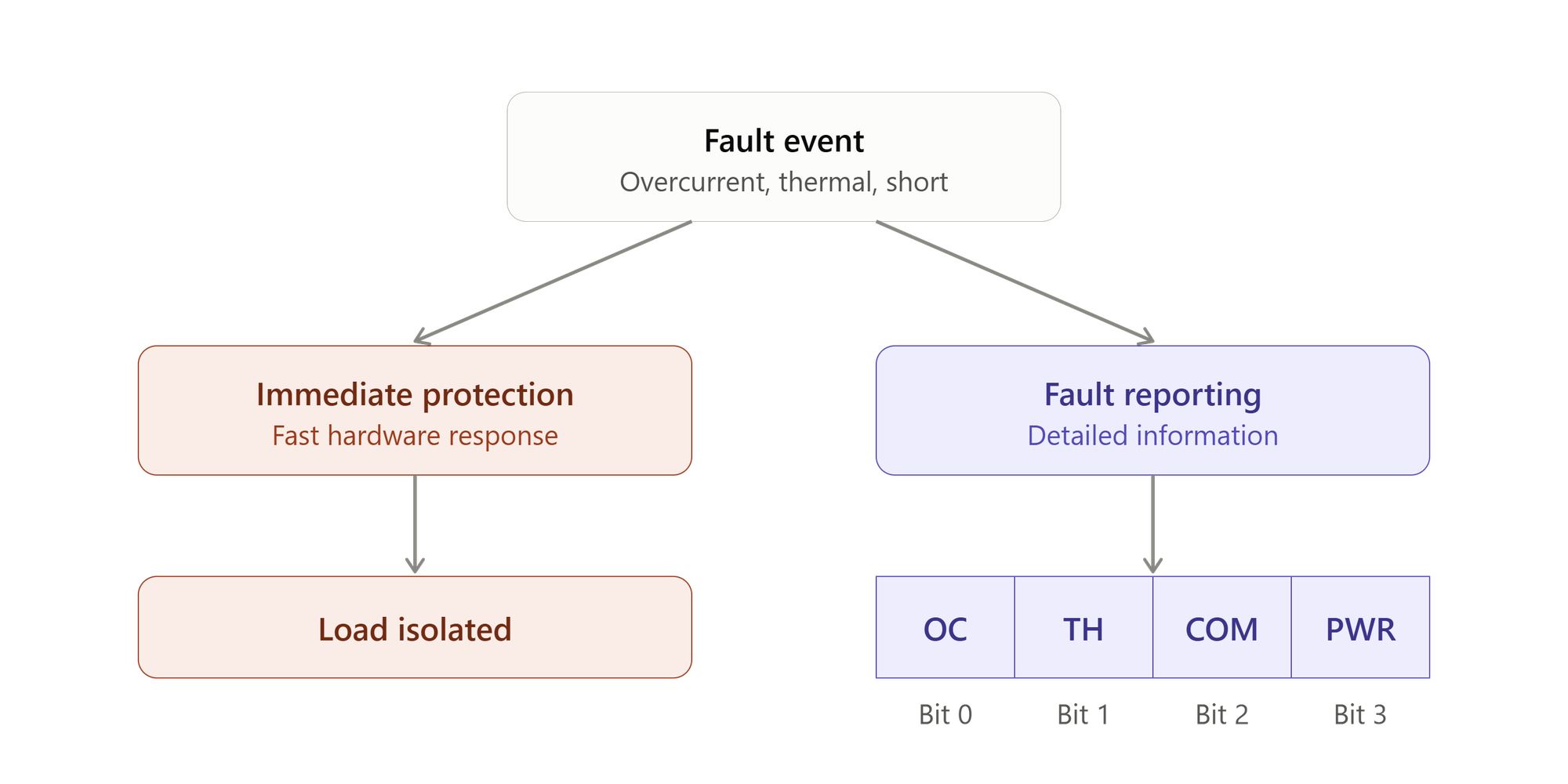
A better architecture separates:
Immediate Protection
Fast hardware response.
Example:
OVERCURRENT
THERMAL
SHORT CIRCUIT
↓
Immediate isolation
Fault Reporting
Detailed information.
Example:
FAULT REGISTER

Bit 0:
Overcurrent

Bit 1:
Thermal

Bit 2:
Communication Failure

Bit 3:
Power Drop
The system protects first and explains later.
Hardware Fault Arbitration Architecture
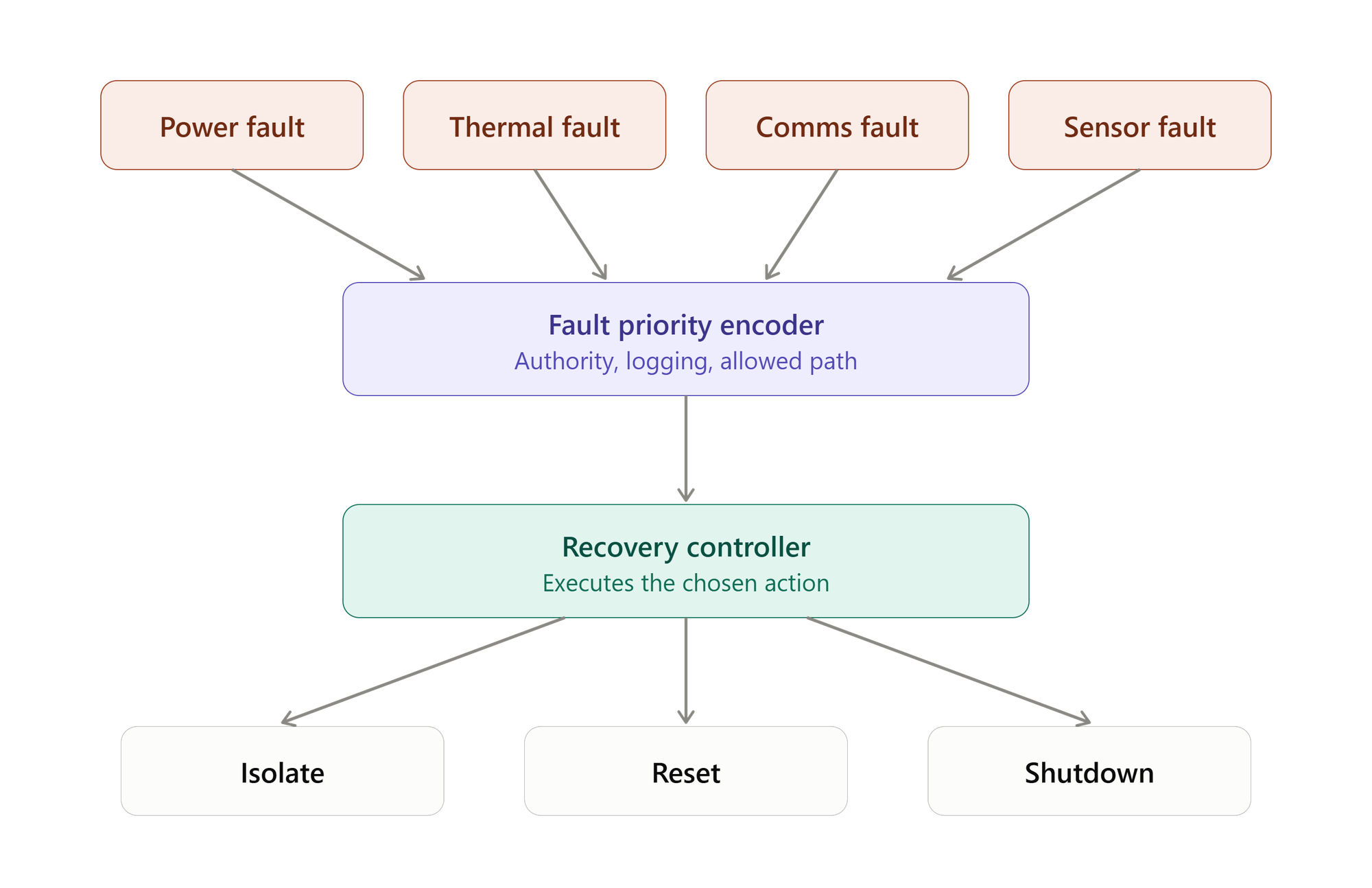
A robust architecture separates detection from decision.
Example:
Fault Sources

Power Fault
Thermal Fault
Communication Fault
Sensor Fault

        |

        ↓

Fault Priority Encoder

        |

        ↓

Recovery Controller

        |

        ↓

Isolation / Reset / Shutdown
The priority encoder decides:
- Which action has authority
- Which events are stored
- Which recovery path is allowed
Preventing Conflicting Recovery Actions
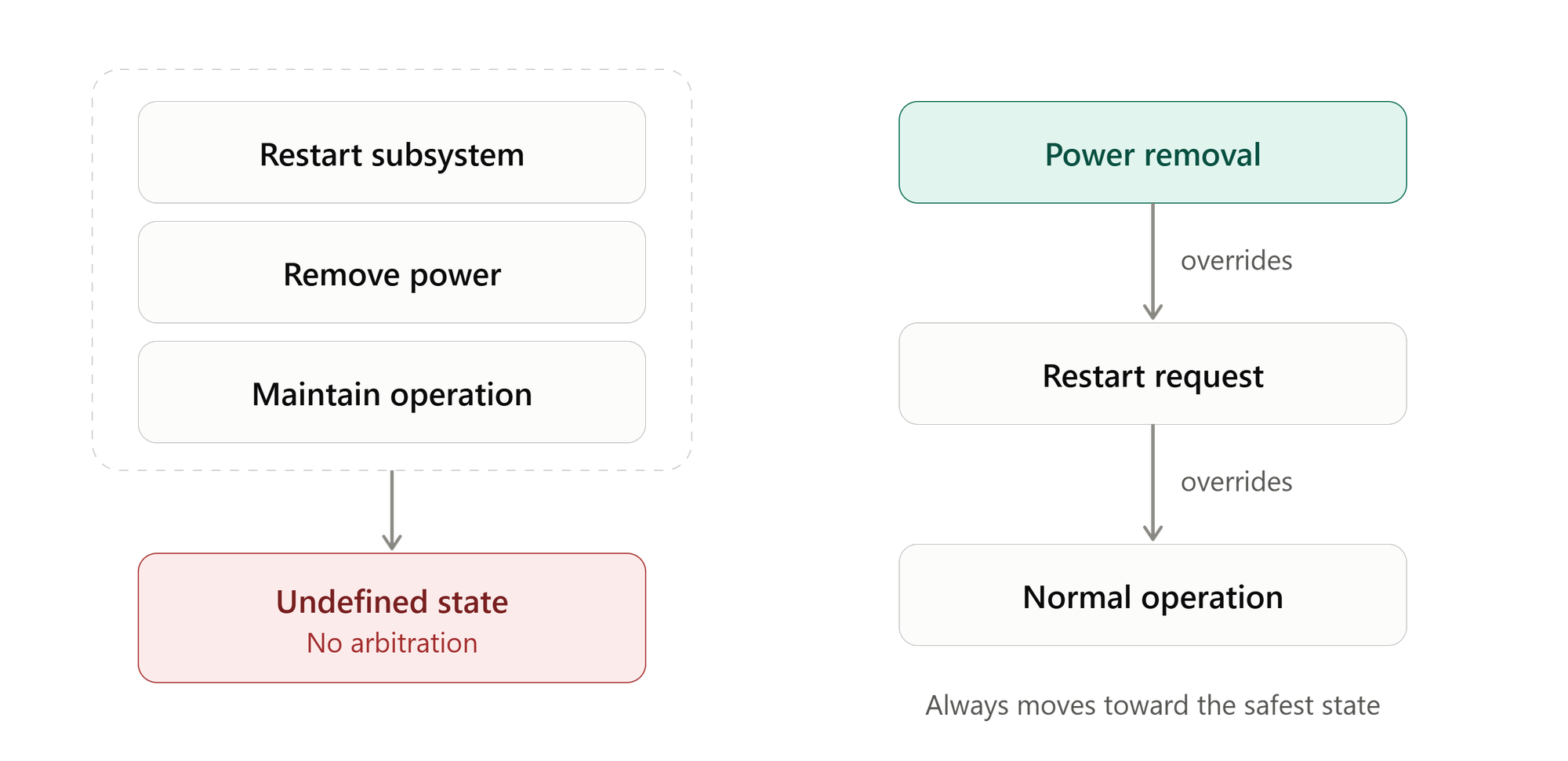
Multiple faults can create conflicting commands.
Example:
Fault A:
"Restart subsystem"
Fault B:
"Remove power"
Fault C:
"Maintain operation"
Without arbitration:
Restart
  +
Power Off
  +
Continue

= Undefined State
A priority controller resolves this:
Power Removal

overrides

Restart Request

overrides

Normal Operation
The system always moves toward the safest state.
Recovery Behaviour Should Be Predictable
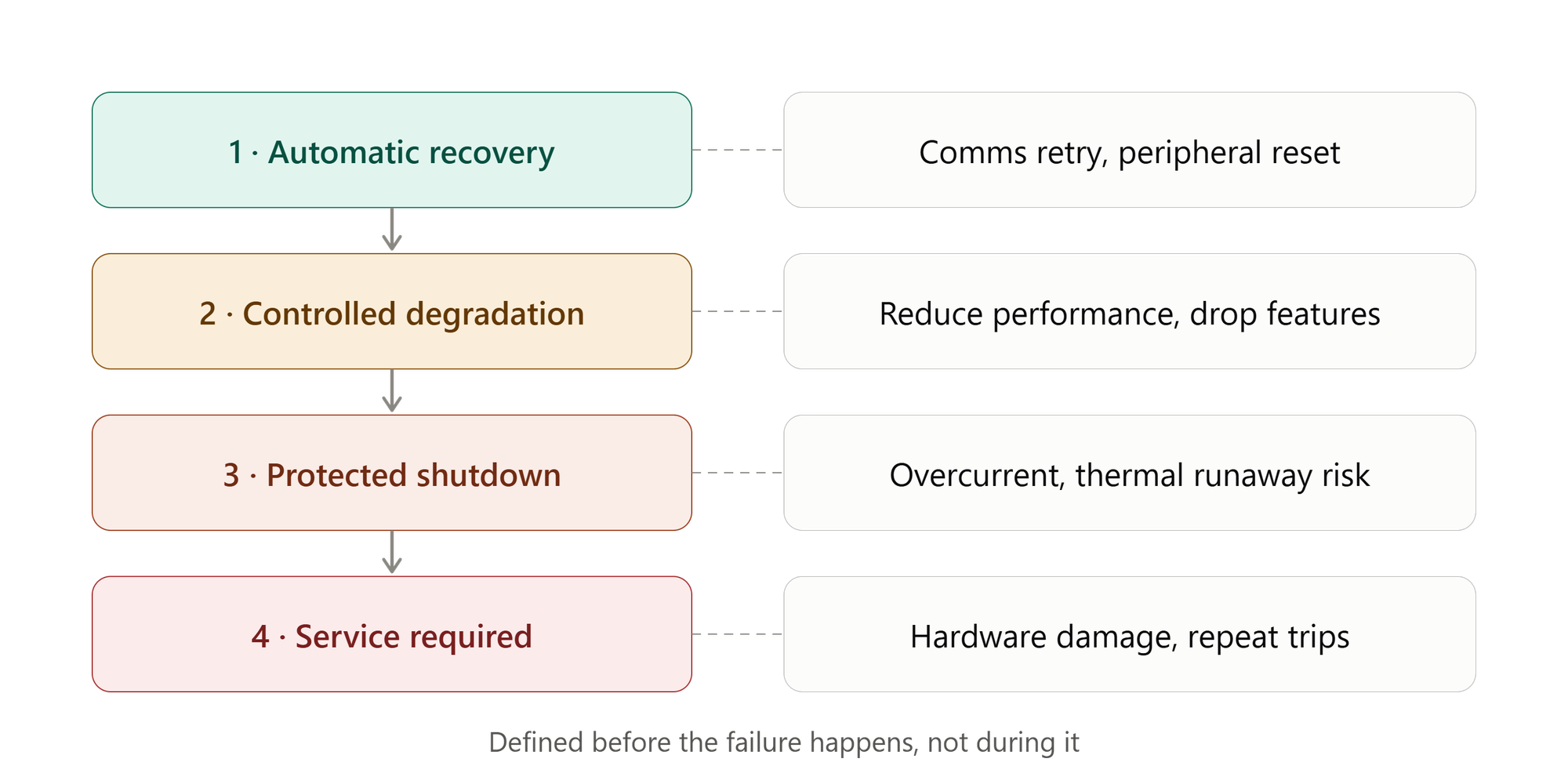
A fault response is incomplete without a recovery strategy.
Possible recovery levels:
Level 1: Automatic Recovery
Used for temporary issues.
Examples:
- Communication retry
- Peripheral reset
Level 2: Controlled Degradation
Used when operation is still possible.
Examples:
- Reduce performance
- Disable optional features
Level 3: Protected Shutdown
Used for serious faults.
Examples:
- Overcurrent
- Thermal runaway risk
Level 4: Service Required
Used for persistent failures.
Examples:
- Hardware damage
- Repeated protection triggers
The important point:
The recovery behavior should be defined before the failure happens.
Designing Fault Visibility Into Hardware
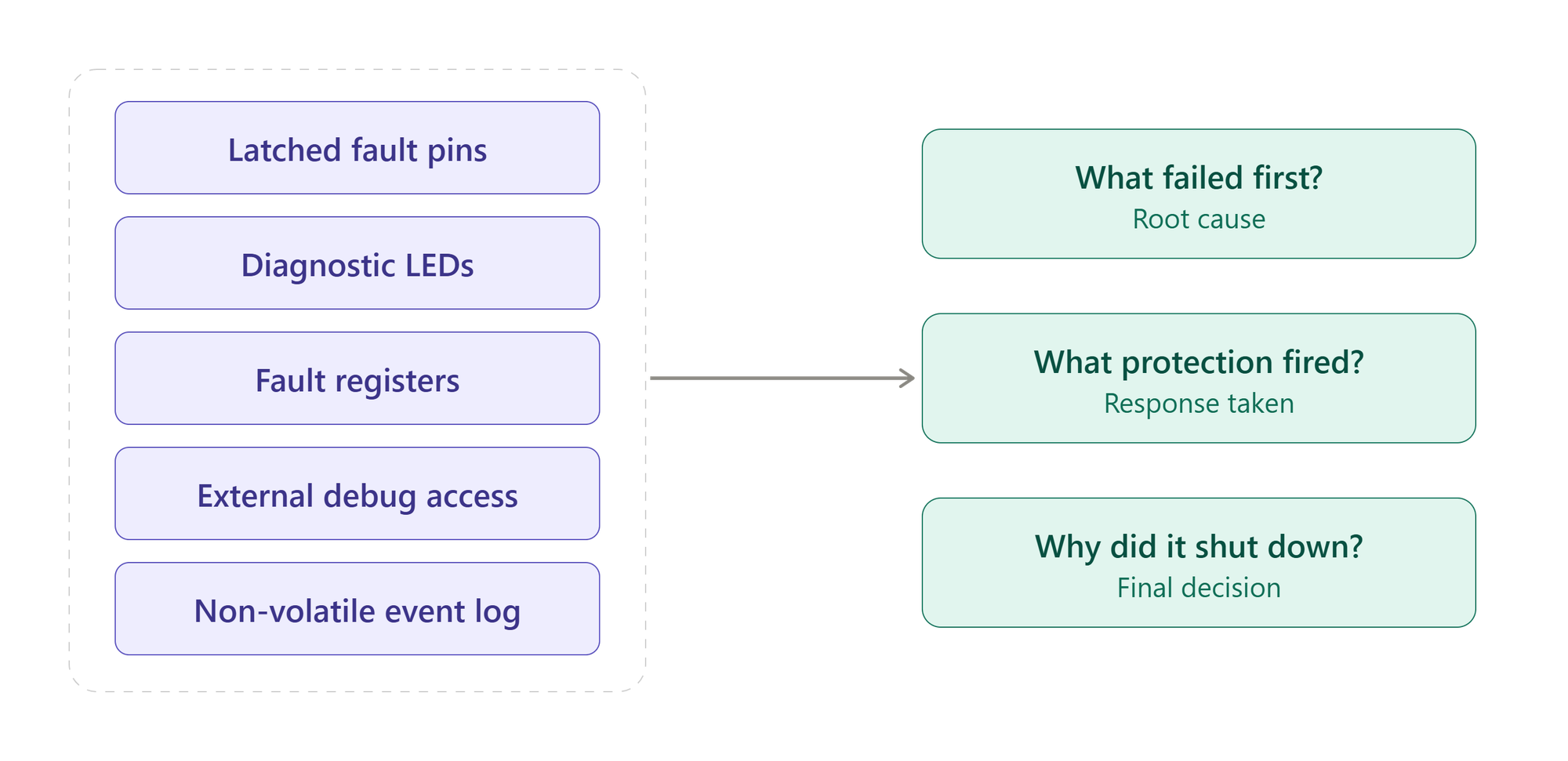
Fault priority is also important for manufacturing and field service.
A technician needs to know:
- What failed first?
- What protection activated?
- Why did shutdown occur?
Useful hardware features:
- Latched fault pins
- Diagnostic LEDs
- Fault registers
- External debug access
- Non-volatile event storage
A system that only says:
"Device failed"
creates unnecessary troubleshooting effort.
A system that says:
"Power overcurrent detected before reset"
changes the entire debugging process.
Hoomanely Design Perspective
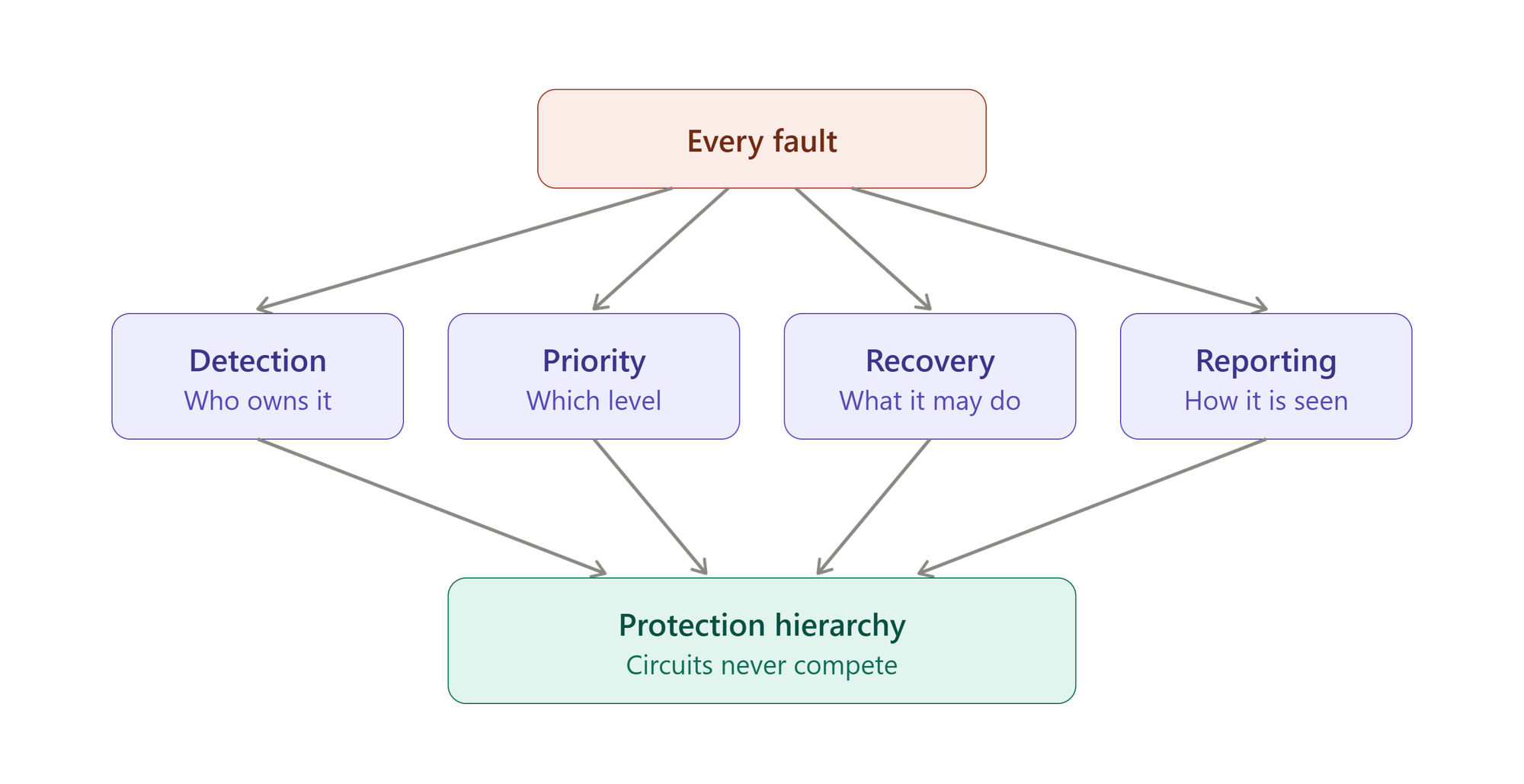
At Hoomanely, protection logic is not treated as a collection of independent safety circuits.
It is designed as a hierarchy.
Every fault needs:
- Detection ownership
- Priority level
- Recovery authority
- Reporting method
The important design question is not:
"Can we detect this fault?"
Most modern systems can.
The better question is:
"When multiple faults happen together, does the hardware know which one matters most?"
A mature hardware architecture does not allow protection circuits to compete.
It gives them a defined order.
Because in real products, the most difficult failures are rarely single failures.
They are combinations.
Conclusion
Products fail in unpredictable ways because real environments create unpredictable combinations.
Multiple faults can happen because of:
- Aging components
- Environmental stress
- Power instability
- User interaction
- Manufacturing variation
A reliable system needs more than fault detection.
It needs fault intelligence.
Fault precedence logic decides authority.
Latched event ordering preserves history.
Multi-fault reporting improves diagnosis.
Defined recovery behavior prevents unstable responses.
The goal is not preventing every fault.
The goal is ensuring that when faults happen together, the hardware responds with a controlled decision.