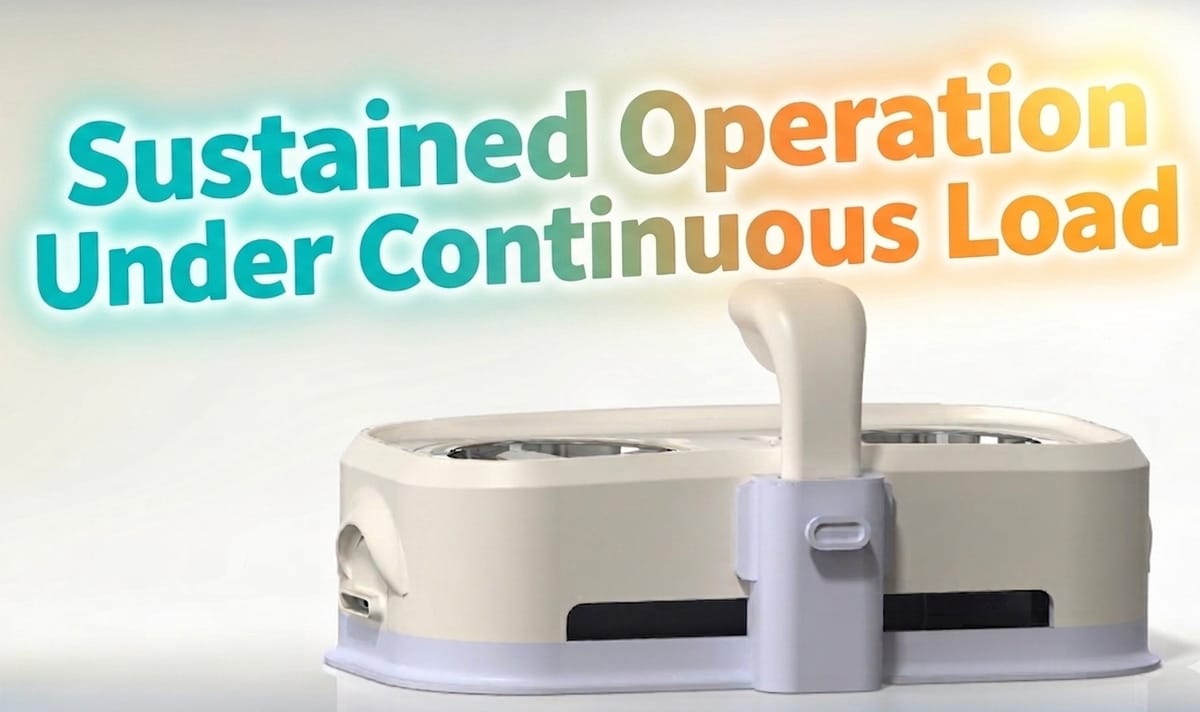
Sustained Operation Under Continuous Load
Most mechanical and electromechanical systems get validated for peak performance: maximum load, worst-case scenarios, failure limits. But in real-world products used every day, the harder problem usually isn't surviving peak load, it's operating reliably under continuous load over time.
At Hoomanely, this distinction mattered a lot while building systems that stay active for long stretches under steady or semi-steady loading. Components that performed perfectly in short tests started showing drift, deformation, and instability after hours or days of continuous use. This post covers what it actually means to design for sustained operation, why continuous load behaves differently from peak load, and how to build systems that stay predictable, not just strong, over time.
Why continuous load is different
When a system takes on load, two very different behaviors show up. Peak load behavior is immediate: stress, deformation, failure, right away. Continuous load behavior is time-dependent: creep, relaxation, drift, showing up gradually. Most design validation focuses on the first. Real-world reliability depends a lot more on the second.
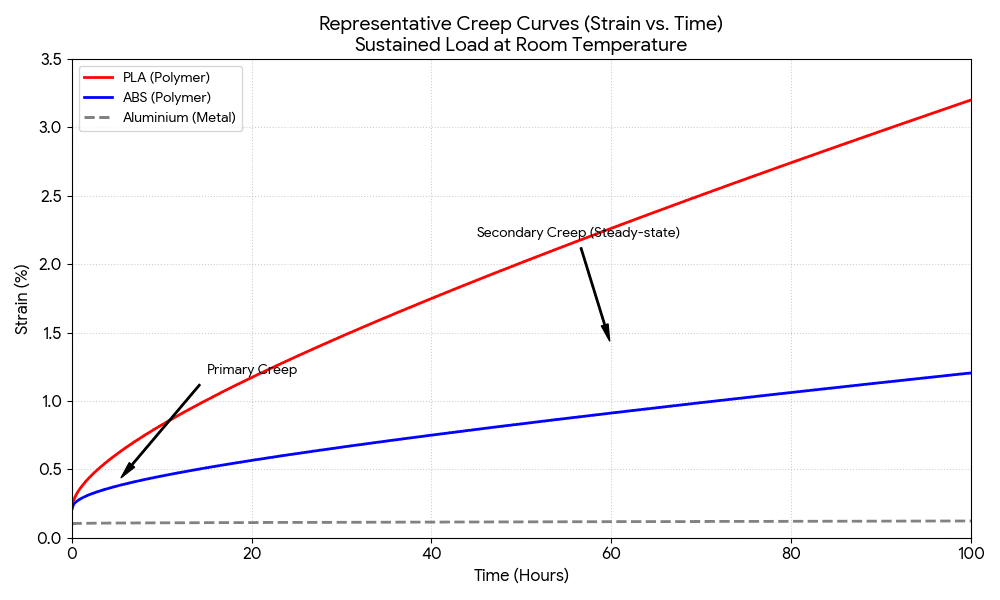
Even operating well below yield strength, materials and assemblies experience creep (slow deformation under constant stress), stress relaxation (a drop in internal force over time), joint preload loss, and micro-deformation at interfaces. As examples, ABS plastics can show 1 to 2% strain over long durations under constant load, fasteners can lose 10 to 20% of preload from relaxation and micro-slip, and even aluminum structures, more stable overall, still redistribute stress under long-term loading. The system doesn't fail outright, it evolves, often in ways that are hard to predict.
Designing for time, not just force
The conceptual shift is simple: don't just design for how a system behaves under load, design for how it behaves over time under that load. That means evaluating time-dependent material behavior, understanding load path stability over long durations, and designing assemblies that hold their geometry and preload. Instead of asking "will it hold?" the better question is "will it still behave the same after continuous use?"
Building systems that stay stable
Understanding material behavior over time: different materials respond very differently to sustained load.
We chose materials for Everbowl with these differences directly in mind, favoring low-creep options wherever a component sat in a long-duration load path.
Managing creep in structural parts: creep in a material depends on the balance between instantaneous strain and time-dependent creep strain. The design strategies we used in Everbowl to control it included keeping stress levels under roughly 30 to 40% of yield, increasing cross-sectional area, adding ribbing or structural reinforcement, and shifting load onto low-creep materials like aluminum.
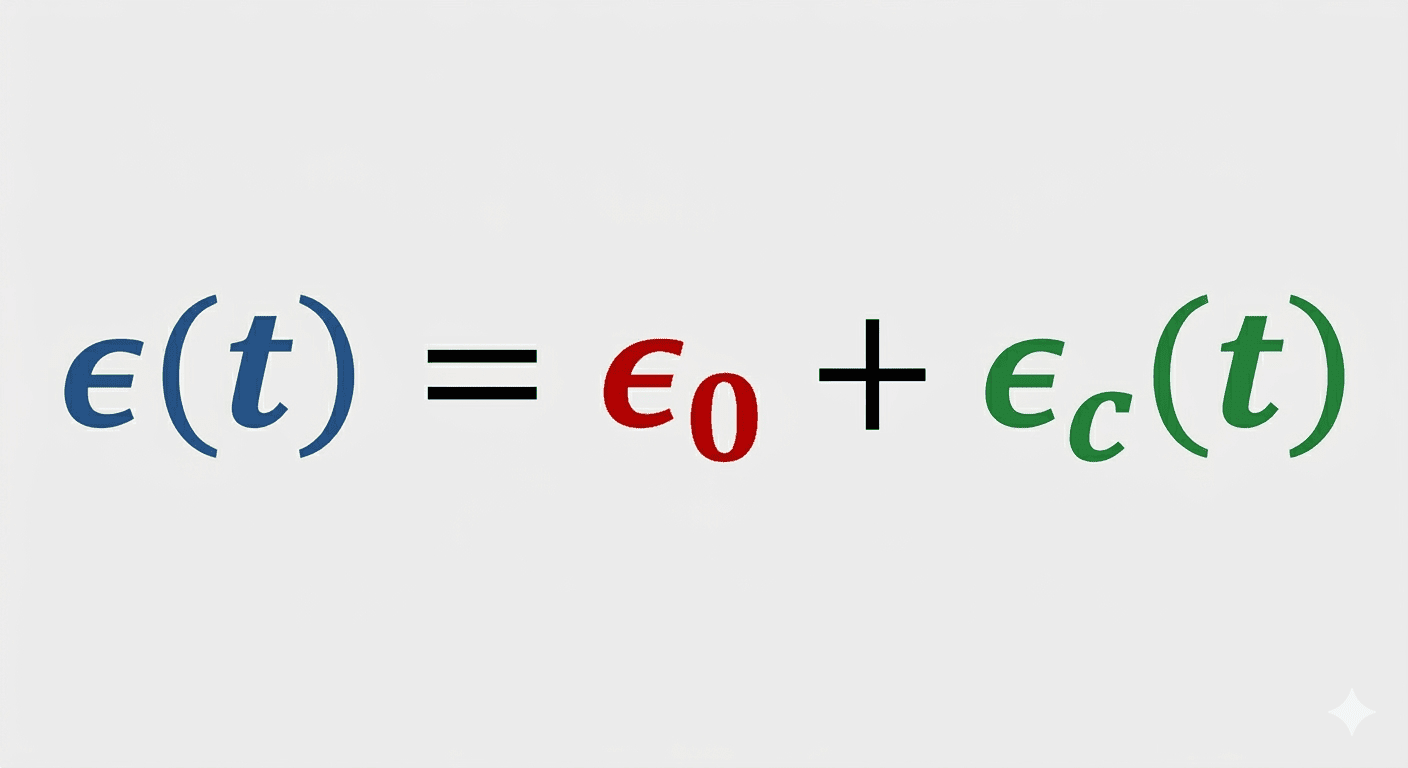
Maintaining joint integrity: fasteners are one of the more fragile parts of a system under continuous load, prone to preload loss, micro-slip, and loosening. Our fixes were threaded inserts in plastic parts, designing in elastic preload zones, and avoiding direct plastic thread engagement wherever the joint carries real load.
Designing stable load paths: under sustained load, even small deformation shifts the load path and creates new stress concentrations, so the design goal is to keep load paths short, direct, and stiff, avoiding long cantilevers and flexible intermediate components.
Minimizing micro-movement: micro-movement leads to fretting wear, alignment drift, noise, and instability, and the displacement causing damage can be as small as 10 to 50 microns. We controlled it by increasing stiffness, improving contact surfaces, and reducing compliance in joints.
From temporary stability to long-term reliability
Applying these principles gave us systems with less drift over time, stable geometry under continuous load, consistent performance across usage cycles, and more user confidence in the result. The system doesn't just survive, it stays predictable, which matters a lot for a measurement system: continuous load affects calibration, sensor alignment, and signal accuracy, and even 1 to 2% structural drift can cause meaningful measurement error.
Continuous load in practice
While developing systems at Hoomanely, continuous load surfaced behaviors that were invisible during short testing cycles. Initial designs passed strength tests and held up in short-term use, but over time, slight deformation appeared in plastic components, fasteners lost preload, and load distribution shifted.
Instead of just adding strength, we shifted focus to stability over time: reinforcing load-bearing structures, reducing stress levels in plastic parts, introducing threaded inserts, and optimizing load paths. That gave us better long-term dimensional stability, less performance drift, and consistent behavior across extended use. Continuous load doesn't break systems outright, it slowly changes them, and designing for stability really means controlling that change.
Hoomanely context
At Hoomanely, designing for continuous operation matters because our products need to function reliably in real environments, not just during testing. Focusing on long-term behavior, creep, preload stability, load path integrity, keeps the systems consistent over time, which strengthens both product durability and user trust in how the product behaves day after day.
Key takeaways
- Continuous load introduces time-dependent behavior that peak-load testing doesn't reveal.
- Creep and relaxation are the primary design challenges to manage.
- Plastics need careful load management to avoid long-term drift.
- Joint design is critical for long-term stability.
- Load paths need to stay stable over time, not just at first assembly.
- Predictability matters more than initial peak performance.
Conclusion
Designing for peak load makes sure a system won't fail immediately. Designing for continuous load makes sure it won't fail gradually. Real products live under sustained conditions, holding weight, maintaining alignment, running continuously, and the ones that succeed aren't the ones that resist load once. They're the ones that stay stable under it indefinitely. Engineering maturity here is really about designing for time under force, not just force alone.