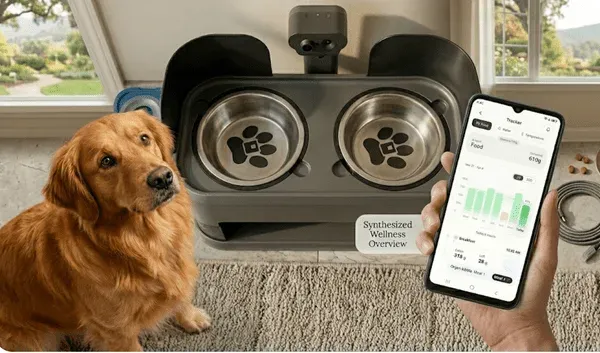
Engineering Multi-Sensor Fusion & Temporal Aggregation for Real-Time Pet Biometrics
The quiet signals
As pet parents, we're fluent in the loud parts of how our companions communicate: the joyful bark at the door, the nuzzle demanding a walk, the rhythmic thump of a wagging tail. Chronic health issues rarely speak that loudly. For most pets, health changes whisper long before they shout.
A 10% drop in daily hydration. A slight rise in overnight body temperature. Eating a favorite meal in a more fragmented way than usual. These are the blind spots in most pet care today, usually only decoded at a vet visit, often once a condition has already progressed. At Hoomanely, closing that gap is the goal. We've focused on scaling the Everbowl platform beyond simple monitoring, building a much higher-fidelity window into the quiet, day-to-day life of a pet. This is the story of how we turned physical signals into something closer to proactive care.
The challenge: building a personal health baseline
The biggest obstacle to proactive pet care is the lack of a personal baseline. Every pet is different: what's normal for a senior Golden Retriever looks nothing like what's normal for a high-energy Border Collie puppy.
Picture a monitoring system built into a pet's daily feeding rhythm. Every interaction becomes a data point, a measure of volume, weight, and timing, but biological data is inherently messy. A pet might nudge their water bowl, take breaks mid-meal, or graze on and off throughout the day. Getting to clinical-grade insight meant building a layer that doesn't just record weight, it interprets behavior. The goal was taking raw physical signals and turning them into something closer to a coherent wellness narrative: "Buddy's hydration is trending 15% below his personal baseline, worth checking his environment."
Keeping signals in sync
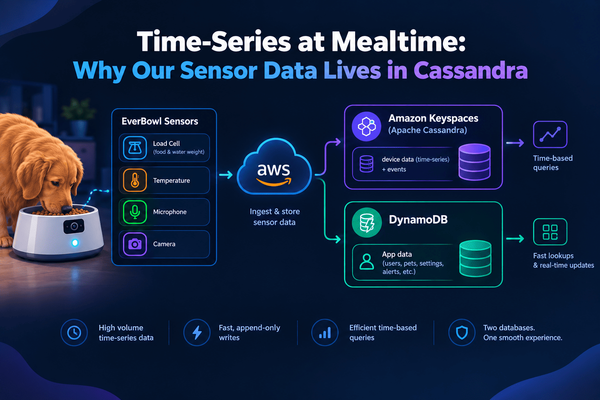
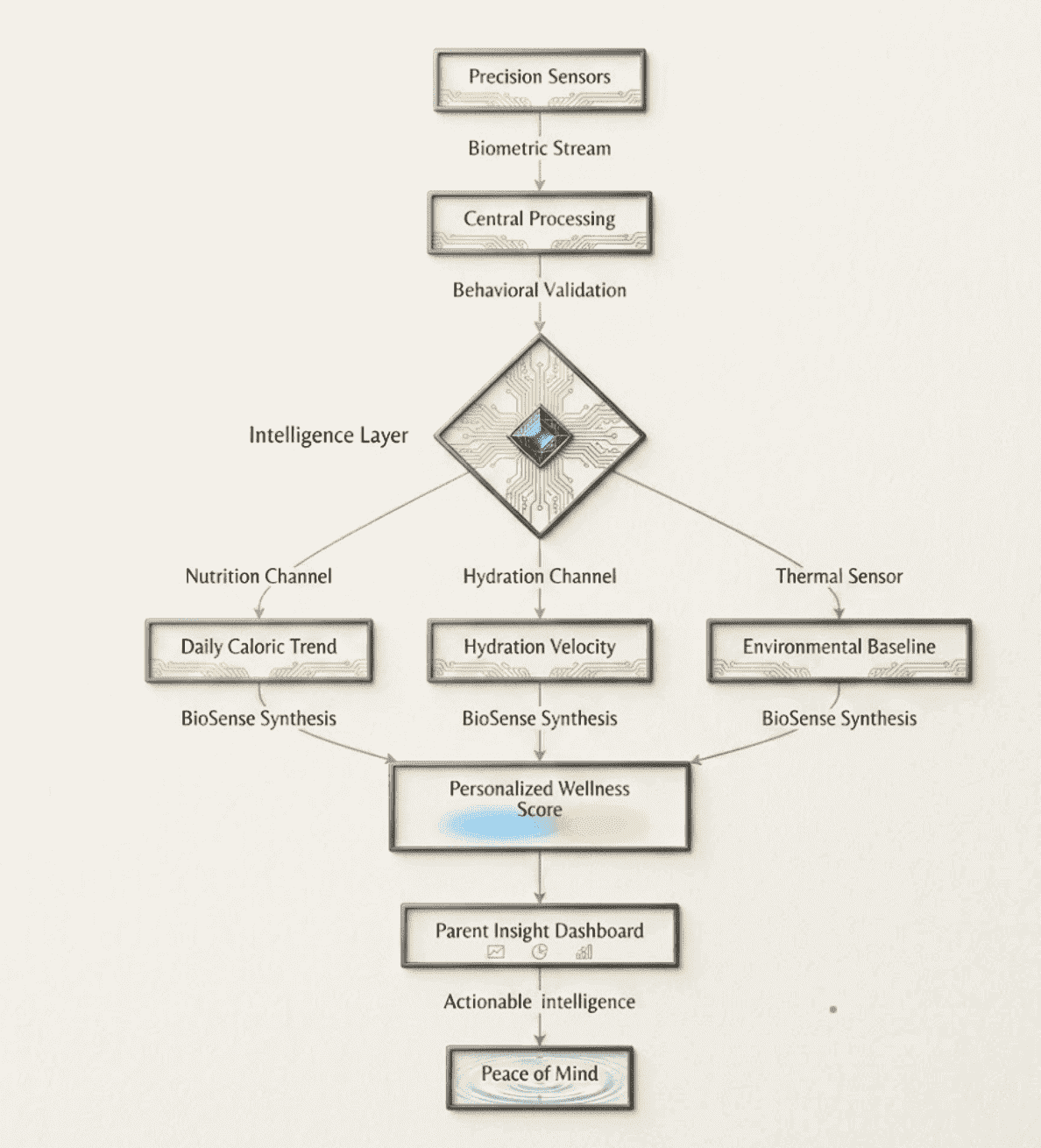
Decoding pet health takes a careful approach to keeping signals synchronized. When multiple sensors track nutrition and hydration at once, the system has to reconcile all of it in real time so a pet parent's dashboard always reflects the current biometric state, not a stale one.
To get there, we moved away from static data models toward a dynamic baseline engine that acts as a conductor for the incoming stream of signals, validating every update before it's allowed to move the wellness score. Accuracy here isn't optional. A false alarm over a hydration drop caused by a temporary signal delay creates real, unnecessary anxiety for a pet owner. We addressed that with a prioritized validation sequence: high-priority health flags for immediate, critical deviations from baseline (like a sudden change in water intake), followed by contextual enrichment, a background check against historical trends and long-term habits so a single-event blip doesn't get mistaken for a chronic issue.
Identifying the rhythm
One of the trickier interactions to decode is the interrupted meal. If a puppy stops eating to chase a ball and comes back five minutes later, is that one meal or two?
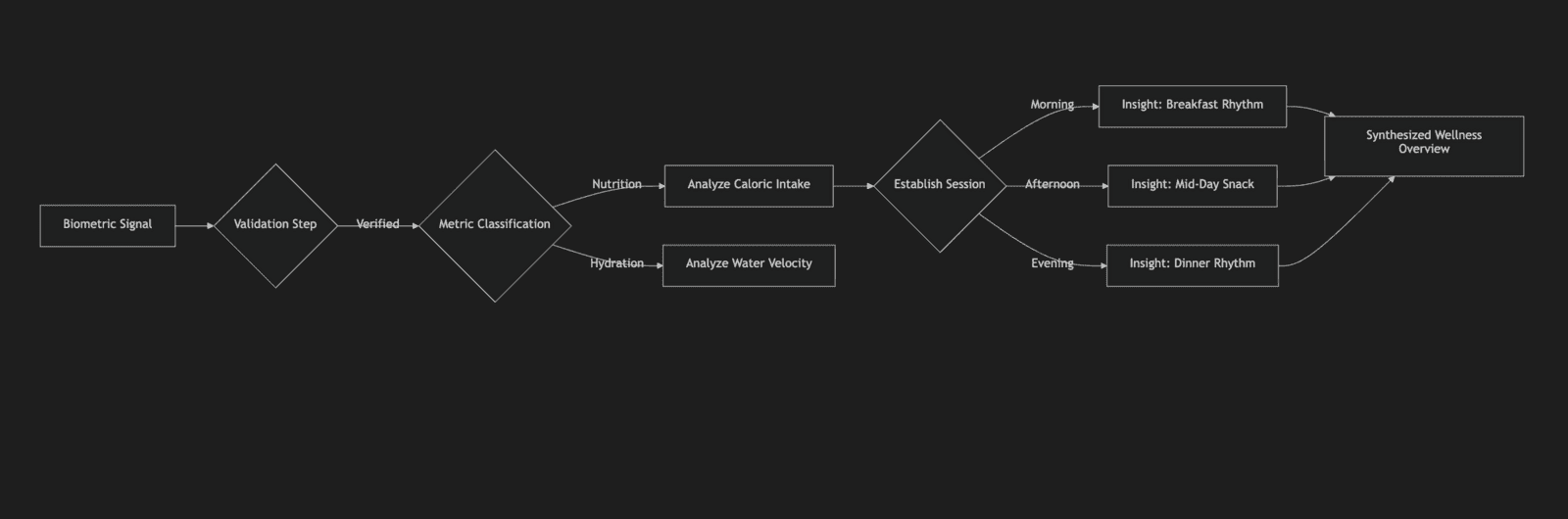
We built a logic layer around temporal grouping that accounts for a pet's own pace and the ordinary distractions of a home environment. By looking at how close feeding events are to each other and comparing that against a pet's established habits, the system can collapse fragmented events into coherent sessions, morning, afternoon, evening snapshots. That matters for telling apart a pet that's simply grazing from one that's struggling to get through its daily intake. Turning raw sensor pings into a clear, low-noise view of actual nutrition gives parents the clarity they need to make real decisions about their pet's diet and health.
Designing the dashboard for clarity
Data only becomes useful once it's actionable and easy to read, so we spent real time on the monitoring experience, making sure complex biometrics translate into simple, intuitive takeaways.
The dashboard isn't a list of raw metrics, it's a tiered priority view. Whether a pet's status reads optimal, stable, or needs attention, the information is laid out to keep cognitive load low. When something's actually concerning, a parent doesn't need raw numbers, they need to know clearly what their pet's behavior is telling them.
Reliability as the foundation
With health data, there's essentially no room for error. Over the last few weeks we've put a lot of weight on system reliability and data integrity. Validating messy, real-world signals, water consumption shifting with room temperature, for instance, takes a genuinely rigorous approach to system architecture. We ran a systematic review of the experience and a resource audit to keep the intelligence layer responsive and lean, stripping out operational friction so the platform stays accurate and responsive even on a weak connection.
That focus on reliability means that when a pet parent checks their dashboard, what they're seeing is an honest read on their pet's health, not a guess dressed up as one.
Where this fits at Hoomanely
Every piece of this, from the logic that decodes fragmented feeding patterns to the environmental checks that track ambient temperature, serves one goal: giving pet owners the data and insight they need for their pets to live longer, healthier lives.
We're not just building technology, we're building something closer to a digital guardian for the animals people care about. Pets are living longer, but clinical visits are still occasional, and this system is meant to provide a continuous thread of care in between. By decoding the quiet signals around nutrition, hydration, and environment, we're moving pet care away from reactive treatment and toward something proactive and driven by actual data. That shift matters because it means pets don't just get by, they get a better shot at thriving in an environment built around their specific biological and emotional needs.
Every pet owner deserves the peace of mind that comes from knowing their companion is healthy, hydrated, and content, even when they're not in the room. This work is meant to be the bridge between the care people already feel for their pets and the precision data needed to actually protect them.
Key takeaways
- Technology only matters here if it turns raw signals into actionable wellness insight.
- A real baseline requires understanding a pet's individual history, not a universal standard.
- Accuracy in monitoring is what builds trust between the system and the pet parent using it.