The Post-Meal Window: A Crucial Health Signal in Dogs
Intro
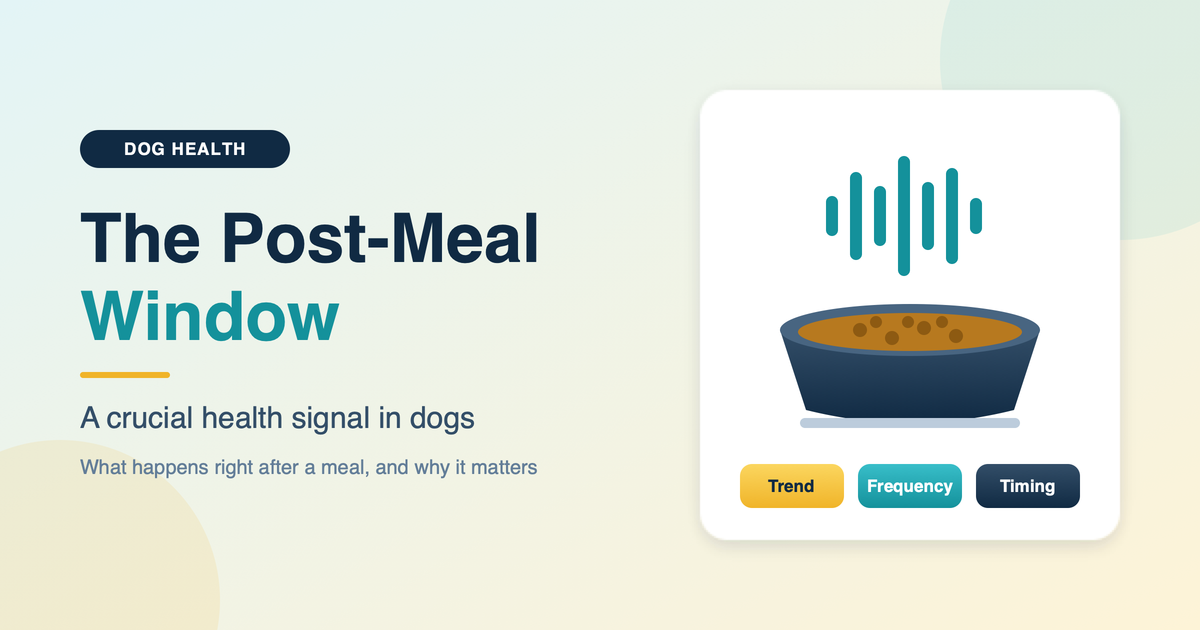
Some health signs in dogs show up at one specific time: right after a meal is one such crucial time. and panting or coughing are such crucial signals. Vets know this, and one of the first things they want to know about a cough is whether it happens consistently around food. The trouble is that almost nobody is watching at that moment, and nobody is counting.
This post looks at, which conditions show signs after a meal, why that window is hard for pet parents to track, and how a bowl that already knows when your dog eats can turn it into a reference for your vet.
Why the moments after a meal matter
Food and air share an entrance at the back of the throat. The larynx is the gate that keeps them apart. When it does not work well, food can go down the windpipe by mistake, and vet sources note that these dogs often develop pneumonia.
The link also runs the other way. In flat-faced breeds, researchers suggest that the effort of breathing through a narrow airway creates strong negative pressure in the chest, which may pull stomach contents upward. So a meal tests the airway and the gut at the same time, and several conditions show themselves around it.
Condition | What sources describe around meals |
|---|---|
Laryngeal paralysis | Gagging or coughing, often linked to eating or drinking. Noisy breathing and heavy panting. |
Megaesophagus | Regurgitation is the main sign. A cough can follow when food reaches the lungs (aspiration pneumonia). |
Tracheal collapse | A dry, harsh, "honking" cough that eating or drinking can set off. |
Brachycephalic airway syndrome | Airway signs together with digestive signs such as regurgitation. |
Table 1: Conditions with signs that cluster around mealtimes.
The research on flat-faced dogs shows how closely the two systems are tied. One study examined 73 brachycephalic dogs that came in for airway signs and found a very high rate of digestive tract problems in the same dogs. A later study reported digestive signs in 93% of French bulldogs with airway disease, 58% of English bulldogs, and 16% of pugs, and those signs generally improved after airway surgery.
Why this is hard to track at home
A single cough after meal tells a vet very little. What helps is the pattern: how often it happens, and how soon after the meal. Pattern is exactly what pet parents cannot give. That is not carelessness. It is hard for humans to keep track.
- You are not in the room. The dog often eats after you have walked away.
- The signs are short. A few gags or a burst of panting are over in moments.
- Memory is not measurement. "He does it sometimes after dinner" is honest, but it does not say how often.
- Hard for the vet to check. A sign that shows up after meal will not appear on demand in an exam room.
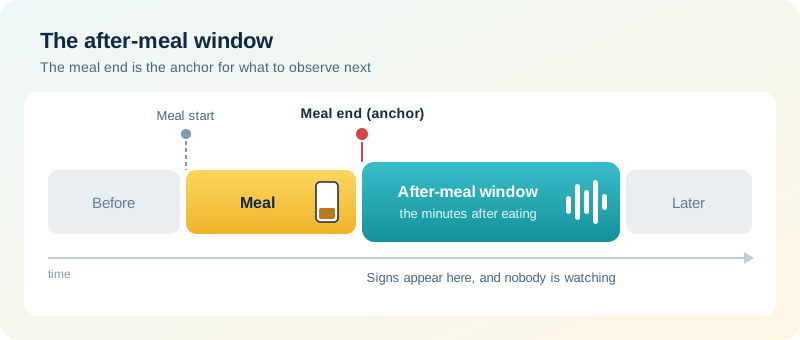
How the profiling should be done
Once you know the moment a meal ends, you can ask a simple question: how did the dog behaviour change right after?
Step-1: Identify post-meal time
Step-2: Record audio post meal: identify behaviour labels and its time
Step-3: Create a per meal summary, then per dog over weeks
What the flow looks like:
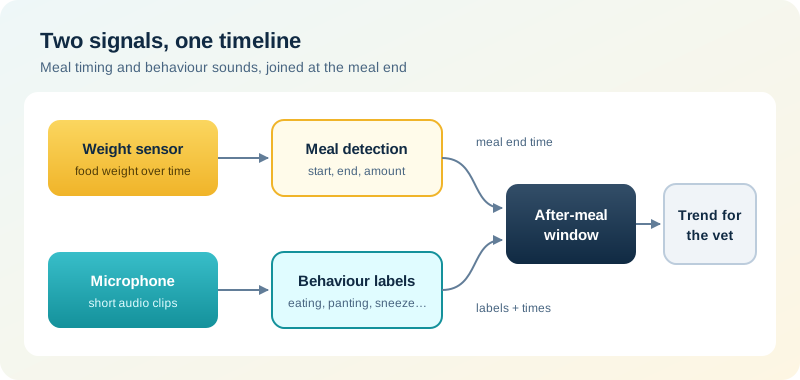
This flows job is to record what happens after a meal, how often, and whether it is changing, in a window that people cannot watch. The vet can use this record as a reference during diagnosis.
How it helps the vet
A vet working with a pet parent's memory gets "sometimes". A record of the after-meal window can answer the questions that memory cannot:
- Trend — is it steady, or becoming more frequent?
- Frequency — after how many meals?
- Timing — does the behaviour follow meals, or does it happen at any time?
Where Hoomanely fits
Hoomanely's mission is to help pet parents understand their dogs' health through everyday signals, not only through clinic visits. The bowl is the centre of that idea, because a dog uses it every day with no effort from anyone.
The hard half of this problem is knowing when the meal happened. A smart bowl already knows that.
1. It knows when your dog eats.
- The Hoomanely bowl already records the pet food consumption, with a time, a duration, and an amount of food.
2. The audio models already classify behaviour.
- The audio classifier models in the Hoomanely device sort audio clips into classes like eating, drinking, panting, etc.
Together they make something new possible: Profiling post-meal pet behaviour.
Key takeaways
- Meals test the airway and the gut together, so several conditions show signs right after eating.
- The pattern matters more than a single event, and pattern is what pet parents cannot observe.
- Knowing when the meal ended is the hard part, and the bowl already identifies it.
- The bowl's audio model already classifies everyday behaviours, so the after-meal window can be analysed.
- A vet can use the output as a reference during diagnosis.
References
- Merck Veterinary Manual — Dilatation of the esophagus in small animals
- American College of Veterinary Surgeons — Laryngeal paralysis
- Cornell Riney Canine Health Center — Laryngeal paralysis
- VCA Animal Hospitals — Tracheal collapse in dogs
- Poncet et al. 2005, *Journal of Small Animal Practice* — digestive tract lesions in 73 brachycephalic dogs with airway signs
- Royal Veterinary College repository — digestive signs by breed in brachycephalic dogs
- Appelgrein et al. 2022, *Journal of Veterinary Internal Medicine* — Quantification of gastroesophageal regurgitation in brachycephalic dogs
- Dogster (vet-reviewed) — Dog coughing after eating