Why Transfer Learning Failed For Our Audio Noise Cancellation Pipeline

Introduction
Transfer learning usually feels like a shortcut that just works. Pretrain on a large dataset, fine-tune on your task, and let scale do the heavy lifting. That approach worked well for us in vision - but audio broke that assumption in a very specific, painful way.
At Hoomanely, we were trying to build a privacy-preserving dog audio pipeline: detect eating sounds, suppress human speech, and later enable anomaly detection — all on edge devices. We relied heavily on a prompt-based audio separation transformer as a teacher model, assuming its outputs would be “good enough” to fine-tune downstream models.
They weren’t.
This post explains why transfer learning failed in our audio setup, how a seemingly small 20% noisy output completely derailed training, and why a smaller, cleaner dataset + diffusion-based augmentation + YAMNet fine-tuning outperformed teacher–student distillation by a wide margin.
Context: Audio at Hoomanely
Hoomanely’s mission is to convert raw pet signals into daily, actionable intelligence - responsibly and privately. Audio is one of the hardest modalities in that equation.
Our constraints shaped everything:
- Always-on microphones in homes
- Strict privacy requirements (human speech must not leak)
- Edge inference (limited compute, low latency)
- Extremely subtle target signals (chewing, licking, bowl movement)
Unlike vision, audio errors are invisible. You don’t see what went wrong — you hear it, and humans are notoriously bad at auditing thousands of clips.
The Original Plan
The original pipeline looked reasonable:
- Collect raw bowl audio
- Use an audio separation transformer with prompts like
“dog eating, chewing, drinking” - Treat the separated output as clean ground truth
- Fine-tune downstream models (Conv-TasNet / classifiers)
- Deploy on edge
This was essentially teacher–student distillation, with the transformer acting as a high-capacity oracle.
On paper, it made sense.
Where Things Started Breaking
The 20% Problem
Roughly 20% of the transformer outputs were bad.
Not catastrophically bad - just subtly wrong:
- Residual human speech buried under chewing
- Over-suppressed transients
- Artificial gating artifacts
- Frequency smearing that didn’t exist in real data
The issue wasn’t the percentage.
The issue was verification.
Why Audio Is Harder to Verify Than Vision
In vision pipelines:
- A bad label is visible instantly
- You can scroll through 500 images in minutes
- Annotation errors are obvious
In audio:
- Each clip takes 5–10 seconds
- Artifacts are subtle
- Fatigue sets in quickly
- Humans disagree on what “clean” means
We could not reliably filter that 20% out.
And the model definitely learned from it.
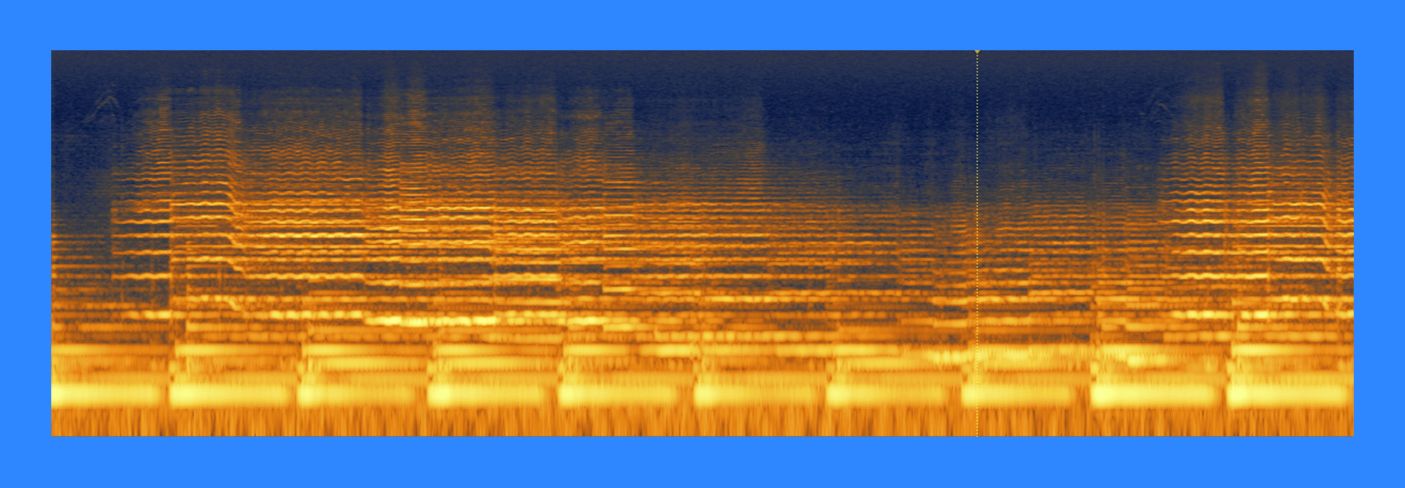
Transformer artifacts often look plausible but distort critical frequency patterns.
Why Transfer Learning Failed (Specifically Here)
1. Teacher Errors Became Student Bias
Teacher–student learning assumes:
“Teacher errors are rare and random.”
Ours were systematic.
The model learned:
- Transformer artifacts as “normal”
- Speech leakage as acceptable background
- Over-smoothed chewing as the target texture
The student didn’t generalize — it overfit the teacher’s mistakes.
2. AudioSep Outputs Were Not Auditable at Scale
We couldn’t:
- Confidently label good vs bad outputs
- Assign trust scores
- Weight samples correctly
So every epoch reinforced noise.
In hindsight, this wasn’t a modeling failure - it was a data trust failure.
3. Distillation Multiplied the Damage
Teacher–student setups amplify bias:
- Teacher mistakes → student representations
- Student trained longer → stronger bias
- Downstream tasks inherit both
Each iteration moved us further from real dog audio.
The Pivot: Smaller, Cleaner, Verifiable Data
Instead of asking “How do we fix the model?”, we asked:
“What data can we actually trust?”
The new approach
- Manually curate a small, clean audio dataset
- Fewer samples, but 100% verified
- Real recordings, no separation artifacts
This dataset was tiny compared to our generated corpus — but it was honest.
Data Strategy Shift
| Old Strategy | New Strategy |
|---|---|
| Large synthetic dataset | Small real dataset |
| Transformer-generated targets | Human-verified audio |
| Teacher–student learning | Direct supervised learning |
| Hard to audit | Easy to trust |
This change alone stabilized training.
Augmenting with Diffusion Models (The Right Way)
The obvious concern was scale.
So instead of trusting separation transformers again, we used audio diffusion models to augment, not generate labels.
Key difference:
- Conditioned on clean dog audio
- Used for variation, not truth
- Human-verified seed data only
Augmentations included:
- Temporal stretching
- Subtle pitch variance
- Environmental noise layering
- Room impulse responses
Crucially, we could still recognize the sound.
Diffusion adds variation without inventing structure.
Fine-Tuning YAMNet (Why It Worked)
With clean + augmented data, we fine-tuned YAMNet for dog-specific sounds.
Why YAMNet?
- Lightweight
- Strong general audio priors
- Stable embeddings
- Designed for environmental audio (not speech separation)
We fine-tuned only the upper layers, keeping lower representations intact.
Results vs Teacher–Student Distillation
The results were unambiguous:
- Higher classification accuracy
- Lower false positives
- No speech hallucinations
- More stable embeddings
- Better edge performance
Most importantly, this setup outperformed the AudioSep-based teacher–student pipeline — despite using far less data.
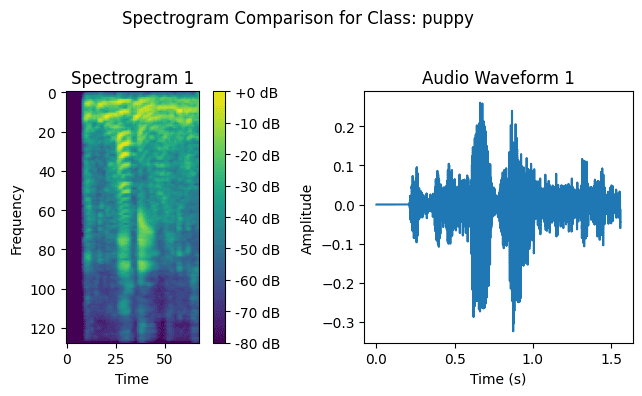
Clean data + diffusion augmentation beat noisy distillation.
Why This Worked
1. Clean Data Beats Large Data
A small dataset you trust will always outperform a large one you don’t — especially in audio.
2. Diffusion Preserves Semantics
Diffusion models add variation, not structure. That distinction matters.
3. YAMNet Matched the Domain Better
Environmental audio ≠ speech separation. Using the right prior mattered more than model size.
How This Strengthens Hoomanely
This shift directly improved Hoomanely’s platform:
- Stronger privacy guarantees (no speech leakage learned)
- Better edge stability
- More reliable downstream anomaly detection
- Faster iteration cycles (less debugging invisible errors)
It reinforced an internal principle we now follow strictly:
Never scale audio data you cannot confidently audit.
Key Takeaways
- Transfer learning can fail due to data trust, not model choice
- Audio separation transformers are powerful — but risky as teachers
- Manual verification is harder in audio than vision
- Clean seed data + diffusion augmentation scales better
- YAMNet fine-tuning beat teacher–student distillation in our case
Final Thought
Transfer learning didn’t fail because the models were weak.
It failed because we trusted the wrong data source.
Once we treated audio like the fragile signal it is - and optimized for trust over scale - everything else fell into place.