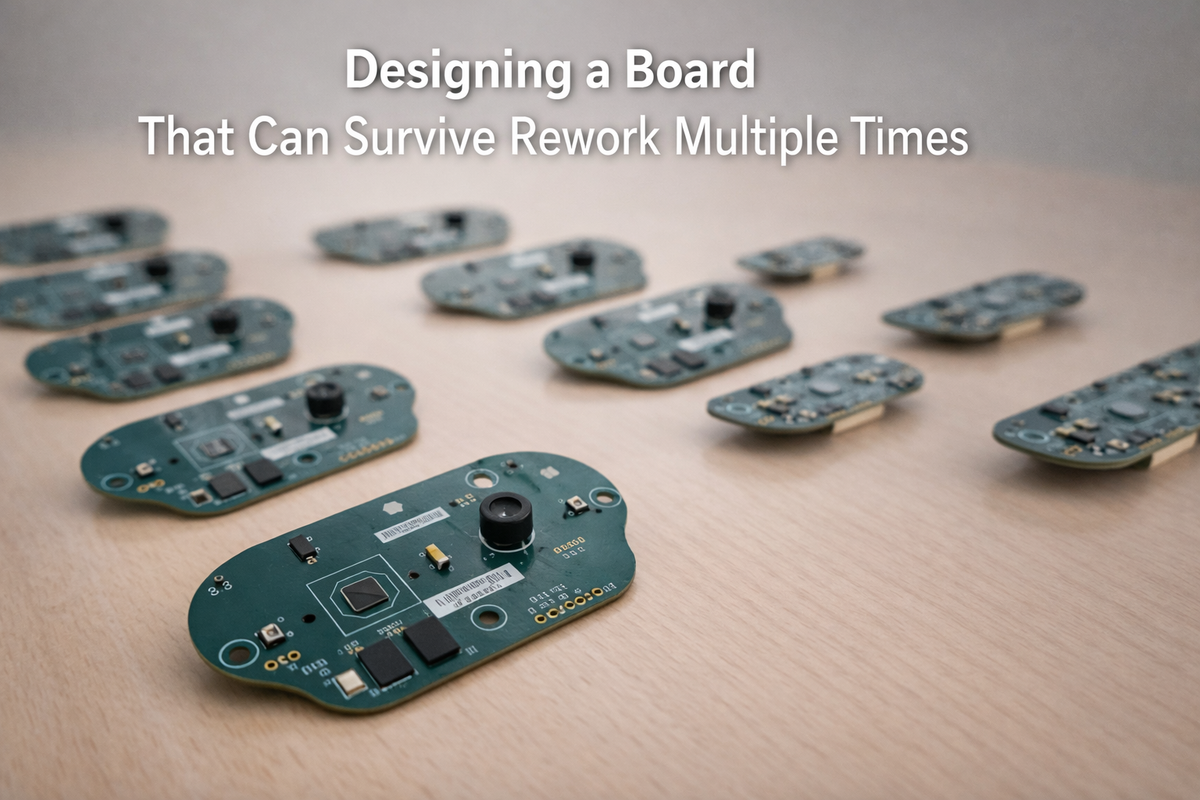
Designing a Board That Can Survive Rework Multiple Times
Rework isn't an exception in hardware development. It's part of the process. Boards are probed, components are replaced, connectors are re-soldered, tracks are modified, and sometimes entire sections are rebuilt, all before the design reaches stability.
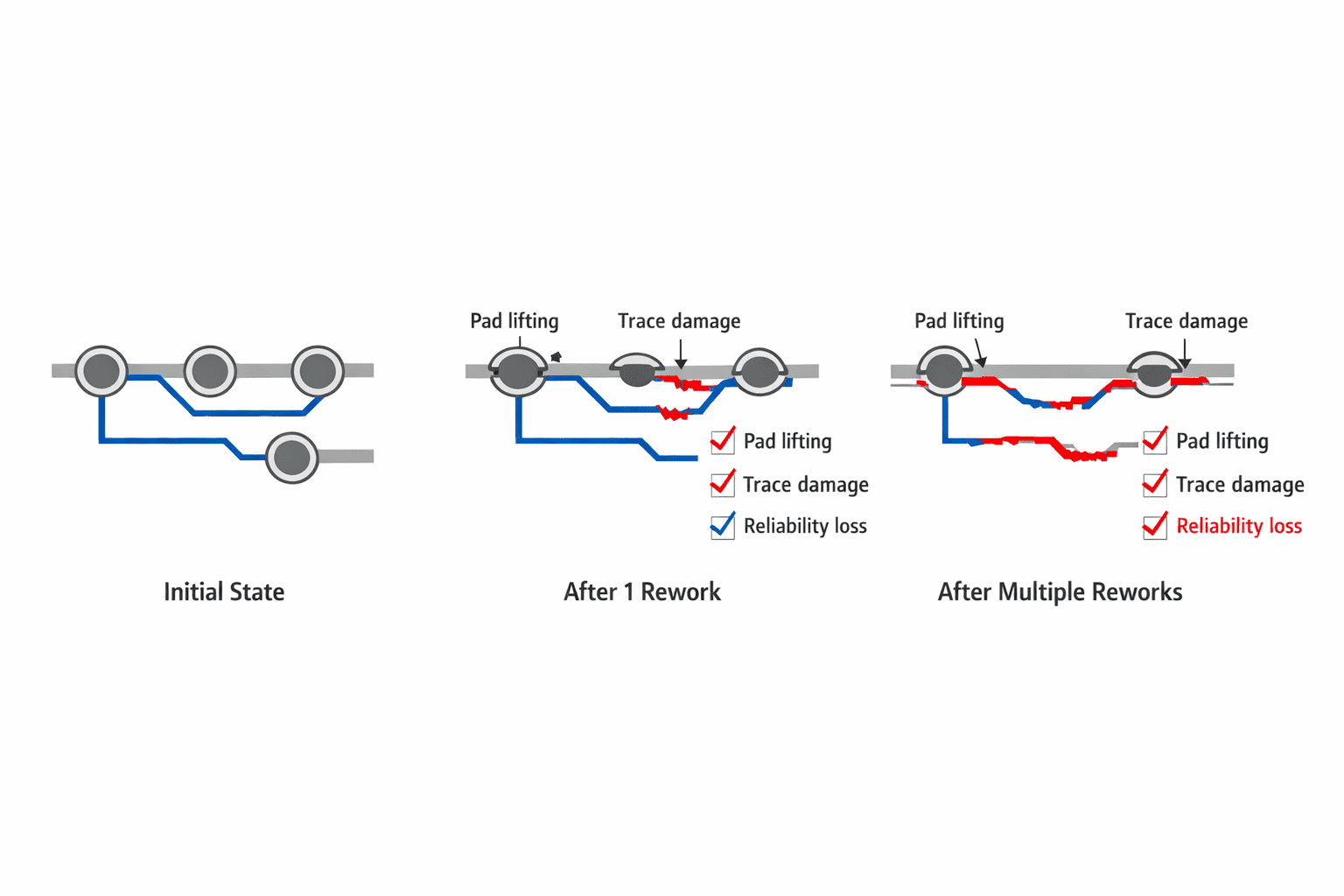
Yet most boards aren't designed with rework in mind. They're designed to be manufactured once, cleanly, perfectly, and permanently. And that mismatch creates problems. Pads lift. Traces peel. Thermal stress damages nearby components. Debugging becomes harder after every rework cycle.
At Hoomanely, we treat rework as a design input, not a post-production inconvenience. Because a board that survives rework doesn't just last longer, it accelerates development, reduces cost, and improves reliability across the entire lifecycle.
The problem: boards that degrade with every touch
A typical PCB is optimized for compact routing, minimal spacing, cost efficiency, and automated assembly. But during rework, solder joints are heated repeatedly, pads are mechanically stressed, nearby components are exposed to heat, and copper adhesion is tested beyond its limits.
Without deliberate design support, each rework cycle introduces weakened pads, micro-cracks in traces, increased electrical resistance, and intermittent faults. The board may still "work," but it becomes unreliable. And debugging an unreliable board is one of the most time-consuming problems in hardware.
Designing pads that don't lift
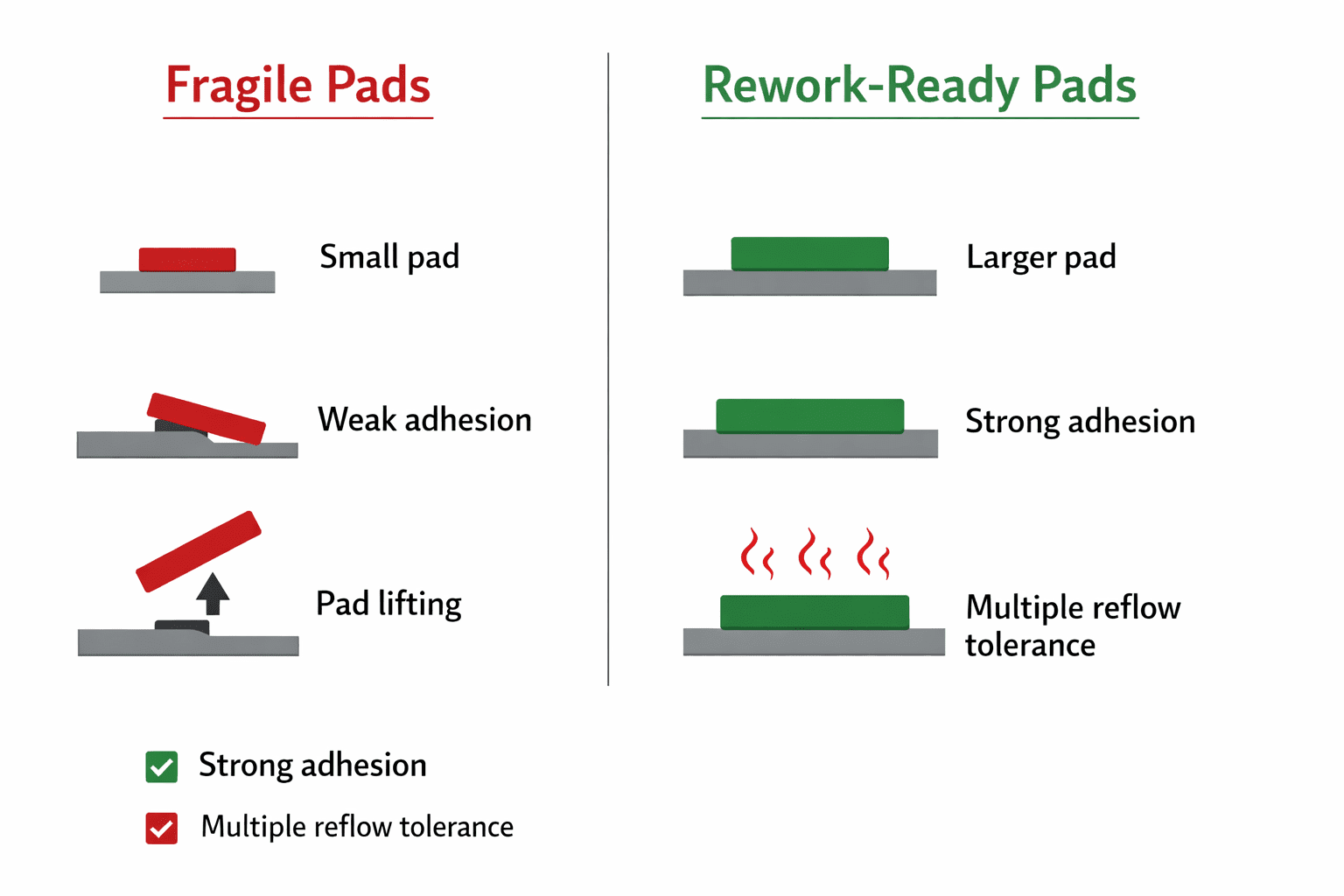
Pad lifting is one of the most common failures during rework. It happens when the copper pad detaches from the substrate, repeated heating weakens adhesion, or mechanical force pulls the pad during component removal.
To prevent this, pad design must be intentional:
- Sufficient pad size relative to the component
- Proper annular ring dimensions
- Avoiding overly aggressive thermal reliefs
- Ensuring strong copper-to-substrate bonding
In critical areas, we also increase pad robustness slightly beyond minimum requirements and avoid ultra-fine geometries where unnecessary. The goal is simple, pads should tolerate multiple soldering cycles without degradation.
Trace routing that survives heat and stress
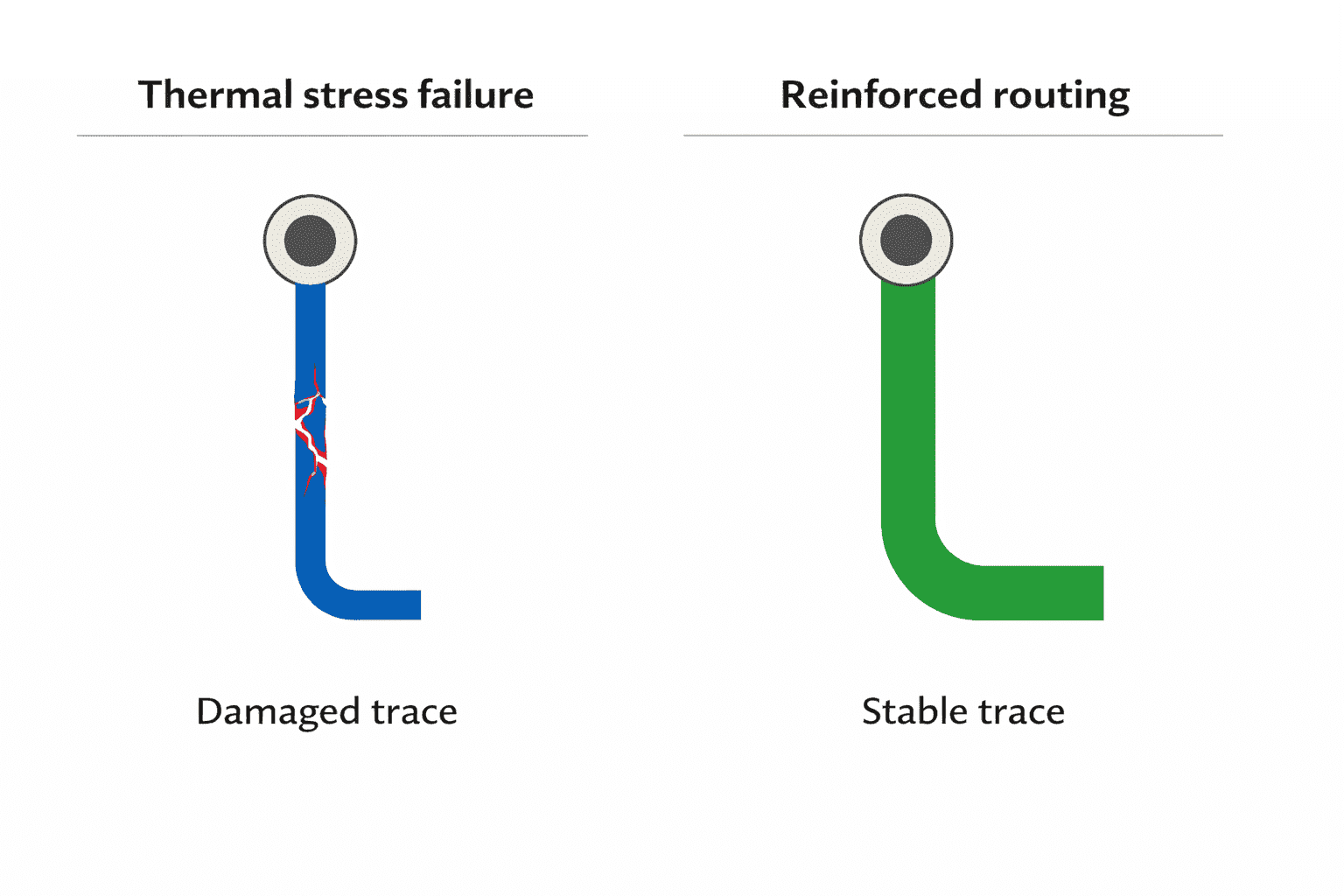
Traces connected to reworked components are vulnerable. During rework, heat expands materials, solder wicking can pull on traces, and mechanical movement stresses connections. If traces are too thin or poorly supported, they crack, delaminate, or fail intermittently.
So we design traces near rework-prone areas with slightly increased width, smooth transitions with no sharp corners, short, direct paths, and mechanical stability. This ensures that even after multiple thermal cycles, connectivity remains intact.
Component spacing: designing for tools, not just layout
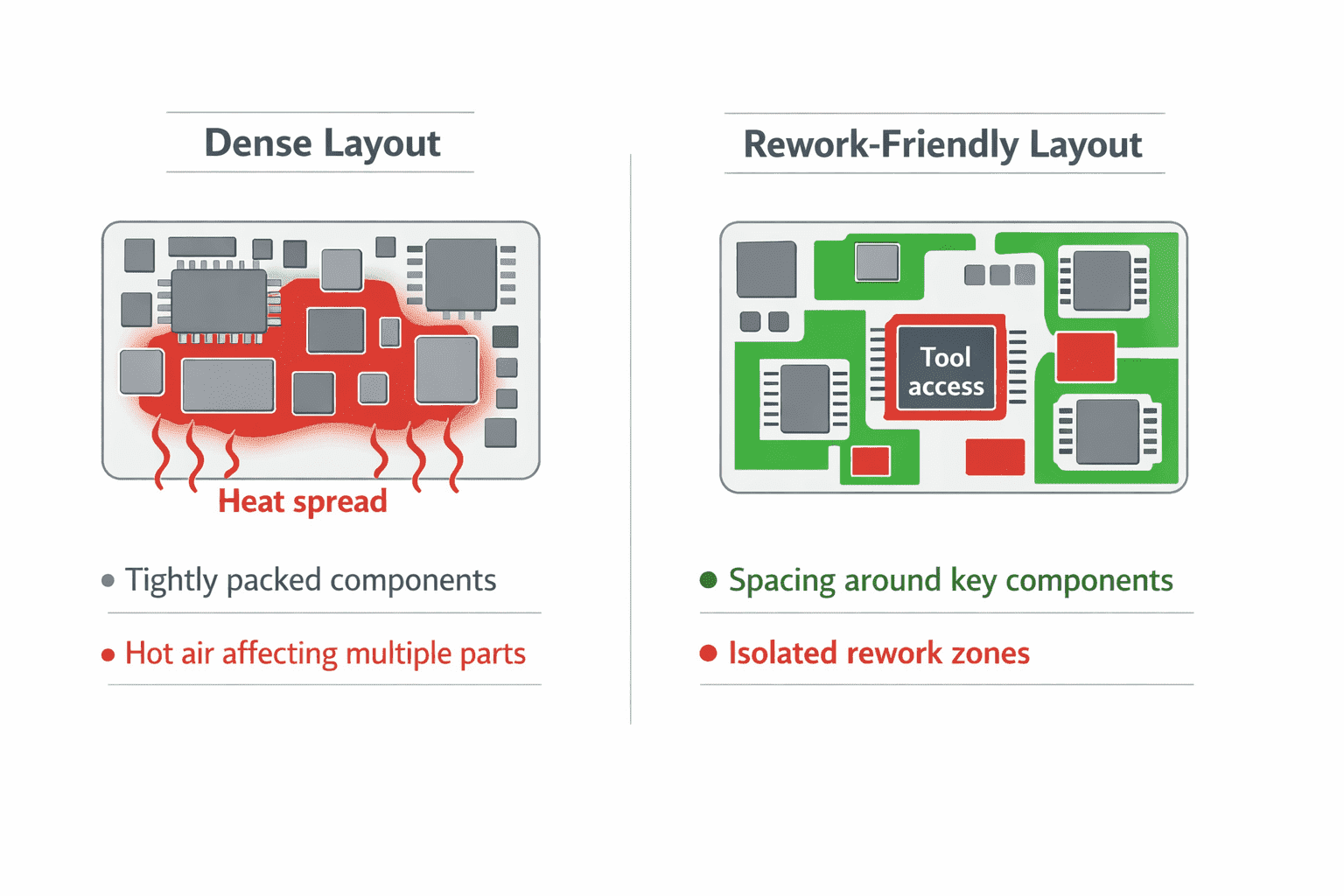
Dense layouts look efficient, but they make rework difficult. Hot air affects adjacent components, solder bridges form easily, tweezers can't access components cleanly, and inspection becomes harder.
So we introduce intentional spacing in critical areas, not everywhere, only where it matters:
- Around connectors
- Near frequently replaced components
- Around debug interfaces
- Near power devices
This allows precise heat application, clean component removal, and reduced collateral damage. Rework isn't just electrical, it's physical, and the board must respect that.
Thermal design for rework conditions
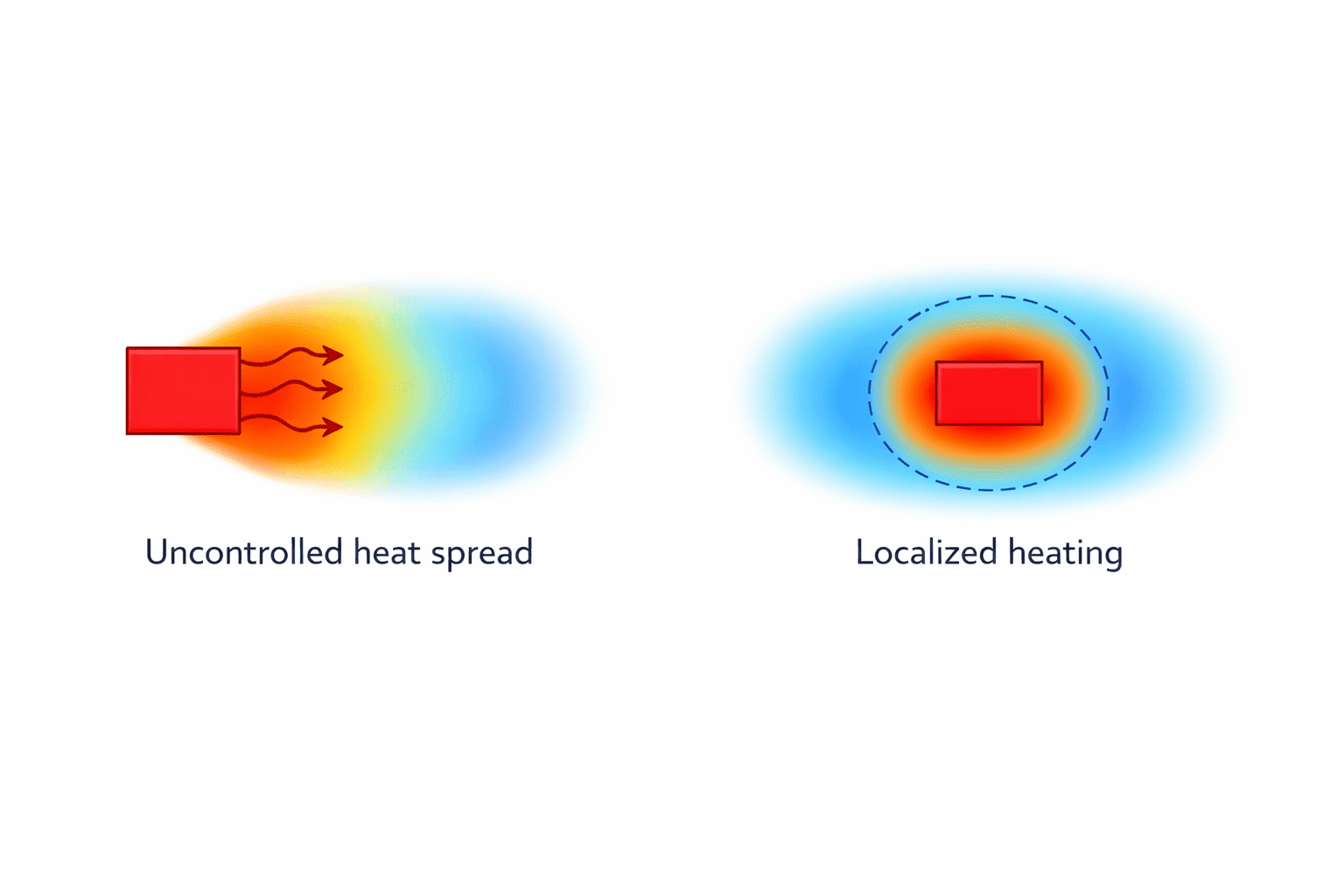
Thermal behavior during rework is very different from normal operation, heat is localized, temperature gradients are steep, and nearby components experience unintended heating. Without planning, this causes solder reflow in unintended areas, component drift, and damage to sensitive parts.
So we design thermal characteristics deliberately:
- Controlled copper distribution around critical components
- Balanced thermal relief for pads
- Avoiding large copper pours directly attached to small pads unless required
This ensures predictable heating, faster rework cycles, and reduced thermal stress.
Protecting critical nets during rework
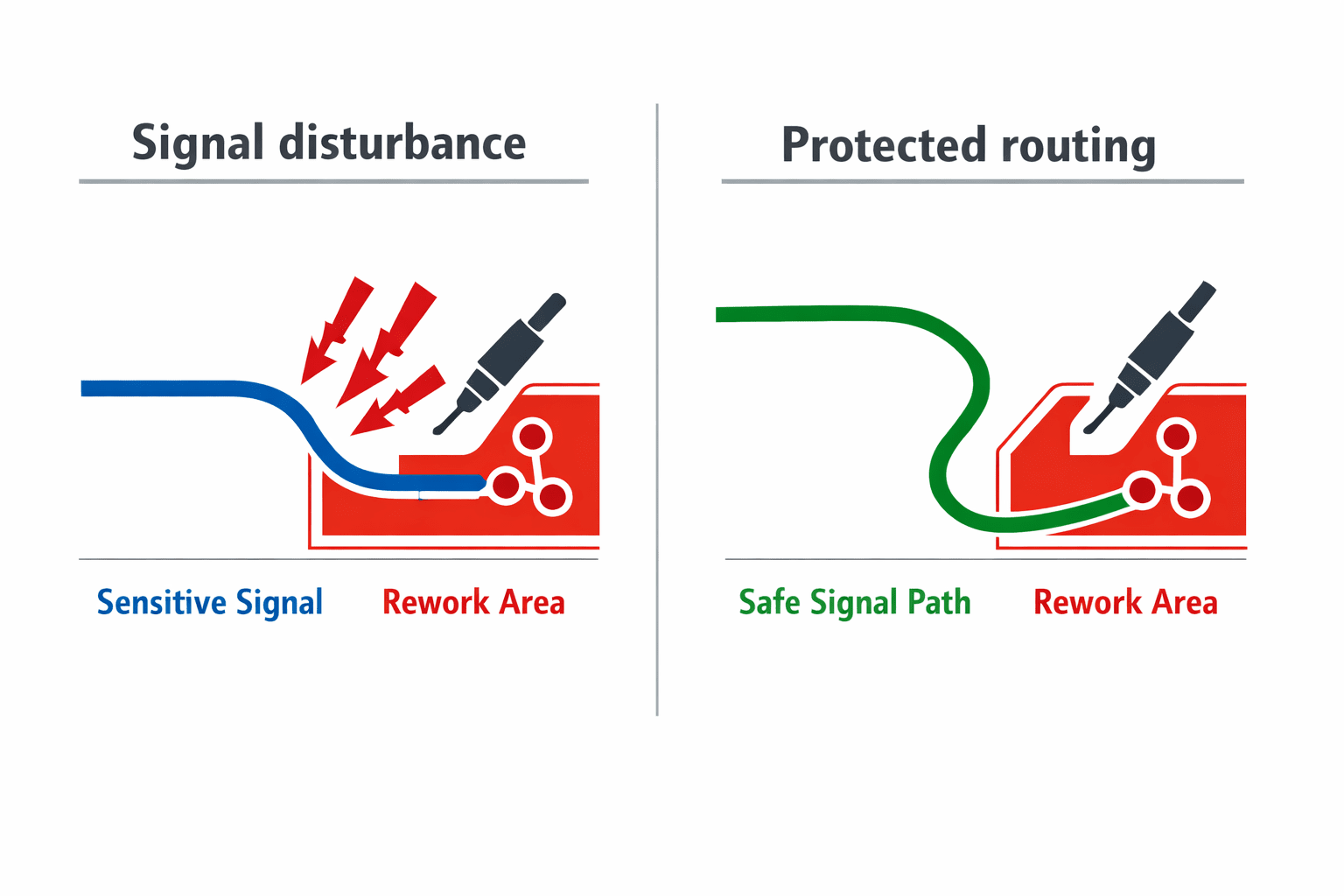
Some signals can't tolerate disturbance, high-speed lines, sensitive analogue paths, reference signals. Rework near these nets can introduce impedance changes, noise coupling, and signal degradation.
So we isolate critical nets from rework zones:
- Maintain distance from high-risk components
- Avoid routing sensitive lines under rework-heavy areas
- Use controlled reference planes
This ensures rework doesn't silently degrade system performance.
Designing connectors for repeated handling
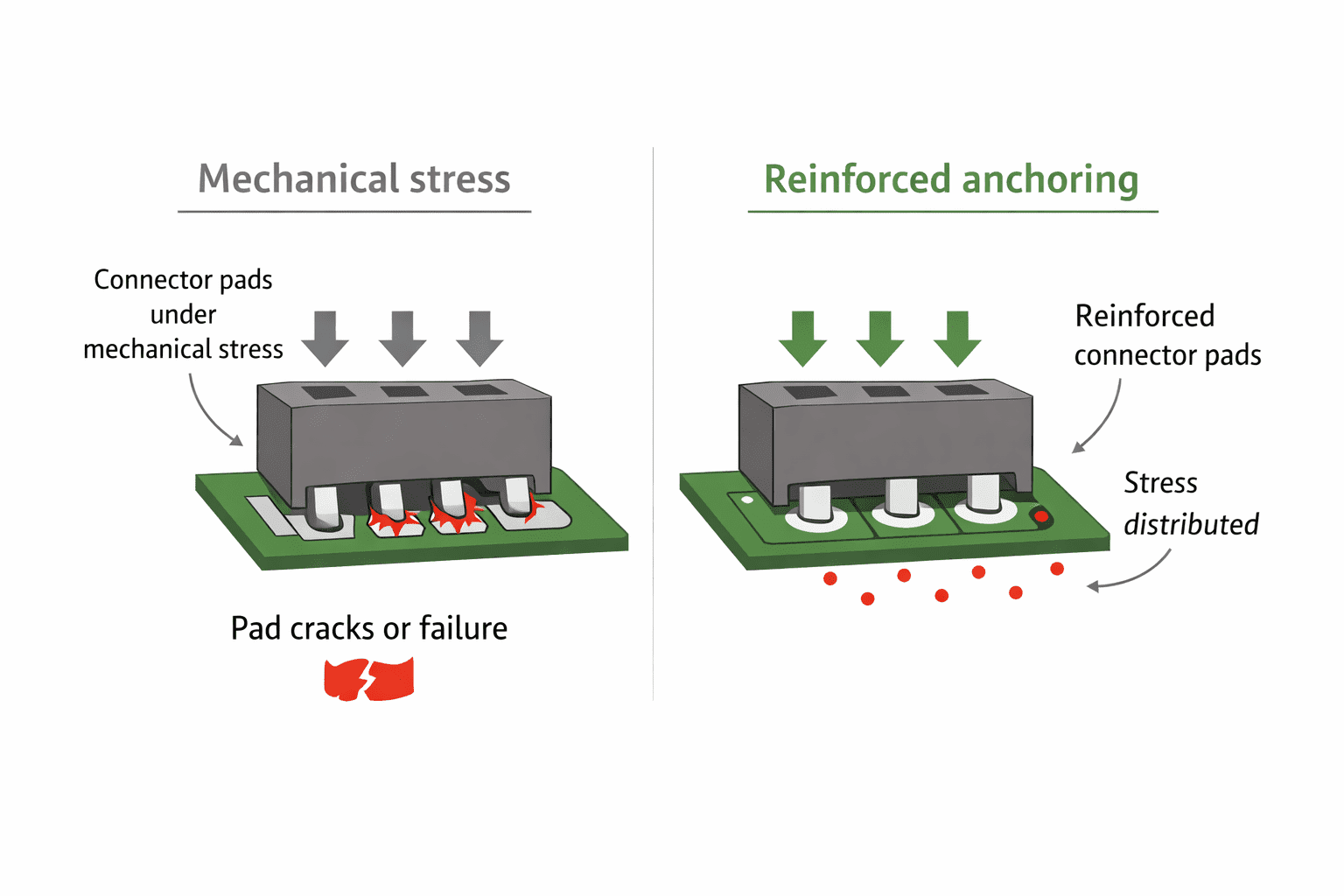
Connectors are frequently plugged and unplugged, re-soldered, and mechanically stressed. If not designed properly, pads crack, solder joints weaken, and alignment shifts.
We design connector interfaces with strong mechanical anchoring, sufficient pad support, and stress distribution through board area. In modular systems like EverBowl-style architectures, this becomes even more important, because connectors define system reliability, serviceability, and long-term durability.
Making debugging reliable after rework
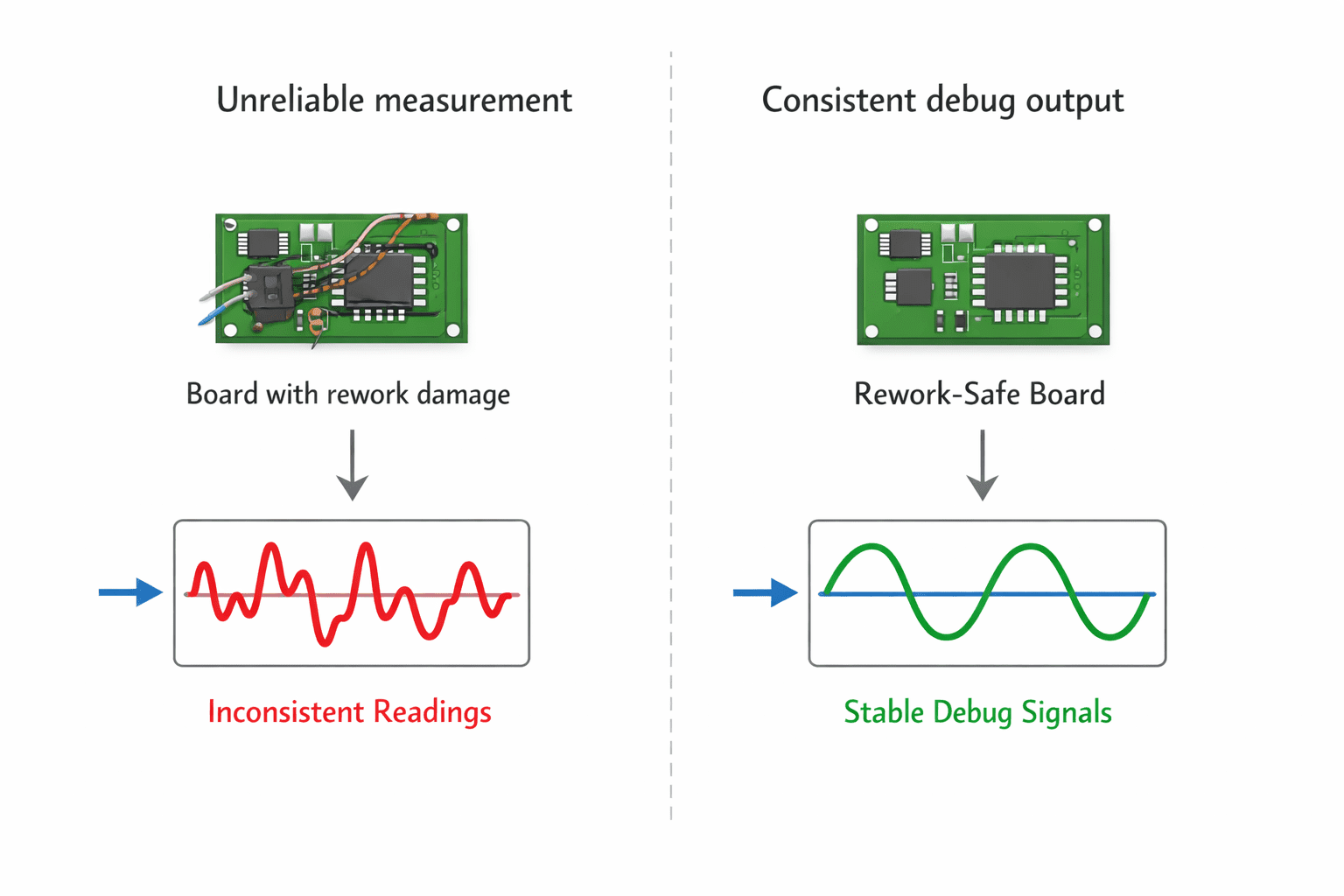
One hidden problem with rework is loss of trust in the board. After multiple changes, is the failure real, or is it caused by previous rework damage? To avoid this, we ensure debug points remain intact and accessible, reference signals are stable, and power rails remain consistent. The board should behave predictably even after multiple interventions, because debugging should focus on the system, not on whether the board itself is compromised.
Practical observations from EverBowl-like systems
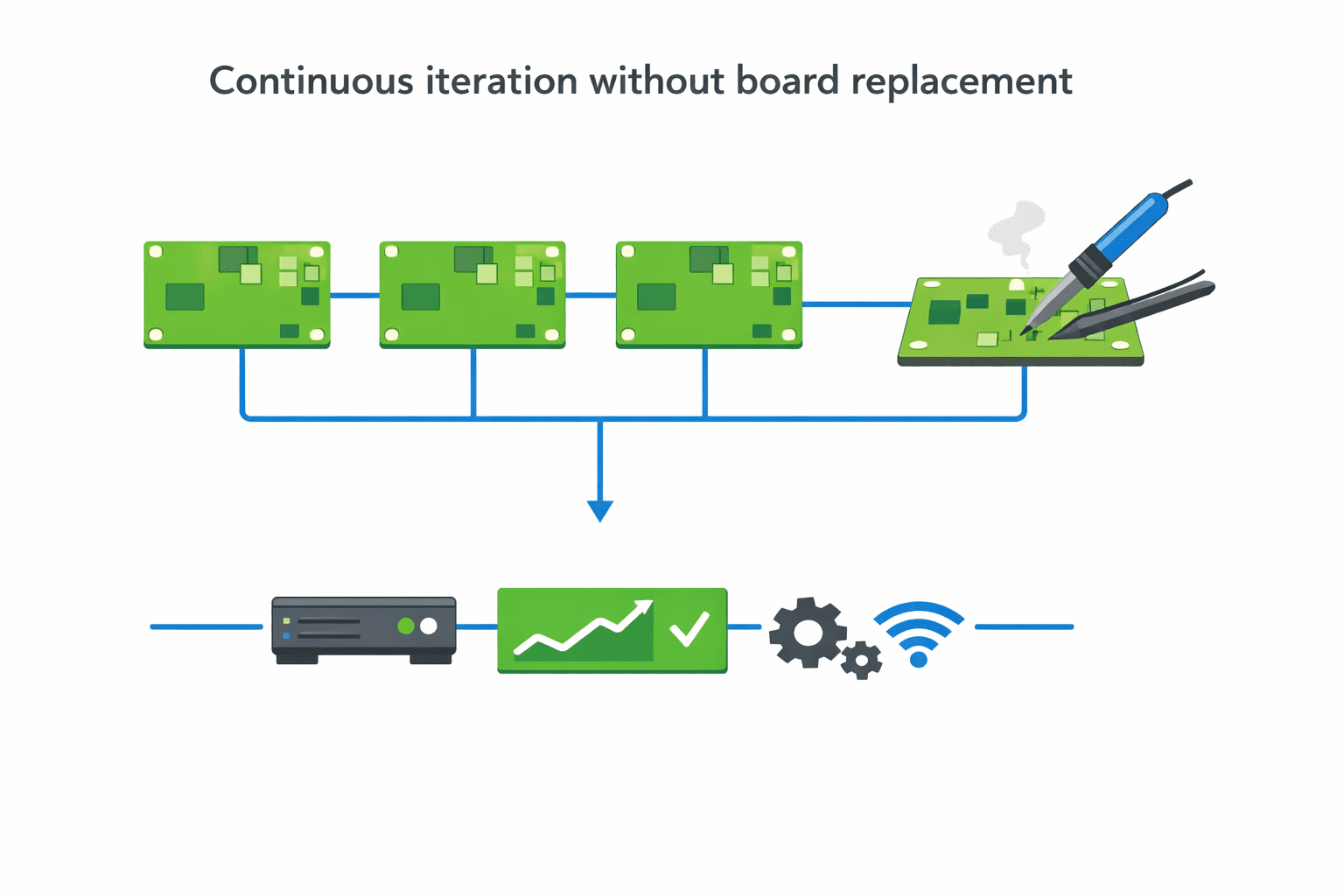
In systems similar to EverBowl, rework happens across multiple iterations, sensor boards are swapped, connectors are replaced, power sections are tuned, and layouts evolve rapidly. We observed boards lasting longer across iterations, with fewer boards needing replacement during development. Debugging became more reliable, as engineers trusted measurements even after multiple rework cycles. Iteration cycles got faster, with less time spent repairing damage caused by previous fixes. And cost dropped over the course of development, with fewer prototype rebuilds and replacements. These improvements came from designing for rework, not reacting to it.
Conventional vs structured approach
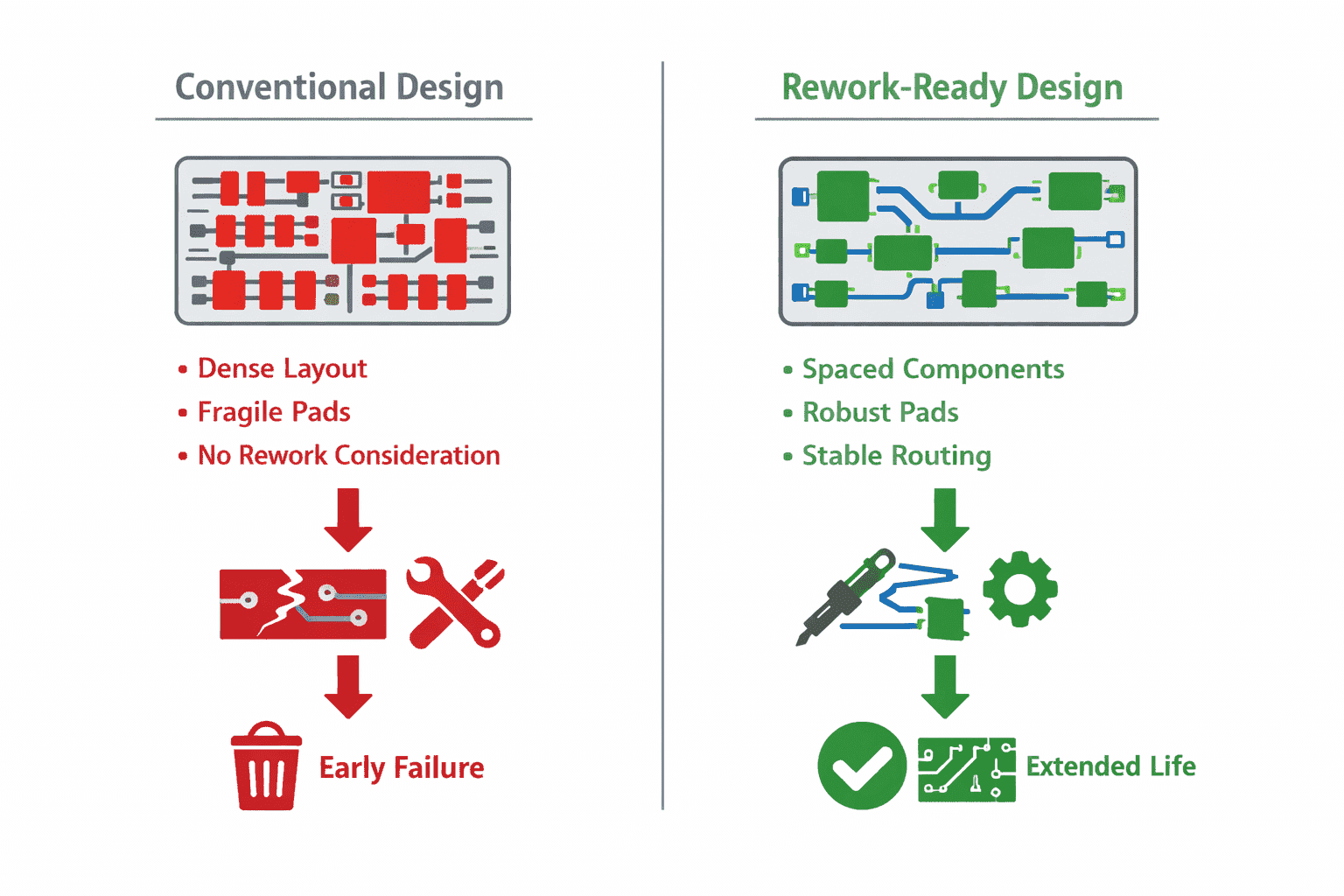
The conventional approach optimizes for manufacturing, with minimal spacing, fragile pads and traces, and rework considered temporary. The Hoomanely approach designs for repeated intervention, with robust pads and traces, intentional spacing, and stable behavior across cycles. The difference isn't visible in the schematic. It becomes obvious during the third or fourth rework cycle, when one board still works, and the other doesn't.
Designing for the full lifecycle
A board isn't just manufactured once. It goes through bring-up, debugging, validation, modification, and sometimes field repair. Each stage applies stress. If the design only supports the first stage, it fails in the rest. So we design for the full lifecycle:
- Durability during rework
- Stability after modification
- Consistency across iterations
This ensures the board remains a reliable platform, not a disposable artifact.

The core principle
A good PCB shouldn't just work once. It should continue to work even after being touched, modified, and reworked multiple times. That requires mechanical robustness, thermal stability, and electrical integrity, all working together.
Final thought
Rework isn't a sign of failure. It's a sign of progress. But only if the board supports it. At Hoomanely, we design boards that tolerate repeated intervention, maintain integrity across cycles, and support faster iteration. Because in real hardware development, the first version is never the final one. And the boards that survive the journey are the ones that were designed for it from the beginning.