Every Lint Rule Is a Scar
Our architecture is not a document. It is thirty-five numbered rules and eight named ones — and almost every one exists because something already went wrong quietly.
Dispatches from the work in progress
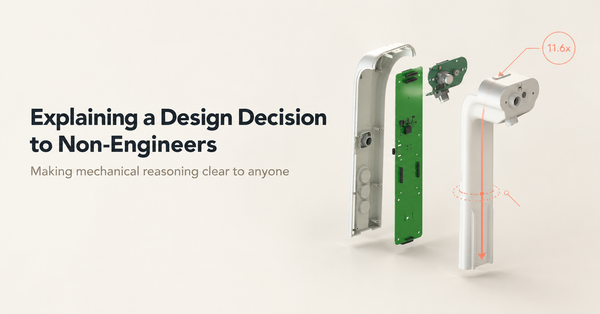
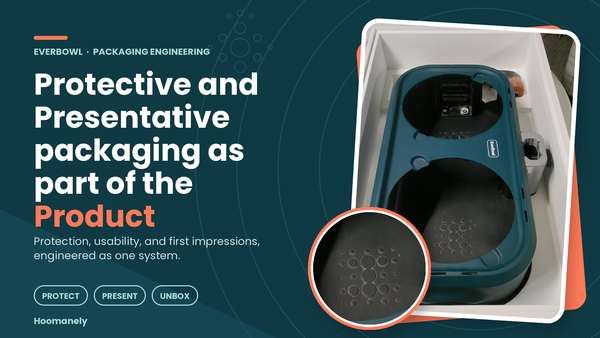
How real interaction with Everbowl changed the way we thought about clearance, wear, and durability. Designing a mechanical product around a spec is fairly straightforward. Designing one around how people, or animals, actually interact with it is a lot harder. A lot of our mechanical assumptions for Everbowl came from
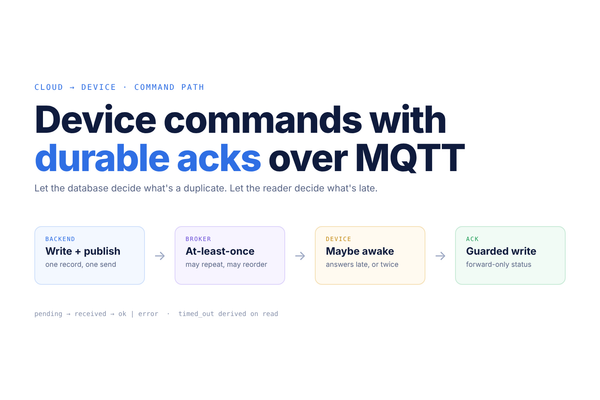
The problem A member's phone lost data for about ten seconds. She was in the middle of writing a community post, tapped Post, and got told it failed. She tapped again. Failed. Again. Again. When the network came back, four identical posts appeared in the feed. The obvious
Building thermal systems that behave the same across every manufactured unit Focus: Mounting pressure control, TIM selection, screw torque, mechanical tolerance stack-up, and unit-to-unit thermal repeatability Introduction Thermal design failures rarely happen because a heatsink was completely ignored. More often, they happen because the design worked perfectly on the first
When I first started looking at this problem, it looked like a simple UI improvement. The idea was straightforward: instead of asking users to understand everything about the product themselves, we could ask a few simple questions and use their answers to guide them toward a more relevant experience. But
Publishing an operating system to one bench device is a task. Publishing it to a fleet of devices sitting in customers' kitchens — each polling the same update feed, each capable of being permanently broken by a bad write — is a discipline. The scary part isn't the update
An honest look at how simulation guided Everbowl's mechanical development, and where physical testing forced us to rethink the model. Introduction Simulation is one of the most useful tools in hardware development because it lets you ask questions before you've manufactured anything: where will this deform,
The bottleneck of modern vector retrieval. When working with high-dimensional embedding space-whether serving semantic search, recommendation engines, or Retrieval-Augmented Generation (RAG) pipelines - the fundamental challenge is nearest-neighbor search. Exact nearest-neighbor methods require calculating the vector distance (like Cosine or Euclidean) between a query vector and every single item in
The bottleneck in the handoff. For most of this project, converting a Figma screen into Flutter was the slowest, dumbest part of the job. The work wasn't hard, it was just relentlessly manual: open the design, click a frame, read the inspector, note that the gap is 12
Amazon OpenSearch Serverless (AOSS) presents the OpenSearch REST API. You point the standard client at it, sign your requests, and everything you already know appears to apply. That appearance is the whole problem. It is not a managed OpenSearch cluster, it is a different product that accepts a subset of
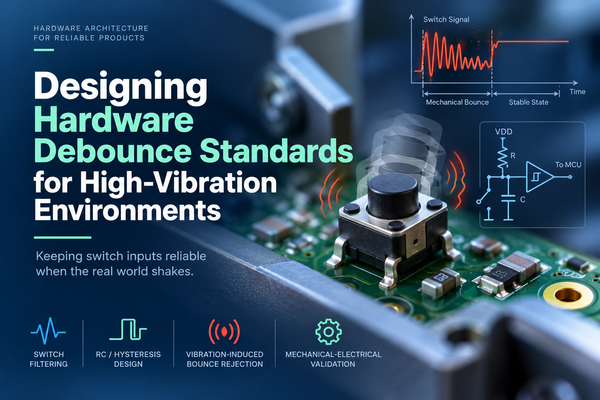
Building Hardware That Remains Stable After Years of Real-World Operation In early hardware validation, voltage rails usually look perfect. The regulator output is measured at room temperature. The load is controlled. The board passes functional tests. The oscilloscope shows clean waveforms. Then the product spends three years in the field.
The problem Open the Journal tab, wait for it to load, switch to Chat, switch back. For a full beat, Journal says "No journal yet" — then the data you already fetched twenty seconds ago reappears. Do it again. Same thing. Every single time. The device log made it
An API can work perfectly during development and still struggle when the number of users increases. A request that takes a few hundred milliseconds with a small number of users can behave very differently when hundreds of requests arrive at the same time. That made us look beyond functional testing
The symptom Pick a pet photo during onboarding, tap "Use this photo," and land on a scanning screen: "Taking a look at {pet}…" Most of the time it resolves in under a second. Sometimes — almost always on the very first attempt in a session — it just
The hub board inside our feeding station reports air quality, light and motion to the rest of the device over a CAN bus. The firmware queued a frame. The controller accepted it. And nothing — nothing at all — appeared on the wire. There was no error code to chase, no exception,
A notification system that only asks "should this be sent?" will eventually send everything, correctly, all at once and the person holding the phone will switch it off. This post is about the opposite failure, and it's the one users actually complain about: everything arrived, every
Technology, Insights and Ideas.
Want to stop getting emails from Tech@Hoomanely?