The Art of Resilient Design: Building Production-Grade BOMs with Second-Source Strategy
The global semiconductor shortage of 2021-2023 taught the industry a hard lesson:
- Design decisions made in the schematic capture phase have far-reaching consequences that ripple through manufacturing
- Supply chain management
- Ultimately
- Your ability to deliver products to customers
At Hoomanely, we've witnessed firsthand how a single-source component can become a production bottleneck, a processor shipping in 16-week lead times, a specialized sensor with allocation restrictions, a power management IC unavailable from any distributor. Companies with rigid BOMs faced impossible choices: delay launches, redesign at enormous cost, or accept inflated pricing on gray-market suppliers. We chose a different path, embedding second-source strategy and comprehensive lifecycle tracking into our design methodology from day one.
The vBus advantage: modularity meets supply chain resilience
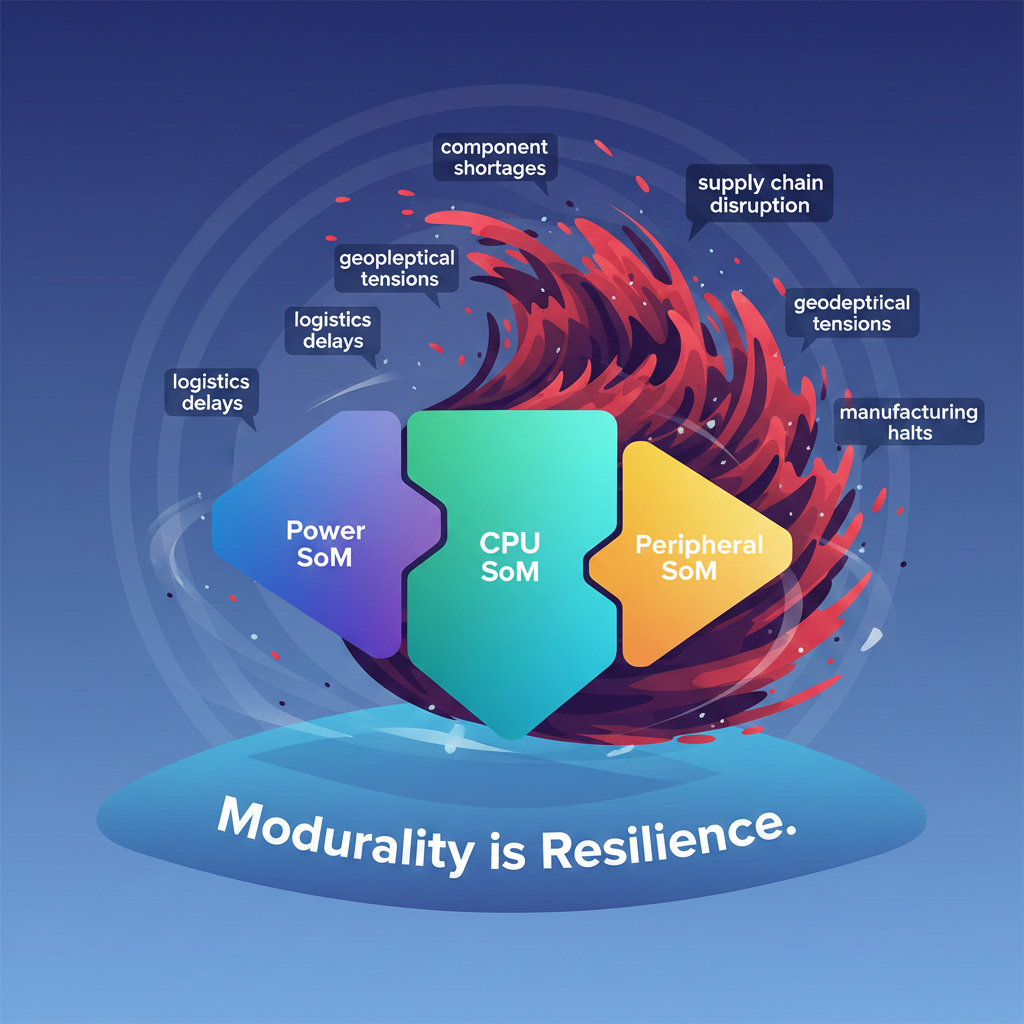
In traditional monolithic system design, a core processor choice locks you into a specific peripheral ecosystem. Change your main processor and you've potentially changed power management, communication interfaces, and debug infrastructure too, redesign becomes catastrophic. vBus inverts this relationship. Our modular SoM architecture scopes component choices within individual modules, a CPU SoM houses the processor, a Power SoM contains power management, Peripheral SoMs handle specific sensors. The brilliance: you can redesign power management or swap processors without affecting sensor modules.
This isolation enables aggressive second-source strategy. If your preferred CPU becomes unavailable, you redesign just the CPU SoM, keeping the rest of the product unchanged. Or better yet, maintain multiple CPU SoM designs simultaneously, allowing different customer configurations or market segments to use whatever processor is currently available. Modularity isn't just about functional flexibility, it's about supply chain optionality.
Strategic component selection: the foundation
Not all components deserve equal BOM attention. A 0.1uF ceramic capacitor has thousands of interchangeable sources, a MEMS gyroscope has maybe three qualified manufacturers globally. Our selection process begins with tiered criticality analysis. Tier 1 critical components, processors, specialized sensors, wireless modules, power management ICs, where no direct equivalents exist, receive dedicated second-source analysis for every one. Tier 2 important components, analog front-ends, memory, communication transceivers, where alternatives exist but might need firmware or hardware tweaks, receive secondary source identification when feasible. Tier 3 standard components, resistors, capacitors, discrete transistors, are grouped by specification rather than specific part number. This tiered approach focuses engineering effort where it matters most.
Our design methodology mandates that no Tier 1 component enters a design without at least one qualified second source identified and validated. During design review, the component selection team presents the primary choice, at least one second-source alternative, pin-compatibility analysis, performance comparison, cost comparison, and availability assessment. Only when this documentation is complete does the design proceed to schematic.
Not all second sources are created equal. Drop-in compatible alternatives use the same pinout, package, and electrical interface, swappable into the PCB with no layout changes, these are gold. Pin-compatible but different alternatives share the pinout but differ in power requirements or peripheral interfaces, the PCB stays unchanged but firmware needs adaptation. Different pinout alternatives require PCB re-layout, expensive but sometimes the only option, in which case we design routing to accommodate both versions via test pads or optional trace paths. Different package alternatives require redesign and are avoided whenever possible. Our preference hierarchy is drop-in compatible, then pin-compatible, then different package, then different pinout.
The production-grade BOM: detailed structure
A truly production-ready BOM is far more sophisticated than a simple part list. Core columns include reference designator, a concise technical component description (more informative than just a part number), quantity, primary part number, primary manufacturer, and primary distributors, listing multiple distributors so an out-of-stock situation at one still leaves backup options.
Second-source strategy columns capture the primary alternative's part number and manufacturer (ideally a different manufacturer for better resilience), secondary distributors, an optional tertiary option for extremely critical components, a clear pin-compatibility statement, a concise performance comparison, and a second-source validation status of qualified, under evaluation, prototyped, or field-tested. We never include unqualified alternatives, they must have been actually tested.
Lifecycle and availability columns answer the crucial question of whether a component will be available when needed, manufacturer lifecycle status, typical lead time for primary and secondary sources, expected lifecycle in years, a last-buy window if end-of-life has been announced, and a recommended inventory level, sometimes a 3-6 month buffer for critical long-lead components.
Cost and commercial columns document unit cost with volume assumptions explicit, extended cost per board, cost delta between primary and secondary, volume discount tiers, and lead-time cost premium for expedited shipping. Traceability and quality columns capture lifecycle codes, RoHS and environmental compliance, quality grade (industrial, automotive, mil-spec), who qualified the component and when, the test method used, and known issues or errata like required settle time or marginal timing at specific frequencies.
Design-phase component validation
Second-sourcing isn't just paperwork, it requires hands-on validation. Initial evaluation reviews schematics and datasheets for primary and secondary options. A prototype build solders both primary and secondary components onto the same PCB using optional pads, enabling side-by-side validation on actual hardware. Functional testing runs both versions through the same test suite. Stress testing covers temperature cycling and voltage variations to ensure the secondary option behaves identically under stress. Long-term validation gives reliability-critical components weeks of continuous operation testing before marking them fully qualified. All results get documented, so if you need to switch to a secondary source mid-production, you have complete validation data. This process typically adds 2-4 weeks to the design cycle but saves months if supply disruption occurs.
Component selection involves more than electrical engineers. The electrical team checks whether it meets requirements. The firmware team checks whether both variants are supportable given peripheral interface or register map differences. The manufacturing team checks whether assembly equipment can handle both options. The supply chain team brings real-world availability data that a great component on paper might not reveal. Quality assurance brings failure history if the secondary component has higher field failure rates. This collaborative approach catches issues pure electrical design would miss.
Lifecycle tracking: building the living BOM
A production-grade BOM isn't static, it's a living document that evolves with component lifecycles and market conditions. We've implemented automated systems tracking lifecycle status, triggering alerts when a component enters nearing-end-of-life status so teams can decide whether to redesign now or stock up on inventory. Lead-time tracking flags unexpected spikes for early proactive sourcing decisions. Price trending identifies buy-in opportunities or triggers redesign if alternatives become significantly cheaper. Availability allocation tracking lets us adjust production planning immediately when components enter limited distribution.
We maintain forward-looking forecasts too, a 3-month view of what components might become constrained, a 6-month view of anticipated lifecycle changes, and a 12-month view of architectural changes to plan for. If we see a key processor heading toward end-of-life in 18 months, we have time to design and qualify a successor module rather than panicking when supply finally runs out.
vBus and BOM modularity: strategic advantage
Each SoM has its own detailed BOM with dedicated second-source strategy. A CPU processor change affects only the CPU SoM's BOM, not Peripheral or Communication SoMs. A Power SoM design might appear across multiple product lines, optimize its BOM once and benefit everywhere. You can offer multiple CPU SoM variants, low-cost, high-performance, automotive-grade, each with its own optimized BOM, all working with identical Peripheral and Communication SoMs. If a specific processor becomes constrained, other CPU SoM designs are ready to substitute, customers might get variant B instead of variant A, but the overall system works identically, no product delay, no customer disruption. This transforms second-source strategy from hoping for the best into strategic optionality.
The extended BOM: beyond component lists
Modern production-grade BOMs extend beyond parts, tracking a firmware compatibility matrix showing which versions work with which component variants, mechanical compatibility noting clearance or thermal differences between alternatives, test coverage mapping which cases validate each component, assembly notes for special handling requirements, a supply chain risk assessment per critical component, regulatory and certification impact of component choice, and environmental and sustainability data like RoHS compliance and conflict minerals reporting.
Execution: from BOM to manufacturing
The BOM doesn't live in a spreadsheet gathering dust, it's integrated into the manufacturing execution system where it drives bill of materials management, supply chain planning, automated test coverage, unit traceability linking to exact BOM revision and component lot numbers, and quality analytics correlating field failures back to component choices and suppliers. As products evolve, rigorous version control tracks every BOM change with date, author, reason, and impact assessment, formal engineering change orders with an approval chain, compatibility analysis for firmware and manufacturing batches affected, and field service impact so technicians know exactly which component variant was installed in which production batch.
Conclusion: resilience through foresight
The production-grade BOM, with rigorous second-source strategy and comprehensive lifecycle tracking, is perhaps the most underappreciated tool in modern electronics manufacturing. It's unsexy compared to processor performance or wireless range, yet it determines whether your company thrives or merely survives when supply chain disruptions inevitably occur.
At Hoomanely, supply chain resilience isn't a fortunate outcome, it's an engineered capability. We've intentionally embedded second-source strategy, lifecycle foresight, and rigorous qualification processes directly into our design workflow. By identifying alternatives early, validating them thoroughly, and maintaining real-time visibility into component lifecycles, we've ensured uninterrupted production. And by building modular architectures like vBus, we've enabled seamless component flexibility that keeps our manufacturing timeline predictable and fast, even under global supply constraints.